
What if your driveway could maintain its crisp, premium look for over 20 years without becoming a haven for weeds or a scattered mess on the pavement? Most homeowners across Hinckley and Nuneaton value the timeless aesthetic of stone driveways, yet many feel frustrated by stones migrating onto the public highway or the complexity of 2008 SUDS drainage regulations. You want a front entrance that reflects the quality of your home, but you need the absolute certainty that it’s built to last and remains fully compliant with UK planning laws.
We understand that a driveway is more than just a place to park; it’s a significant investment in your property’s kerb appeal. This 2026 guide provides the expert insight you need to choose, design, and maintain a surface that stands up to the Midlands weather. We’ll walk you through the professional installation techniques that prevent stone movement and explain how to navigate local drainage requirements. By the end of this article, you’ll have a clear roadmap for a durable, high-end transformation that provides a professional finish for your home.
Key Takeaways
- Identify the best materials for your property, from traditional natural stone setts to loose aggregates tailored for Hinckley and Nuneaton homes.
- Learn why selecting the correct material size is vital for stone driveways to ensure a stable, vehicle-ready surface that lasts for years.
- Understand the legal SUDS drainage requirements and structural foundations necessary to prevent flooding and ensure your installation remains fully compliant.
- Discover how bespoke design elements like stabilisation grids and professional borders create a high-end transformation while preventing stone migration.
- Gain insight into the professional installation process that delivers a premium, “right-first-time” finish and superior long-term value compared to DIY.
Understanding Stone Driveways for Hinckley & Nuneaton Homes
Stone driveways offer a versatile and high-impact solution for homeowners looking to upgrade their property’s entrance. This broad category encompasses everything from loose aggregates like golden gravel to solid natural stone setts and cobbles. Selecting the right material depends on your home’s architectural character and your specific functional needs. At McCready Home Improvements, we focus on bespoke craftsmanship to ensure every installation reflects the unique heritage of the Midlands. We treat every project with the meticulous care your home deserves, providing a professional finish that lasts for decades.
Choosing stone is often the preferred route for adding immediate kerb appeal to local properties. Whether you own a traditional cottage or a detached executive home, the texture of natural stone creates a premium first impression. It provides a level of durability that manufactured alternatives struggle to match. When installed correctly, stone driveways offer excellent permeability and structural integrity, making them a reliable choice for the varied British weather.
The Aesthetic Versatility of Natural Stone
Hinckley’s red-brick Victorian terraces demand a classic look that respects the original building materials. In contrast, Nuneaton’s more modern developments often benefit from a sleeker, minimalist finish. You can choose contemporary sawn stone for a smooth, uniform surface or traditional riven finishes that highlight the natural ridges and clefts of the rock. Natural stone is a non-manufactured material quarried for its unique colour and texture. This authenticity ensures your driveway remains a one-of-a-kind feature rather than a mass-produced imitation.
Why Stone is a Practical Choice for the Midlands Climate
The UK weather fluctuates constantly, putting immense pressure on external surfaces. High-quality stone driveways handle these rainfall and frost cycles without the cracking or “heaving” often associated with low-grade concrete. Effective water management is a legal and practical necessity for modern homes. By integrating Sustainable Drainage Systems (SuDS), we ensure surface water filters back into the ground naturally to prevent pooling and local flooding.
Beyond the structural benefits, stone serves as a brilliant security feature. The distinct, audible crunch of footfall on gravel acts as a natural deterrent for uninvited visitors. This makes stone a “safe pair of hands” for your long-term property investment. It’s a choice that balances beauty with a hard-headed approach to home security and maintenance. We take pride in delivering a seamless transformation that gives you complete peace of mind from the moment we break ground.
Comparing Popular Materials: Gravel, Setts, and Stone for Driveway
Choosing the right surface requires a balance between your property’s aesthetic and your daily routine. Most homeowners focus on the initial look, but the long-term performance of stone driveways depends on the specific material format you select. We categorise these into loose aggregates and solid setts, each offering distinct advantages for UK weather conditions and vehicle loads. Your choice impacts everything from drainage efficiency to how often you’ll need to pick up a rake.
Gravel and Chippings: The Affordable Classic
Gravel remains a top choice for those seeking a quick, cost-effective transformation. We always recommend 20mm gravel as the industry standard for domestic use. This specific size is large enough to stay out of tyre treads but small enough to be comfortable underfoot. Smaller 10mm stones often get stuck in shoes or vehicle tyres, leading to migration into your hallway or onto the public road. Popular local choices like Cotswold Buff offer a warm, traditional feel, while Granite chippings provide a sharper, contemporary grey finish.
Using loose stone for driveway projects also supports the environmental benefits of permeable pavements by allowing rainwater to filter naturally into the ground. This reduces the risk of puddles and helps your property meet modern drainage regulations without expensive extra plumbing. It’s a practical solution that’s easy to refresh. You can simply add a new top layer every few years to keep the surface looking brand new.
Natural Stone Setts and Block Paving
Natural stone setts represent a premium, “forever” driveway solution. Unlike loose gravel, materials like Sandstone, Granite, and Limestone are laid individually to create a solid, interlocking surface. These materials provide incredible structural strength. They’re the best option for households with multiple heavy SUVs or high-traffic requirements because they don’t shift or rut under pressure. While the initial investment is higher than loose stone, the longevity is unmatched. A well-installed stone sett drive can easily last 30 years or more with minimal maintenance.
For a deeper look at high-end installations and how they compare to other solid surfaces, see our Block Paved Driveways in Hinckley & Nuneaton guide. This approach is perfect for homeowners who want a bespoke look that adds significant value to their property. If you’re unsure which material suits your home’s specific layout, our team can provide a professional site assessment to help you weigh up the cost against your lifestyle needs. We take pride in ensuring every stone driveways project we handle reflects the craftsmanship our clients expect.
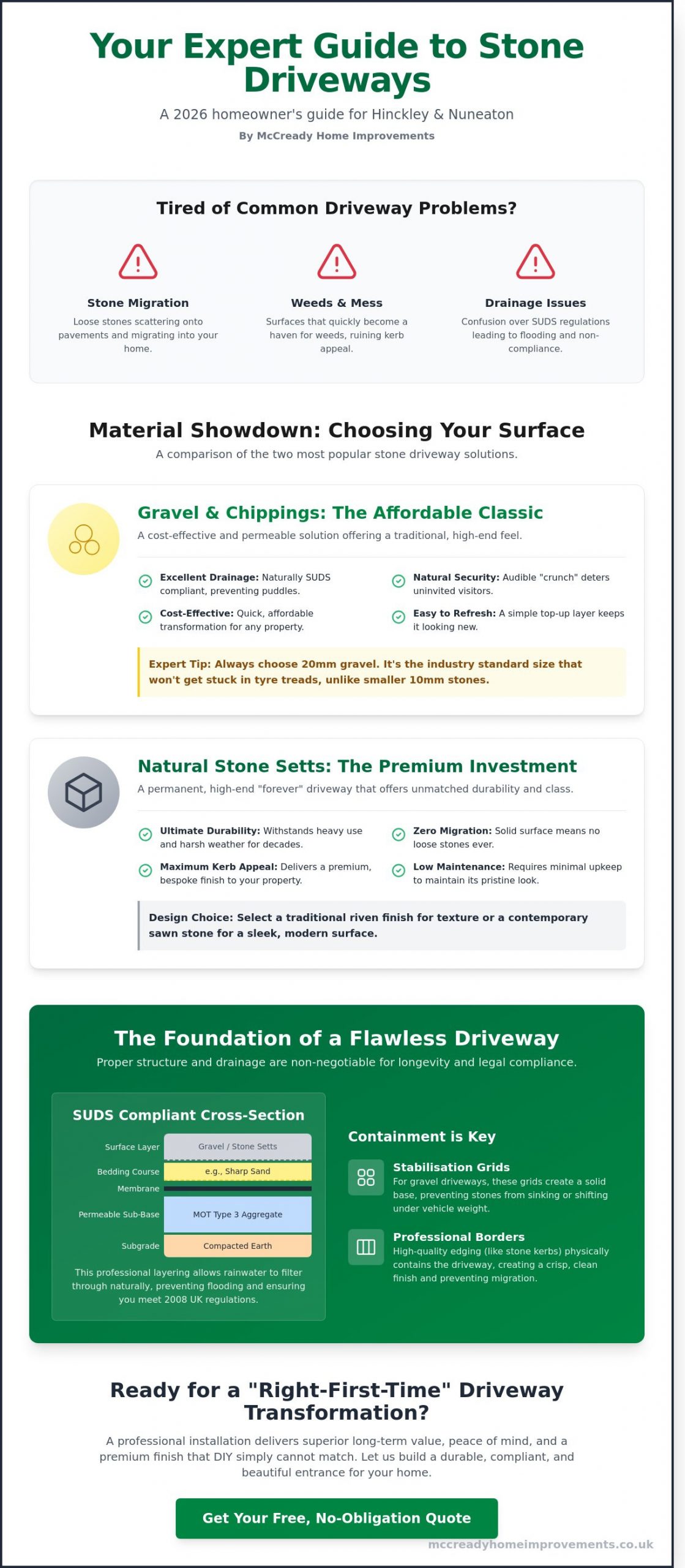
Structural Integrity and Drainage Requirements (SUDS)
A common misconception suggests that stone driveways are simply a layer of loose rock tipped onto the ground. This myth ignores the vital engineering required for a long-lasting finish. At McCready Home Improvements, we view the surface stone as only 10% of the project. The real work happens underground. Since 2008, UK homeowners must comply with Sustainable Urban Drainage Systems (SUDS) to mitigate flood risks. Following the UK government’s SUDS standards ensures that rainwater stays on your property rather than flooding the public highway. Our team manages this process meticulously, so you don’t have to worry about legal compliance or water damage.
Managing Surface Water in the Midlands
In Nuneaton and across the Midlands, our heavy clay soil creates unique drainage hurdles. Clay holds water like a bowl, which can cause inferior driveways to “float” or turn into a bog. We solve this by using heavy-duty geo-textile membranes. These fabrics act as a filter, keeping the sub-base and the decorative stone separate while letting water pass through freely. Because our professional installations meet SUDS requirements for any area over 5 square metres, they are classified as permitted development. This status removes the requirement for formal planning permission, which often costs homeowners £258 in local authority fees and significant time in administrative delays.
The Importance of a Solid Sub-Base
A driveway’s lifespan depends entirely on its foundation. We excavate to a specific depth to accommodate a substantial sub-base of 150mm of MOT Type 1 or Type 3 crushed aggregate. Type 3 is particularly effective for stone driveways because it contains fewer “fines,” allowing even better drainage through the structure. We don’t just spread the stone; we compact it in layers using industrial-grade vibrating machinery. This rigorous process eliminates air pockets that cause sinking or rutting under the weight of a 2-tonne family car. DIY projects usually fail here because domestic equipment cannot achieve the 95% compaction rate required for a professional-grade finish. We take pride in these invisible details because they provide the peace of mind you deserve.
By prioritising this unseen engineering, we ensure your driveway remains a stable, beautiful asset to your home. Our meticulous approach to sub-grade preparation distinguishes a McCready installation from a temporary fix, providing a durable surface that handles the British weather with ease. If your existing surface is already showing signs of stress, our guide to driveway repair in Hinckley and Nuneaton can help you identify whether a targeted fix or a full reinstallation is the right course of action.
Designing Your Stone Driveway: Borders, Grids, and Finishes
A bespoke transformation turns a simple parking area into a standout feature of your property. For modern stone driveways, we focus on structural integrity and visual contrast. One of the most effective ways to ensure longevity is by using a cellular stabilisation system. These high-density polyethylene (HDPE) grids sit beneath the surface, locking the aggregate into place. This prevents the common issue of gravel migration, where stones end up in the street or clumped in corners. Industry data suggests that using stabilisation grids can reduce surface maintenance by up to 60% over a five-year period. It creates a firm, walkable surface that feels as solid as paving but retains the drainage benefits of loose stone.
Using contrasting textures adds immediate kerb appeal. We recommend mixing smooth finishes with more rugged natural stones to define walkways or parking bays. This level of craftsmanship ensures your driveway looks planned and professional. We often use 20mm angular flint or granite because the jagged edges interlock better than rounded pea shingle, providing a more stable base for vehicles. Homeowners who want to extend this seamless, permeable aesthetic beyond the driveway and into their garden may also want to explore our resin bound patio guide for Hinckley and Nuneaton, which covers how a complementary surface can eliminate standing water on heavy clay soil.
Choosing the Right Borders and Kerbs
A solid border is the secret to a tidy driveway. Without a firm edge, stones inevitably spill onto your lawn or the public pavement. Many homeowners opt for a tarmac driveway with border style, using the dark, clean lines of tarmac or charcoal setts to frame the lighter stone. Concrete pin kerbs offer a minimalist look, while tumbled setts provide a more traditional, rustic feel. These borders act as a structural “picture frame” that keeps the aggregate contained and prevents the edges from fraying over time.
Enhancing the Perimeter
The transformation doesn’t stop at the ground level. Installing new fencing and gates completes the aesthetic overhaul and adds a layer of security to your home. We advise choosing stone colours that complement your existing brickwork. For example, warm buff-coloured stones pair beautifully with red Victorian bricks, while silver-grey granites suit modern builds. Adding low-voltage LED lighting along the perimeter highlights the texture of stone driveways at night, creating a welcoming atmosphere and improving safety during the winter months.
Ready to start your project? Contact McCready Home Improvements today for a professional consultation and quote.
Professional Installation vs. DIY: Achieving a Premium Finish
Deciding between a DIY approach and professional installation is a pivotal moment in your home improvement journey. While the idea of a weekend project is tempting, high-quality stone driveways require technical precision that goes beyond basic manual labor. McCready Home Improvements brings a systematic, professional process to every site, ensuring the result is both beautiful and structurally sound.
Our team follows a proven sequence to guarantee longevity:
- Full site excavation to a depth that ensures structural integrity.
- Installation of a commercial-grade weed membrane.
- Layering of a compacted MOT Type 1 sub-base for maximum stability.
- Precision edging to keep your gravel contained and tidy.
- Application of high-quality decorative stone to your chosen depth.
The cost of hiring experts is often a primary concern for homeowners. It’s helpful to view this as a long-term saving. A poorly laid DIY driveway often fails within the first two years, leading to sinking, puddling, or total weed takeover. Repairing these issues frequently costs significantly more than the original professional quote because it requires the removal of the failed materials. For a clear breakdown of what to look for before problems escalate, our 2026 driveway repair checklist for Hinckley and Nuneaton homeowners outlines the key warning signs that indicate when professional intervention is needed. We focus on getting it right the first time, providing a durable surface that stands up to heavy vehicle use and British weather.
Why Expert Sub-Grade Preparation is Essential
We take our environmental responsibilities seriously too. All waste materials are disposed of in strict accordance with local UK environmental regulations. Using McCready means you’re choosing a safe pair of hands. We manage the logistics, the heavy lifting, and the technical details so you don’t have to worry about a thing.
Transforming Your Property with McCready
We’re a local, family-run business with deep community roots, and we take immense pride in every transformation we complete. Our commitment to superior craftsmanship is visible in driveways across Hinckley and Nuneaton. We treat your home with the same respect we’d show our own, ensuring a clean site and a seamless finish that enhances your property’s value.
Stop the endless scrolling and start the transformation today. We’re ready to help you move from the planning phase to a stunning reality. Contact us for a free, no-obligation estimate on your new stone driveway and join the many local homeowners who trust McCready Home Improvements for quality they can rely on.
Transform Your Property With a Professional Finish
Choosing the right materials for your home in Hinckley or Nuneaton is about more than just aesthetics; it’s a long-term investment in your property’s value. We’ve explored how selecting high-quality setts or durable gravel redefines your kerb appeal while ensuring your project meets the 2026 SUDS requirements for 100% permeable drainage. A professional installation avoids the common 30% failure rate seen in DIY projects caused by improper sub-base preparation. Our expert local team focuses on these structural details to deliver results that last for decades.
McCready Home Improvements provides the craftsmanship and local knowledge needed to navigate these technical standards. We’re specialists in SUDS-compliant drainage and bespoke designs tailored to your specific requirements. Whether you’re interested in premium stone driveways or a clean, modern finish, we handle every stage from the initial groundworks to the final stone placement. You’ll gain peace of mind knowing your project is managed by a dedicated local partner. As part of a complete home improvement plan, it’s also worth reviewing our essential checklist for roof repairs in Leicester to ensure the rest of your property is protected from water ingress before investing in your new driveway. If you’re considering a more extensive overhaul of your home’s exterior, our guide to new roof installations in Hinckley and Nuneaton covers everything you need to know about protecting your property from the top down.
Get your free, no-obligation stone driveway estimate today
Your dream home improvement project is within reach, and we’re ready to help you create an entrance you’ll be proud of for years to come.
Frequently Asked Questions
Do I need planning permission for a stone driveway in Hinckley?
You won’t usually need planning permission for a stone driveway in Hinckley if the surface is permeable. Hinckley and Bosworth Borough Council regulations follow the 2008 SuDS requirements, stating that any new driveway over 5 square metres must allow water to drain through. If you choose a non-permeable option without a proper soakaway, you’ll need to apply for full planning permission. We ensure every installation meets these legal standards to keep your project stress-free.
What is the best type of stone to prevent weeds from growing?
Choosing 20mm angular gravel is the best way to prevent weeds from taking root in your stone driveways. This specific size and shape lock together tightly, making it difficult for wind-blown seeds to reach the soil. We always install a heavy-duty 100gsm geotextile membrane beneath the stone to block growth from the ground up. This combination provides a durable finish that stays clear of unwanted vegetation for much longer than rounded shingle.
How much does a stone driveway cost compared to tarmac?
A stone driveway typically costs between 30% and 50% less than a tarmac installation. According to 2024 industry price benchmarks from Checkatrade, gravel remains one of the most cost-effective surfacing options available in the UK market. While tarmac requires heavy machinery and hot-laid materials, stone driveways offer a more straightforward installation process. This makes them an ideal choice for homeowners looking for a high-quality transformation that fits a realistic budget.
Can I install a stone driveway over my existing concrete drive?
You can install gravel over existing concrete, but it requires careful preparation to ensure a professional finish. We first check the concrete for structural cracks and install a sturdy timber or brick edging to contain the loose stones. Because concrete is non-porous, we must create adequate drainage points or use a specific stabilization system to prevent water pooling. This method saves on excavation costs while providing a fresh, bespoke look for your property.
How do I stop gravel from moving and ending up on the road?
Installing a cellular grid system is the most effective way to stop gravel from migrating onto the public footpath or road. These recycled plastic grids lock the stones in place, creating a stable surface that’s easy to walk or drive on. We recommend using 14mm to 20mm angular chippings rather than rounded pea shingle. Angular stones interlock naturally, which reduces movement by up to 80% compared to smooth, round alternatives.
Is a stone driveway suitable for heavy vehicles like vans or SUVs?
Stone driveways are perfectly suitable for heavy vehicles like SUVs or transit vans when built on a solid foundation. We install a 150mm thick sub-base of compacted MOT Type 1 stone to provide the necessary structural integrity for your home. This professional approach prevents sinking and rutting under the weight of a 3.5-tonne vehicle. It ensures your driveway remains level and functional, regardless of the size of the vehicle you park on it.
How often does a stone driveway need maintenance?
Your stone driveway requires minimal maintenance, usually involving a quick rake every 3 to 4 months. This redistribution keeps the surface level and prevents tracks from forming in high-traffic areas. You should plan for a small top-up of fresh stone every 3 to 5 years to maintain the aesthetic depth and colour. This simple routine protects your investment and ensures the entrance to your home always looks its best with very little effort.
What is the best way to clean natural stone setts?
The best way to clean natural stone setts is with a pH-neutral stone cleaner and a stiff natural bristle brush. You’ll want to avoid using harsh acidic chemicals, as these can permanently damage the surface of stones like sandstone or limestone. A low-pressure wash every 12 months removes organic growth and dirt without dislodging the jointing material. This meticulous care preserves the craftsmanship of your paving and keeps the natural colours vibrant for decades. If you notice damp patches appearing on interior walls or ceilings following heavy rain, it may be worth consulting our guide to roof repairs in Leicester to rule out any water ingress from above before it becomes a costly structural problem. For homeowners who suspect the issue may require more than repairs, our comprehensive guide to new roof installations in Hinckley and Nuneaton can help you understand when a full replacement is the most cost-effective long-term solution. Homeowners planning a full exterior upgrade can also browse our complete range of landscaping services in Hinckley, covering driveways, paths, and patios to help you achieve a cohesive, high-end finish across your entire property.
