
What if your home’s entrance could achieve a premium aesthetic for roughly 40% less than the price of a standard block paving installation? Achieving a high-end look shouldn’t mean sacrificing longevity or dealing with the constant headache of stone migration onto the public roads of Hinckley and Nuneaton. A professionally installed stone drive offers a bespoke, permeable solution that balances immediate kerb appeal with long-term structural integrity.
You’ve likely seen drives that suffer from deep ruts and unsightly weed growth within just 12 months of completion. It’s frustrating to invest in your property only to watch the finish degrade because of poor sub-base preparation. We understand that peace of mind comes from knowing your driveway can handle daily traffic without sinking. This expert guide provides the technical blueprint to create a durable, high-impact surface tailored for Midlands homeowners. We’ll explore everything from professional drainage requirements to the specific craftsmanship needed to ensure your stones stay put for years to come.
Key Takeaways
- Understand why a multi-layered permeable surface is the perfect functional and aesthetic match for Hinckley’s traditional architecture.
- Avoid common pitfalls by choosing the correct aggregate size to prevent stones from becoming lodged in tyre treads.
- Learn why 80% of a quality stone drive is hidden beneath the surface and how to achieve the correct excavation depth for maximum durability.
- Establish a simple seasonal maintenance routine to keep your driveway weed-free and looking professional for years to come.
- Discover the peace of mind that comes from working with a local specialist who understands the specific terrain of Nuneaton and Hinckley.
What is a Stone Drive and Why is it Ideal for Hinckley Homes?
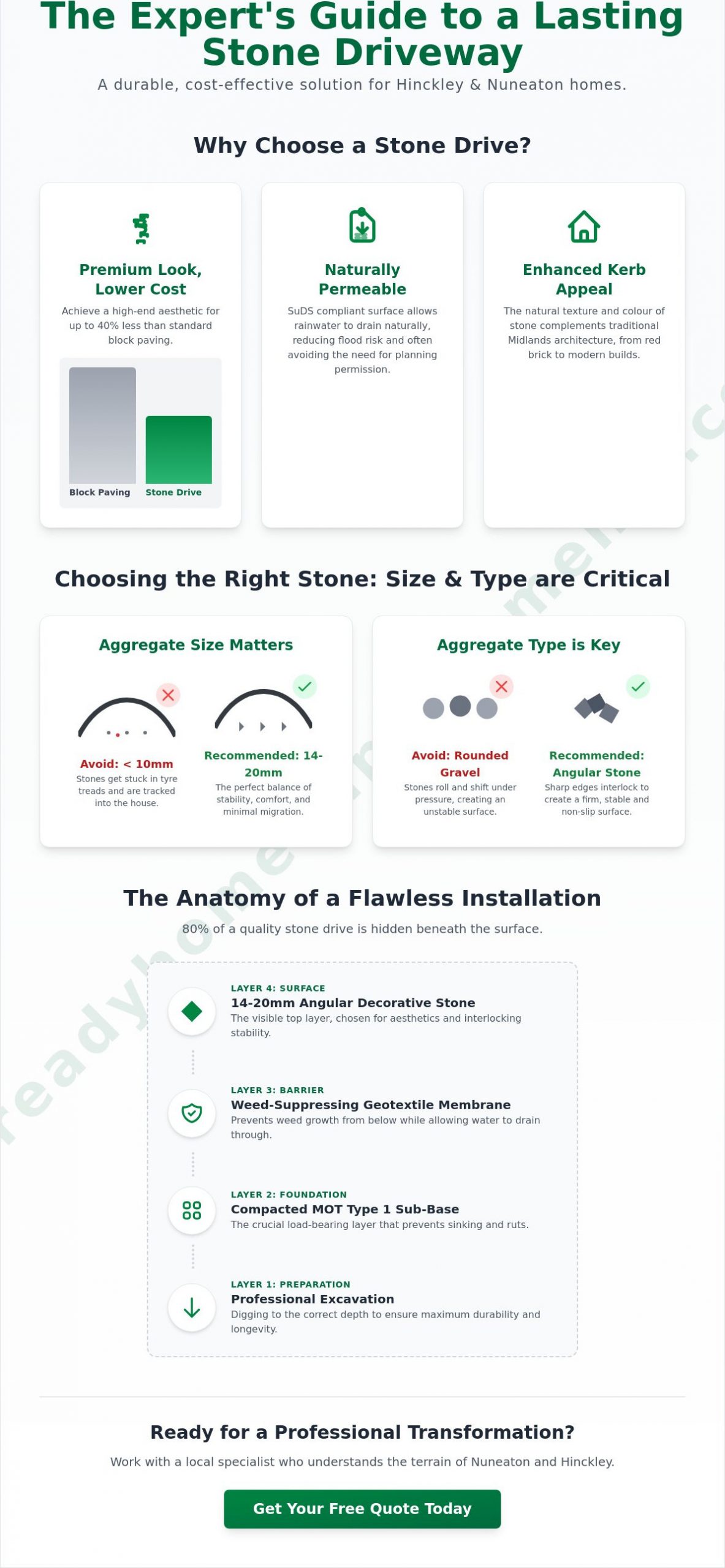
A professional stone drive is far more than a simple layer of loose rocks scattered over a path. It is a precision-engineered, multi-layered surfacing solution that uses specific decorative aggregates to create a durable and attractive entrance to your home. When we design these systems for clients in Hinckley and Nuneaton, we focus on a build process that involves a compacted sub-base, a weed-suppressing geotextile membrane, and a final layer of high-quality stone. This approach ensures the surface remains stable under the weight of modern vehicles while maintaining its visual appeal. To understand the foundational principles of these surfaces, it helps to look at the history and construction of a stone drive and how these materials have evolved for residential use.
The aesthetic appeal of natural stone is particularly suited to the traditional Midlands architecture found across Leicestershire. Whether your home features the classic red brickwork common in Nuneaton or the more contemporary builds in Hinckley, a stone surface adds a texture and warmth that manufactured materials often lack. It is also an incredibly cost-effective choice. On average, a well-installed stone surface can be 30% to 50% more affordable than block paving or resin-bound systems. This allows homeowners to achieve a premium look without the high price tag of individual pavers. Beyond the cost, the primary benefit is permeability. A stone surface allows water to pass through naturally, which is a critical factor in local flood prevention and modern property maintenance.
The Benefits of Permeable Surfaces (SuDS)
In Nuneaton and the surrounding areas, local authorities encourage the use of Sustainable Drainage Systems (SuDS). Installing a stone drive typically means you don’t require planning permission, as the surface is naturally permeable. Unlike solid concrete, loose stone allows rainwater to soak directly into the ground. This reduces the pressure on our local Leicestershire drainage networks during heavy downpours. It also benefits the local ecosystem by maintaining natural groundwater levels, preventing the “urban heat island” effect often caused by large expanses of tarmac.
Stone vs. Gravel: Understanding the Terminology
Homeowners often use the terms stone and gravel interchangeably, but the difference is vital for driveway stability. Rounded pea shingle or river gravel tends to shift and “roll” under car tyres, making it difficult to walk or drive on. We recommend angular crushed stone for every project. Angular aggregate consists of crushed rock with sharp, irregular edges that interlock under pressure to provide a rigid, non-slip surface. This interlocking action ensures the stones stay in place, reducing the need for constant raking and maintenance while providing a much firmer footing for your vehicles.
Selecting the Right Aggregates: Stone Sizes and Styles
Choosing the right aggregate is the most critical decision in your project. A professional stone drive isn’t a one-size-fits-all solution; it’s a bespoke design choice that reflects your home’s character and your personal style. We recommend selecting stones between 14mm and 20mm in diameter. This specific size range provides the best balance of stability and comfort underfoot. It allows the stones to lock together effectively while still feeling smooth when walked upon.
Stones smaller than 10mm often cause migration issues. These tiny pebbles easily get lodged in tyre treads and end up scattered across your pavement or, worse, inside your hallway. Larger stones stay in place and offer superior drainage. When you learn How to Install a Durable Stone Driveway, you’ll see that the depth and size of the aggregate layer determine the longevity of the finish. In local areas like Hinckley and Nuneaton, we carefully match the stone to the existing architecture. Red-brick Victorian terraces in Nuneaton benefit from warmer tones, while the newer, light-stone builds in Hinckley often suit a brighter, cleaner palette. This attention to detail ensures your stone drive remains functional and beautiful for years.
Popular Stone Types for UK Driveways
- Golden Gravel: This is a staple for Nuneaton cottage-style homes. Its warm, multi-coloured hues mask dirt well and complement traditional red-brick facades perfectly.
- Cotswold Buff: These cream-coloured stones provide a high-end, bright finish. They work exceptionally well for modern Hinckley properties where a clean, contemporary look is required.
- Granite and Basalt: For high-traffic areas, these dark, angular stones are the best choice. They are exceptionally durable and won’t crush or turn to dust under the weight of heavy SUVs.
Calculating How Much Stone You Need
You don’t want to run short halfway through the installation. Use this simple formula to get your order right: multiply the total area in square metres by the depth, which is usually 0.05 metres (50mm). For a 40m2 driveway, you would need 2 cubic metres of stone. We always advise ordering 10% extra to account for settling and future top-ups. This ensures you have a consistent batch of stone for any minor maintenance later.
For more detailed advice on materials and professional layouts, read our Stone Driveways in Hinckley & Nuneaton: The 2026 Homeowner’s Guide for expert design help. If you’re ready to start your transformation, contact McCready Home Improvements for a professional consultation.
How to Install a Durable Stone Driveway: A Step-by-Step Guide
A beautiful stone drive is only as good as the ground it sits on. At McCready Home Improvements, we know that 80% of a driveway’s quality remains hidden beneath the surface. If the foundation is weak, the finish will fail within months regardless of how expensive the gravel looks. We follow a rigorous construction process to ensure every project in Hinckley and Nuneaton stands the test of time and heavy vehicle use.
Step 1-3: Preparation and Sub-base
Excavation is the first critical task. We remove topsoil down to a solid sub-grade layer, typically reaching a total depth of 200mm to 250mm for Midlands properties. This depth provides the necessary volume for a heavy-duty foundation that won’t shift. Once the area is clear, we install a high-quality geotextile membrane. This layer is non-negotiable for a professional stone drive because it prevents the sub-base from mixing with the soil and stops aggressive weeds from surfacing.
The sub-base consists of MOT Type 1 crushed aggregate, which is the industry standard for load-bearing surfaces. We spread and vibrate this material using a heavy-duty compactor in 75mm layers. This incremental approach ensures the aggregate interlocks perfectly, creating a rock-solid platform that prevents future ruts or sinking under the weight of your car.
Step 4-6: Edging and Surface Layer
Before the final stone goes down, we install kerbs or setts. These edges are essential to keep the stone contained and provide a tidy, professional border that defines the transformation. We bed these edges in concrete to ensure they don’t move over time. This structural frame is what gives the driveway its crisp, bespoke look.
We then spread the decorative stone to a uniform 50mm depth. Achieving this specific thickness is vital for usability. We follow a strict rule to never over-fill a stone drive. If the layer is too deep, tyres will spin and walking becomes difficult; if it’s too thin, the sub-base will show through. A precise 50mm layer offers the perfect balance of coverage and stability, delivering a seamless finish that provides peace of mind for years to come.
- Excavation depth: 200mm to 250mm for maximum stability.
- Compaction: MOT Type 1 laid in 75mm increments.
- Surface depth: Exactly 50mm for optimal traction and aesthetics.
Managing Maintenance: Keeping Your Stone Drive Pristine
Many homeowners choose a stone drive because they believe it requires zero effort once the last pebble is laid. This is a common misconception. While it’s one of the most durable and cost-effective options for Hinckley properties, it requires consistent, light upkeep to prevent it from looking neglected. A well-maintained surface lasts decades, but ignoring it for just one season can lead to structural headaches that are far more expensive to fix than simple routine care.
Maintaining your investment involves a simple seasonal rhythm. You should aim to rake the surface once a month to redistribute stones that have shifted under tyre pressure. In the Midlands, the damp climate means you’ll need to be proactive. Every 48 months, expect to add a fresh “top-dress” layer of aggregate. This compensates for the 5 to 10 percent of stone that naturally crushes or settles into the sub-base over time, ensuring the drive doesn’t look “thin” or sparse.
Weed Control and Cleaning
Weeds don’t usually grow from beneath a professional installation if the membrane is intact; they sprout from wind-blown seeds landing in the stone dust. Use eco-friendly, acetic acid-based weed killers which are safer for local Leicestershire wildlife. For debris, use a leaf blower or a stiff garden brush rather than a vacuum, as vacuums can disturb the smaller binding stones. Spot-treatment involves applying targeted herbicide only to emerging weeds rather than blanket-spraying the entire surface, preserving the surrounding ecosystem and stone integrity.
Repairing Ruts and Potholes
If you notice deep depressions that don’t disappear after raking, your sub-base might have failed. This often happens if the original excavation didn’t account for heavy SUVs or poor soil drainage. For minor surface movement, use the rake and fill technique: move excess stone from the edges back into the tyre tracks and compact it firmly with a hand tamper. For more significant structural issues, consult our Driveway Repair in Hinckley & Nuneaton: The 2026 Homeowner’s Checklist to see if you need a professional intervention.
The long-term cost of ownership is where a stone drive truly shines compared to other materials. While block paving or resin might require professional steam cleaning or resealing every 24 months, stone only requires your time and a small budget for occasional top-ups. It’s a practical choice for those who value both aesthetics and financial sense over a 15-year period.
Professional Transformation: Why McCready Home Improvements is the Local Choice
Choosing the right contractor for your stone drive project determines whether your investment lasts for two years or twenty. McCready Home Improvements acts as a safe pair of hands for homeowners across the Midlands. We bring over 15 years of hands-on experience to every site, ensuring that the structural integrity of your driveway matches its visual appeal. Our team lives and works in the Hinckley and Nuneaton area, which gives us a distinct advantage in understanding the local terrain. We know how the region’s clay-heavy soil reacts to heavy rainfall, and we design our drainage solutions to prevent the sinking or shifting that often plagues DIY attempts.
Our service doesn’t stop at the edge of the gravel. We provide a comprehensive approach to property maintenance that considers your entire frontage. This includes the professional installation of fencing and gates to secure your new stone drive and create a cohesive aesthetic. By managing every element of the transformation, we eliminate the stress of coordinating multiple tradespeople. You get a single point of contact and a consistent standard of craftsmanship from the first shovel in the ground to the final decorative flourish.
Bespoke Designs for Midlands Homes
Every property in Hinckley has a unique character, and your driveway should reflect that. We specialize in creating high-contrast finishes that elevate the kerb appeal of traditional and modern homes alike. For instance, we often pair a tarmac driveway with border accents to frame a central stone area, providing a premium look that is both durable and stylish. Our attention to detail extends to the precision of our kerb edging and the implementation of SuDS-compliant drainage systems. We take immense pride in our work, treating every Hinckley property as if it were our own home, which has resulted in a 98% customer satisfaction rate across our recent local projects.
Get Your Free Stone Drive Estimate
We believe that professional advice should be accessible. That’s why we offer a free, no-obligation site visit to discuss your vision and assess your property’s specific requirements. During this visit, we provide transparent guidance on materials, timelines, and costs, ensuring you have all the information needed to make an informed decision. There’s no pressure and no hidden fees; just honest, expert advice from a local team that values long-term community relationships over quick sales. You can trust our team to deliver a result that enhances your home’s value and functionality for years to come.
Ready to upgrade your property’s exterior? Transform your home today with a bespoke stone drive and experience the peace of mind that comes with hiring local experts.
Transform Your Property with a Professional Finish
A high-quality stone drive is more than just a practical parking solution; it’s a significant investment in your home’s kerb appeal and functionality. Success depends on selecting the right aggregate sizes for stability and ensuring the ground preparation is handled with professional precision. By following the maintenance steps we’ve outlined, you’ll ensure your new surface remains pristine and weed-free for years to come.
McCready Home Improvements brings over 30 years of trade experience to homeowners across Hinckley and Nuneaton. We specialise in bespoke designs that match the unique character of your property, and every installation comes with a full ground-prep guarantee. You’ll benefit from a “safe pair of hands” approach where we treat your project with the same respect we’d show our own homes. We focus on durable results and seamless craftsmanship that truly transforms your outdoor space.
Take the first step toward a more reliable, attractive entrance. Get your free, no-obligation stone drive estimate from McCready Home Improvements. We look forward to helping you create a driveway you can be proud of.
Frequently Asked Questions
Is a stone drive cheaper than a tarmac driveway?
A stone drive is generally more affordable than tarmac, typically costing between £40 and £70 per square metre. In contrast, tarmac installations often range from £60 to £100 per square metre due to the heavy machinery and heat-treatment required. We focus on delivering a high-quality finish that provides excellent value for your investment while maintaining a premium look for your property.
Do I need planning permission for a stone driveway in Nuneaton?
You don’t usually need planning permission for a stone surface because it’s naturally permeable. Under the 2008 General Permitted Development Order, Nuneaton homeowners can install porous driveways without a permit as they allow water to drain away naturally. If your project covers more than 5 square metres and uses non-porous materials, you’d need to seek council approval. We ensure every design meets local drainage standards to give you total peace of mind.
How do I stop stones from my drive ending up on the road?
Installing a professional border or a rumble strip at the entrance effectively contains the material. We use block paving or timber edging to create a 50mm lip that keeps the stone drive contained within your property boundaries. Choosing angular stones rather than rounded pebbles also helps. These angular pieces lock together under the weight of your car, which reduces the chance of them migrating onto the public highway.
Can I lay a stone drive directly onto soil or old concrete?
We don’t recommend laying stone directly onto soil because it leads to sinking and weed growth within 6 months. A professional installation requires a 100mm to 150mm sub-base of crushed MOT Type 1 stone to provide structural integrity. While you can lay stone over old concrete, you must drill drainage holes every 300mm to prevent standing water. Our team handles this preparation to ensure a durable and seamless result.
How deep should the stone layer be on a driveway?
The surface layer of a stone drive should be exactly 40mm to 50mm deep. If you lay it deeper than 50mm, your car tyres will sink and struggle for traction. If it’s shallower than 40mm, the sub-base will start to show through the surface. We measure this precisely during the transformation of your driveway to ensure a functional finish that lasts for years without needing constant adjustment.
What is the best type of stone for a driveway with heavy cars?
Angular 20mm granite or basalt chips are the most durable choice for heavy vehicles like SUVs or vans. These hard-wearing stones don’t crush into dust over time, unlike softer limestone alternatives. We recommend the 20mm size because it’s too large to get stuck in tyre treads but small enough to provide a comfortable walking surface. Our bespoke approach helps you choose a material that balances aesthetic excellence with long-term reliability.
How often do I need to top up the gravel on my stone drive?
You should expect to top up your driveway every 3 to 5 years to maintain its professional appearance. Natural settlement and displacement mean a small amount of fresh stone helps refresh the aesthetic and fill any low spots. Buying a bulk bag of the original stone during the initial installation ensures a perfect colour match. This simple maintenance task keeps your home’s entrance looking as good as the day we finished it.
Will a stone drive increase my Hinckley home’s value?
A well-designed driveway can increase a property’s value by up to 10% according to real estate industry estimates. In Hinckley, curb appeal is a significant factor for buyers who want a home that looks cared for from the first glance. Our bespoke craftsmanship ensures your new entrance provides a high-quality first impression. This transformation acts as a tangible asset that can help your property stand out in the local market.
