
That growing dip in your driveway isn’t just an eyesore; it’s a structural warning sign that your sub-base is failing under the weight of modern SUVs and the unpredictable Midlands weather. When you look to fix sunken block paving Hinckley homeowners often wonder if they can simply lift and relay a few blocks or if a more significant structural problem is lurking beneath the surface. Most of the time, the issue isn’t the blocks themselves but a foundation that wasn’t built to handle today’s drainage requirements or the pressure of daily use.
We understand how frustrating it is to see unsightly puddles forming after a heavy rain or weeds aggressively claiming the gaps where your paving has shifted. You want a driveway that reflects the care you put into your home, not one that feels like a trip hazard. This 2026 restoration guide reveals the professional secrets to identifying why your driveway is sinking and how to repair it for a lasting, level finish. We will walk you through the essential steps of sub-base reinforcement, explain how to meet current drainage regulations, and provide the knowledge you need to stop the sinking from returning once and for all.
Key Takeaways
- Identify how Midlands Clay and local weather patterns contribute to driveway subsidence, turning small dips into major structural issues.
- Differentiate between surface-level sand issues and sub-base failures to ensure your restoration efforts target the correct layer of your driveway.
- Master the professional technique to fix sunken block paving Hinckley homeowners can rely on for a perfectly level and durable finish.
- Evaluate the cost-effectiveness of localised repairs versus full driveway renovations based on the percentage of blocks affected.
- Gain insight into why structural integrity and proper drainage are the only ways to prevent unsightly puddles and shifting blocks from returning.
Why Block Paving Sinks: The Hinckley Homeowner’s Guide
Block paving subsidence is a structural failure that goes far beyond a simple aesthetic annoyance. It signals that the ground beneath your driveway has shifted or washed away, leaving the surface blocks unsupported. When homeowners look to fix sunken block paving Hinckley experts often find that the initial installation didn’t account for the unique local conditions. A small dip might seem harmless, but it acts as a funnel for rainwater. This water penetrates the sub-base, washing away the bedding sand and weakening the MOT Type 1 foundation until the entire area collapses.
The 2026 weather season in Leicestershire has been particularly harsh on driveways. We’ve seen a pattern of intense, localized downpours that saturate the ground, followed by periods of high heat. This cycle is devastating for older installations. It accelerates sub-base erosion and highlights any flaws in the original drainage plan. Understanding what causes the ground to sink is vital for any homeowner who wants to protect their property’s value and safety. Ignoring these early signs is a gamble that usually ends in an expensive total replacement rather than a targeted repair.
Identifying the Early Warning Signs
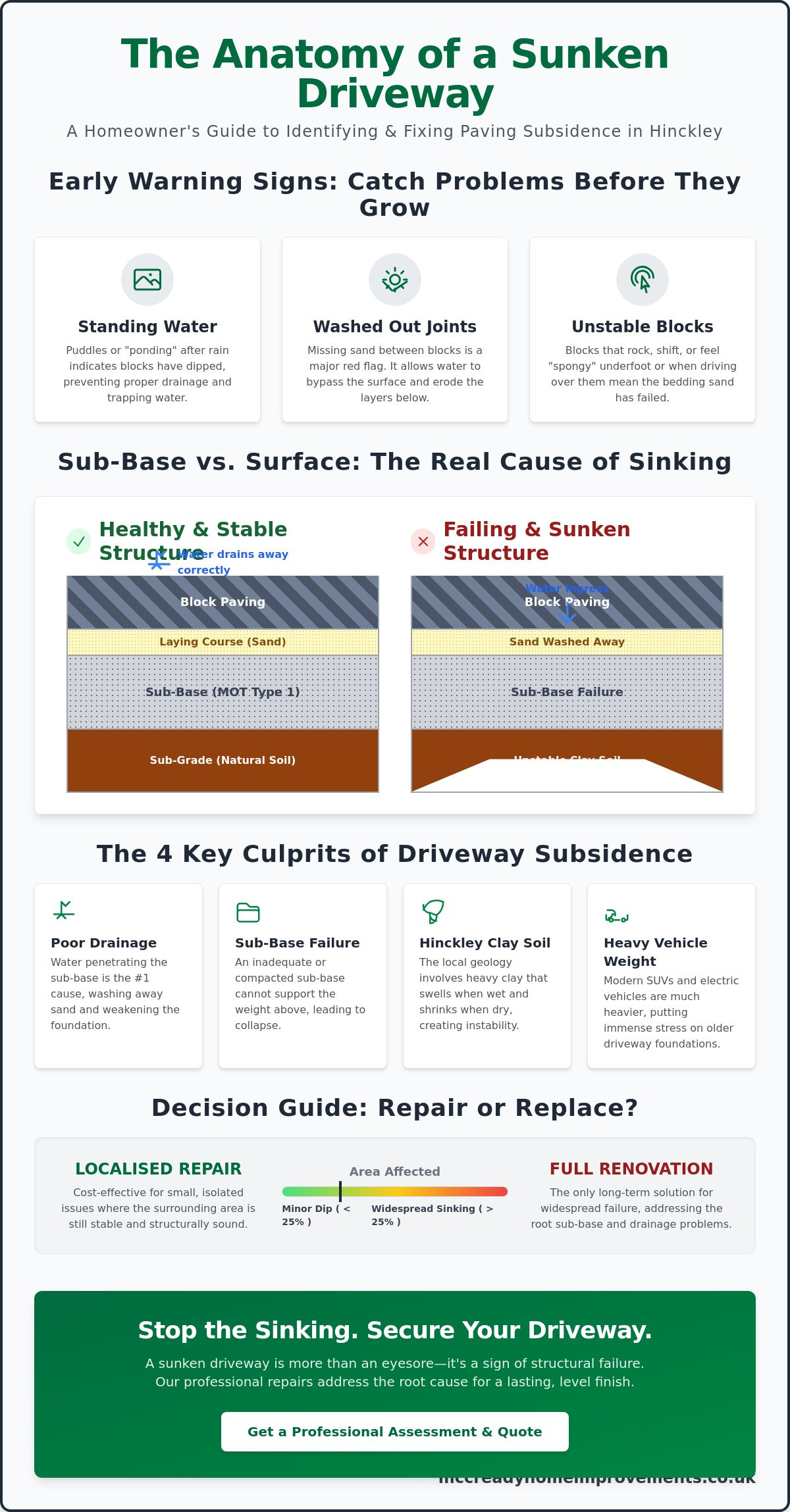
Catching a problem early saves time and money. You don’t need to wait for a massive hole to appear to know something is wrong. Look for these specific indicators after a typical Midlands rainstorm:
- Standing water: If “ponding” occurs in specific spots, your blocks have already begun to dip, preventing water from reaching the drainage channels.
- Washed out joints: If you notice the kiln-dried sand is missing from the gaps, water is likely bypassing the blocks and eroding the layers below.
- Movement under load: Blocks that “rock” or shift when you drive your car over them are a clear sign that the laying course has turned to sludge or shifted.
Local Geology: The Hinckley Factor
The soil in Hinckley and the surrounding Leicestershire area is predominantly heavy clay. This material is notoriously unstable. It swells when wet. It cracks when dry. This constant movement creates a “pumping” action beneath your driveway. To properly fix sunken block paving Hinckley residents must address these underlying soil issues rather than just adding a fresh layer of sand. Many older estates in the area were built with drainage systems that simply cannot handle the volume of water we see today.
There’s also the “SUV factor” to consider. Modern family vehicles are significantly heavier than those used twenty years ago. Foundations that were perfectly adequate in 2004 are now failing under the weight of two-tonne electric vehicles and large 4x4s. Professional restoration in 2026 requires a deeper understanding of these localized pressures to ensure your driveway remains level for the next two decades.
The Anatomy of a Sunken Driveway: Sub-base vs. Surface
To understand why your driveway is failing, you have to look beneath the surface. A block paving installation is a multi-layered system, much like the foundations of your home. At the very bottom is the sub-grade (the natural soil), followed by the sub-base (usually MOT Type 1 crushed stone), then the laying course of grit sand, and finally the blocks. While many homeowners blame the sand layer when they need to fix sunken block paving Hinckley specialists know that the sand is rarely the culprit. It’s merely the messenger showing that the foundation below has shifted.
When water penetrates the gaps between blocks, it creates the “pumping effect.” As a heavy vehicle passes over a saturated area, the pressure forces water and fine sediment out through the joints. This process gradually hollows out the foundation. This is a localized version of the scientific definition of subsidence, where the downward shifting of the ground surface occurs because of underground material movement. If you notice “alligator cracking” in nearby tarmac surfaces, it’s often a sign that the entire sub-grade in your area is struggling with drainage or stability.
Sub-base Erosion and Water Ingress
The integrity of your driveway depends on keeping water out of the sub-base. When jointing sand washes away, it opens the door for saturation. This leads to “soft spots” in the MOT Type 1 layer where the stone loses its interlocking strength. To prevent this, a professional installation requires a precise 5% slope to ensure water flows toward drainage channels rather than sitting on the surface. If your driveway is flat, it’s essentially a ticking time bomb for erosion. Maintaining your block paving driveways with regular sand top-ups can help, but it won’t fix a sub-base that’s already turned to mush.
The Impact of Modern Heavy Vehicle Loads
The driveways built in the 1990s weren’t designed for the world of 2026. A typical family saloon from thirty years ago weighed significantly less than a modern Electric Vehicle (EV), which can weigh over two tonnes due to heavy battery packs. This increased weight places immense stress on older, shallower sub-bases. We often see “point loading” failure, where the blocks sink specifically where the tyres rest every night. This concentrated pressure accelerates the failure of the laying course, turning a minor dip into a deep rut that requires professional intervention. When you fix sunken block paving Hinckley driveways need a foundation that reflects these modern demands.
Repairing vs. Replacing Your Block Paving
Deciding whether to repair or replace is the most critical step in restoring your property’s kerb appeal. If you want to fix sunken block paving Hinckley driveways often require a thorough inspection of the edge restraints first. These kerbs or concrete haunchings act like a frame for a picture; if they have shifted or cracked, the blocks will continue to spread and sink regardless of how much sand you add. You should also evaluate the physical state of the blocks. High-quality concrete pavers are incredibly durable. A professional jet wash and re-sand can often make twenty-year-old blocks look like new, provided they aren’t physically fractured or crumbling.
Cost is always a major factor in this decision. A localized repair is a surgical strike on a specific problem area, whereas a replacement is a complete reset of your driveway’s lifespan. If the sinking is confined to a small patch where a utility company once dug a trench or where a heavy skip sat, a repair is usually the sensible route. However, if you see widespread movement across more than 30% of the surface, you are likely looking at a systemic failure of the original installation. We always look at the structural integrity of the entire area before recommending a course of action.
When a Localised Fix is Enough
If the sinking is limited to a small area, perhaps under two square metres, a repair is often the best choice. This typically happens when the sub-base is still firm but the bedding sand has migrated or washed away through open joints. In these cases, block paved driveways can be partially lifted and restored to their original level without a full overhaul. For those looking for technical details on the DIY process, you can find a step-by-step guide to fixing sunken pavers that outlines the tools and materials required for these smaller interventions. It is a great way to maintain the aesthetic without the cost of a full rebuild.
Structural Failure: When to Consider Replacement
There are times when a patch-up job is just throwing good money after bad. If your driveway shows deep, permanent ruts where your car tyres sit, the sub-base has likely reached its limit. This level of “rutting” suggests the MOT Type 1 layer has been crushed or forced into the sub-grade clay we discussed earlier. When the estimated cost of multiple repairs starts to exceed 50% of the price of a new installation, a full replacement becomes the more economical long-term solution. A new driveway allows you to install modern, permeable membranes and deeper foundations designed for the heavier loads of 2026 vehicles.
Step-by-Step: How to Fix Sunken Block Paving Properly
Repairing a driveway requires more than just aesthetic adjustments. To properly fix sunken block paving Hinckley homeowners must follow a rigorous structural process. The first step is lifting the affected blocks without damaging the surrounding units. We use specialized block extractors or two thin-bladed screwdrivers to gently ease the first block out. Once the initial “key” block is removed, the rest follow easily. Simply pouring more sand into a dip is a classic “cowboy” fix. It ignores the void in the sub-base and ensures the area will sink again within months as the loose sand washes away into the hollows below.
True restoration involves reaching the root cause. This means removing the bedding sand to inspect the MOT Type 1 sub-base for structural integrity. If you’ve noticed persistent dampness, we check for underlying pipe leaks that might be saturating the ground. A lasting repair relies on mechanical compaction. We use a heavy-duty wacker plate to ensure the foundation is rock-solid before any blocks are returned to their positions. This level of care ensures that the repair doesn’t just look good on day one but remains level for years to come.
Excavation and Sub-grade Reinforcement
Once the blocks are out, we dig out any “soft” or contaminated sub-base material. We often find that the local clay has mixed with the stone over time, weakening the structure. To prevent this, we install a high-quality geotextile membrane. This layer keeps the soil and the stone separate while allowing water to drain through. We then add fresh MOT Type 1 in 50mm layers, compacting each one thoroughly. This incremental approach prevents air pockets and creates a stable platform that can withstand the weight of modern electric vehicles. If your driveway needs this level of meticulous care, our team provides professional block paving driveways services that prioritize long-term results over quick fixes.
Re-laying and Finishing for Longevity
The final stages require precision. We screed a fresh bed of sharp sand, ensuring it sits at the perfect level to allow for final compaction. Blending the repair is an art form. We source matching blocks from local Hinckley suppliers to ensure the new units don’t stand out against the weathered originals. This avoids the “patchwork” look that often ruins a property’s kerb appeal. Once the blocks are laid in the correct pattern, we sweep kiln-dried sand into the joints. This specialized sand is essential because it creates the structural interlock that prevents blocks from moving and stops water from entering the sub-base. We then run the wacker plate over the finished surface one final time to lock everything into place.
Why Choose a Local Specialist for Hinckley Repairs
Selecting a contractor to fix sunken block paving Hinckley homeowners can trust involves looking beyond the lowest quote. A local specialist understands the unique challenges of the Leicestershire landscape, particularly the heavy clay soil that defines our region. We’ve spent years observing how Hinckley’s specific ground conditions interact with the changing Midlands weather. This local insight allows us to design repairs that don’t just hide the problem but solve it at a foundational level. National firms often apply a one-size-fits-all approach that fails to account for the localized subsidence patterns we see in estates across the borough.
At McCready Home Improvements, we take immense pride in our reputation as a family-run business. We treat every property with the same meticulous care we would apply to our own residences. Our team prioritizes structural integrity over quick surface fixes, ensuring that every MOT Type 1 sub-base we repair is compacted to 2026 durability standards. We also understand that living in a residential area means site cleanliness is paramount. We manage all waste removal efficiently, leaving your property tidy and your neighbours undisturbed throughout the restoration process. Our commitment is to provide peace of mind through reliable, long-term results.
The McCready Approach to Driveway Longevity
Our methodology focuses on the evolution of your property. We don’t just finish a job and disappear; we empower homeowners to protect their investment. By referencing our driveway repair checklist, you can stay ahead of minor issues before they escalate into structural failures. While we are experts in paving, our comprehensive service extends to associated property needs. We utilize high-quality materials, such as EPDM for flat roofing systems and advanced resin for specific repairs, ensuring every aspect of your home’s exterior meets our high standards of aesthetic excellence and reliability.
Get Your Free No-Obligation Estimate in Hinckley
Restoring your driveway starts with a professional assessment. Our site surveys are designed to identify the root cause of sinking, whether it’s a failed sub-base or poor historical drainage. We provide tailored quotes that offer tiered options, allowing you to choose between a targeted repair or a full replacement based on your specific needs and the condition of your blocks. We believe in honest, direct communication and will never recommend a full renovation if a localized fix is sufficient. Contact our Hinckley team today to schedule your survey and take the first step toward a perfectly level, lasting finish for your home.
Restore Your Property’s Kerb Appeal and Structural Integrity
Your driveway is the first thing people see when they visit your home. It’s more than just a place to park; it’s a vital part of your property’s structural health. We’ve explored how the unique Midlands clay and modern vehicle weights can compromise your foundation over time. You now know that a lasting repair requires addressing the sub-base rather than just the surface blocks. Taking action today prevents minor dips from turning into costly total failures tomorrow.
When you’re ready to fix sunken block paving Hinckley experts from our team are here to help. As local specialists, we understand the specific ground conditions in Leicestershire and provide honest, professional guidance on the best path forward for your project. We offer free no-obligation structural estimates to identify exactly what’s happening beneath your paving. Request your free driveway repair assessment in Hinckley today and let’s restore the level, polished finish your home deserves. You can look forward to a driveway that stays flat and functional for years to come.
Frequently Asked Questions
Why has my block paving driveway started to sink in certain spots?
Sinking occurs because the foundation layers have shifted or eroded over time. In Hinckley, the heavy clay soil naturally expands and contracts with the seasons, which creates movement beneath your driveway. If the sub-base wasn’t deep enough or water has penetrated the joints, the bedding sand washes away and the blocks lose their support. This process is often accelerated by the weight of modern, heavier vehicles.
Can I just put more sand on top of sunken block paving to level it?
Adding sand to the surface is a temporary measure that fails to address the underlying structural problem. While it might look level for a few weeks, the void in the sub-base remains. Without proper excavation and mechanical compaction of the foundation, any new sand will simply migrate into the same hollows. This causes the dip to return quickly, often worse than before.
How much does it typically cost to fix a sunken driveway in Hinckley?
The cost of repair depends on the total area affected and the depth of the structural failure. A simple lift and relay of a small patch is more affordable than a project requiring extensive sub-base reinforcement or drainage upgrades. We provide detailed site surveys to determine whether a targeted repair or a more comprehensive solution is the most cost-effective way to fix sunken block paving Hinckley homeowners are facing.
Is it possible to match the colour of my 10-year-old paving blocks?
We can achieve an excellent colour match by sourcing blocks from local Hinckley suppliers who stock similar ranges. While ten years of weathering changes a block’s appearance, we often use a mix of your existing blocks and new ones to blend the repair area seamlessly. A professional jet wash after the repair also helps unify the overall look, making the restoration almost invisible.
How long does a professional block paving repair take to complete?
Most localized block paving repairs are completed within one to two working days. This timeframe includes lifting the blocks, reinforcing the sub-base, re-laying the units, and finishing with kiln-dried sand. Larger areas or those with complex drainage issues may take longer. We always aim to minimize disruption to your daily routine while ensuring the structural work is handled with meticulous care.
Will my driveway sink again after it has been professionally repaired?
A professionally repaired driveway shouldn’t sink again if the root cause was correctly identified and fixed. By using geotextile membranes to separate the soil from the stone and ensuring mechanical compaction of the sub-base, we create a stable foundation. Correct drainage slopes also prevent water from eroding the layers in the future, ensuring the repair lasts as long as the original installation.
What happens if I leave my sunken block paving without fixing it?
Leaving sunken paving leads to accelerated structural damage and creates potential trip hazards. Water will collect in the dips, further eroding the sub-base and causing the surrounding blocks to collapse. Over time, what could have been a simple patch repair often turns into a full driveway replacement as the damage spreads across the entire surface and affects the kerb appeal of your home.
Does a sunken driveway always mean I need a full replacement?
A sunken driveway doesn’t always require a full replacement. If the damage is localized to a small area, such as under two square metres, a professional repair is often sufficient. We only recommend a full replacement when the sub-base has failed across a significant portion of the driveway or when the cost of multiple repairs makes a new installation a better long-term investment for your property.
