
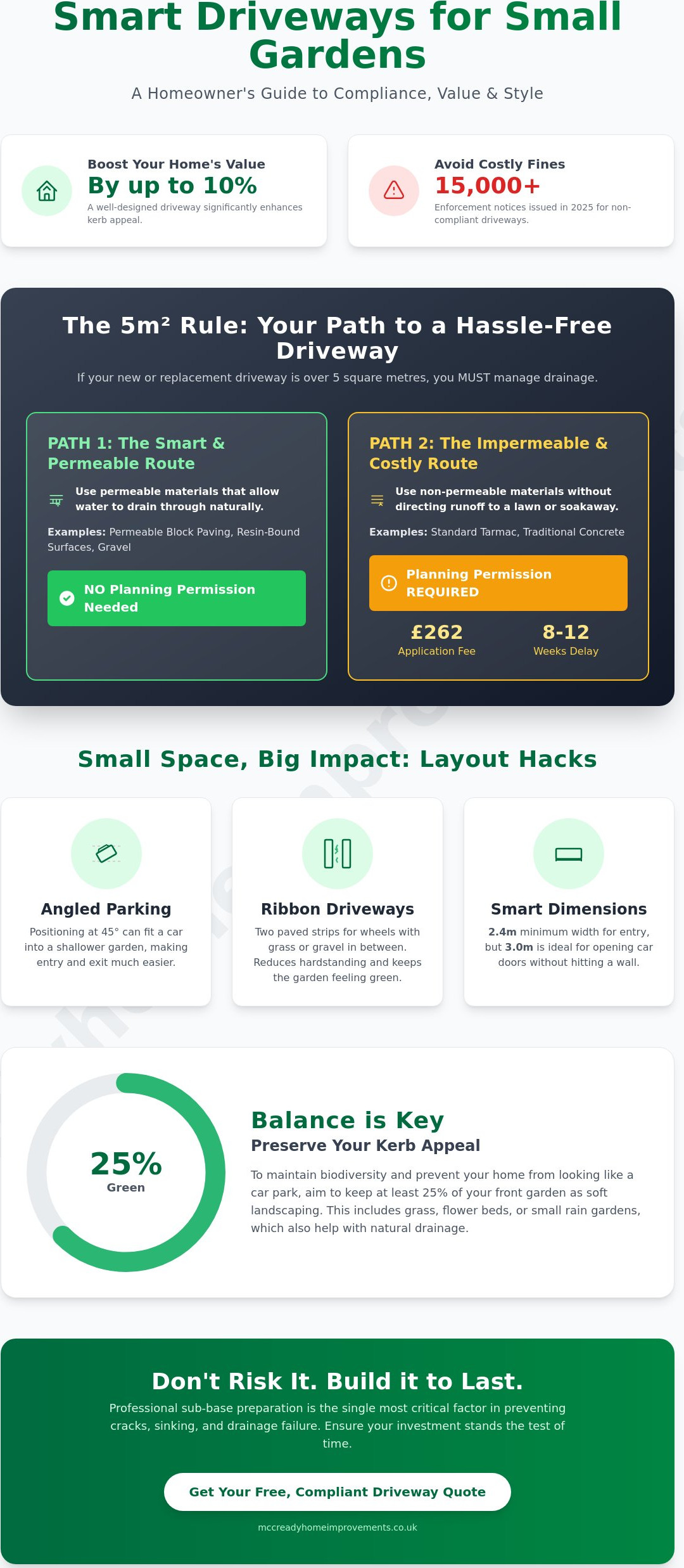
Did you know that over 15,000 enforcement notices were issued in 2025 alone for driveways that failed to meet UK drainage regulations? It’s a sobering thought for any homeowner looking to convert their limited outdoor space. When you’re searching for driveway ideas for small front gardens, the challenge isn’t just about finding a place to park your car. It’s about balancing practical needs with the visual charm of your property. You likely feel that every square inch of your garden is precious, and you don’t want to sacrifice your home’s kerb appeal for a dull, impermeable surface.
Creating a functional parking space shouldn’t mean losing the character of your home. This guide will show you how to transform even the most compact plot into a durable driveway that can add up to 10% to your property’s value. You’ll learn how to navigate the latest SuDS requirements and the 5 square metre rule to ensure your project remains compliant and stress-free. We’ll preview the top material trends for 2026, including permeable block paving and sustainable gravel designs, to help you achieve a professional finish that stands the test of time.
Key Takeaways
- Learn how to stay compliant with UK drainage laws and avoid planning permission delays when converting a small plot.
- Discover modern driveway ideas for small front gardens using durable, permeable materials like block paving and high-quality tarmac.
- Master visual design tricks, such as herringbone patterns and light-toned stones, to make compact parking spaces feel significantly larger.
- Find out how to integrate secure fencing and gates that protect your vehicle while maintaining visibility and kerb appeal.
- Understand why professional sub-base preparation is the most critical factor in preventing your new driveway from cracking or sinking.
Planning Your Small Driveway: SuDS, Laws, and Layouts
Homeowners across the Midlands often face a specific challenge when exploring driveway ideas for small front gardens: heavy clay soil. In areas like Hinckley and Nuneaton, this soil type doesn’t absorb water quickly, making drainage a structural priority rather than an afterthought. If you pave over a small garden without a plan, you risk pooling water, damp walls, and potential legal action from the local council. Successful planning starts with understanding how water moves across your property.
Sustainable Drainage Systems (SuDS) is the legal framework for managing surface water runoff in residential driveways. By following these guidelines, you ensure that rainwater stays on your property or enters the ground naturally instead of overwhelming the public sewer system. It’s a proactive approach that protects your home and the wider community from flash flooding.
The Legal Essentials of Permeable Surfaces
The law is clear: if your new driveway exceeds five square metres, you must use a permeable surface or direct water to a lawn or soakaway within your property. If you choose impermeable materials like standard tarmac or concrete without a drainage solution, you’ll need to apply for planning permission. This process currently costs £262 and can take between 8 to 12 weeks to process. Choosing a permeable material from the start isn’t just better for the environment; it’s a smart way to avoid these extra costs and delays.
For smaller plots, we often recommend integrating rain gardens or small-scale soakaways. These features act as natural reservoirs, holding water during heavy downpours and letting it filter back into the earth slowly. It’s a meticulous way to balance modern parking needs with ecological responsibility, ensuring your home remains compliant with Sustainable Drainage Systems (SuDS) regulations.
Maximising Every Inch: Layout Options for Tight Spaces
Space is at a premium in small front gardens, so your layout must be precise. You need to account for ‘swing room’, the space required to turn your vehicle comfortably into the bay. Modern SUVs are wider than cars from previous decades, so we typically suggest a minimum width of 2.4 metres, though 3 metres is ideal for opening doors without hitting boundary walls.
- Angled Parking: By positioning the driveway at a 45-degree angle to the road, you can often fit a car into a shallower garden that wouldn’t accommodate a straight-on approach.
- Ribbon Driveways: This design uses two parallel strips of paving for the wheels, with gravel or low-growth plants in the centre. It reduces the amount of hardstanding and keeps the garden feeling green.
- Corner Cut-outs: Removing a small corner of a boundary wall can create the necessary turning circle for tight entrances without sacrificing the entire front wall.
Balancing hard surfaces with green zones is essential. We aim to keep at least 25% of the garden soft-landscaped. This maintains local biodiversity and keeps your home’s frontage looking like a garden rather than a car park, preserving that vital kerb appeal that adds value to your property.
Top Material Ideas for Small Front Garden Driveways
Selecting the right surface is the most critical decision in your project. It dictates the character of your home and how much time you’ll spend on maintenance. When exploring driveway ideas for small front gardens, you must weigh up the initial investment against the expected lifespan. In 2026, homeowners are increasingly prioritising materials that offer both visual appeal and high-performance drainage. Resin-bound gravel has become a particularly popular choice across the Midlands because it provides a smooth, permeable finish that handles our local weather with ease.
Block Paving: Versatility and Classic Style
Many homeowners choose block paved driveways because they offer unmatched repairability. If a single block becomes stained by oil or damaged, you can replace it without disturbing the rest of the surface. For smaller plots, we recommend using smaller bricks rather than large slabs. This creates an optical illusion that makes the parking area feel more expansive. Permeable block paving is a fantastic solution that allows water to filter through the gaps naturally. This often means you can bypass the need for planning permission, as outlined in the official government guidance on front garden surfacing.
Tarmacadam: The Sleek, Modern Alternative
Modern tarmac is a far cry from the plain black surfaces of the past. It’s now a sleek, durable option that suits contemporary homes. We often install a tarmac driveway with border to give a small space a high-end, finished look. Using a contrasting brick edge prevents the driveway from looking like a commercial car park and helps define the boundaries of your garden. You can even explore decorative finishes, such as red tarmac, to add a unique personality to your property. It’s a cost-effective choice that provides a smooth surface for years to come.
Gravel and Stone: Texture and Drainage
If you want to achieve an instant cottage feel, stone driveways are an excellent choice. Gravel is naturally permeable and provides a satisfying crunch underfoot that also acts as a security feature. However, in small, high-traffic areas, gravel can migrate or develop ruts. We solve this by using stabilisation grids that keep the stone in place. It’s important to select a 20mm stone size; smaller pebbles often get stuck in tyre treads and end up being carried into your home or onto the street. If you’re looking for a low-maintenance approach that still looks premium, our team can help you select the perfect gravel driveway for your specific space.
Visual Design Hacks to Make Small Driveways Feel Larger
Designing a compact frontage requires a shift in perspective. You aren’t just creating a place to park; you’re engineering an optical illusion. When we explore driveway ideas for small front gardens, we use specific geometry and colour palettes to push back the boundaries of a tight plot. A well-planned design ensures that your vehicle doesn’t dominate the entire view of your home. It’s about creating balance through clever visual cues that guide the eye away from the limitations of the space.
Pattern and Texture Play
The direction of your paving makes a massive difference in how wide your garden feels. We often recommend laying block paving in a 45-degree herringbone pattern. This diagonal orientation draws the eye to the furthest corners of the plot, creating the longest possible visual line. For narrow driveways in Nuneaton and Hinckley, this simple shift in layout can make a three-metre wide space feel much more expansive. It breaks up the rigid, boxy feel of a standard rectangular garden.
Contrasting borders create a visual ‘frame’ that organises a small space. By using a darker or lighter block around the perimeter, you define the parking area as a deliberate design feature rather than an accidental patch of hardstanding. To soften these hard edges, we suggest using ‘fringe’ planting. Low-maintenance shrubs like lavender or box hedging planted along the boundary provide a vertical green element. This contrast between stone and foliage adds depth, making the driveway feel like an integrated part of a garden rather than a separate concrete entity.
Colour Theory for Kerb Appeal
Colour choice is a powerful tool for manipulation. The ‘Light and Bright’ rule is essential for small frontages. Lighter stones, such as silver-grey granite or buff-toned paving, reflect more natural light. This is particularly effective for North-facing gardens that often sit in shadow. These cooler tones make the boundaries feel less restrictive and open up the entire frontage. While you should always look for a finish that complements your home’s brickwork, going one or two shades lighter than the house can create a refreshing sense of space.
While you focus on these aesthetic choices, remember that every design must still adhere to the official government guidance on driveway regulations to manage water runoff. To further improve the look, use ‘pop’ colours in your surrounding borders. Bright perennials can distract from the utilitarian nature of the drive, drawing the eye toward the life and movement of the garden. Finally, consider recessed LED lighting. Framing the drive with subtle, ground-level lights adds safety at night and creates a high-end, polished finish that highlights the architectural lines of your property.
Integrating Boundaries: Fencing, Walls, and Gates
Boundary treatments are the finishing touch that transforms a parking bay into a refined property feature. In a compact plot, these structures provide more than just security; they define the limits of your land and prevent your vehicle from feeling like it’s simply parked on the pavement. When researching driveway ideas for small front gardens, you must consider how your choice of perimeter affects visibility. A boundary that is too high or solid can make a small space feel claustrophobic and, more importantly, can create dangerous blind spots when you’re pulling out into traffic.
We focus on creating a sense of enclosure without sacrificing the open feel of your frontage. By selecting the right materials, you can maintain a clear line of sight while adding significant kerb appeal. If you’re unsure which style suits your property, you can explore our detailed guide on fencing and gates to see how different heights and textures impact a small garden’s footprint.
Fencing Solutions for Small Frontages
Choosing the right fence requires a balance between modern aesthetics and local regulations. Contemporary slatted panels are a major trend for 2026. These panels feature small gaps between the timber laths, allowing light and air to pass through. This prevents the “boxed-in” feeling common with standard lap panels. If you prefer a traditional look, low-level picket fencing remains a timeless choice for cottage-style homes in Hinckley and Nuneaton.
UK law typically limits front garden boundaries to one metre in height if they are adjacent to a highway. Keeping your fencing at or below this height ensures you stay compliant with planning rules while keeping your home’s architecture visible. For maximum durability, we integrate fence posts directly into the driveway’s sub-base during the construction phase. This meticulous approach ensures the entire structure remains stable against the wind and the weight of the car, providing long-term peace of mind.
Garden Walls and Decorative Brickwork
Brickwork offers a level of permanence and structure that timber cannot match. For gardens with a slight slope, we often build low-level retaining walls to create tiered planting zones. This allows you to tuck greenery alongside your drive, softening the transition between the hardstanding and the house. Using a ‘bullnose’ brick for the top edge provides a professional, rounded finish that is both safer and more visually appealing than a standard sharp corner.
You can even add custom features like integrated letterboxes or low-voltage lighting into the brickwork itself. To keep the area looking fresh and vibrant, consider combining your new driveway with sections of artificial grass or professional turfing. This adds a splash of green that requires minimal upkeep. If you’re ready to secure your property with a high-quality perimeter, contact our team for a professional boundary installation quote.
Professional Installation: Why Quality Matters for Small Plots
A small driveway faces a unique structural challenge: every time you park, your tyres hit the exact same spot. In larger areas, the weight of a vehicle is distributed across different sections, but in compact plots, the pressure is concentrated. This is why the sub-base preparation is the most critical part of any driveway ideas for small front gardens project. Without a meticulous foundation, even the most expensive block paving or tarmac will sink and crack within a few seasons. We focus on the engineering beneath the surface to ensure your investment remains perfectly level for years.
The McCready Home Improvements Difference
Our team brings a comprehensive background in both roofing and landscaping to every project. This dual expertise means we understand the entire exterior of your property, from how water sheds off your roof to how it drains away from your new driveway. We take immense pride in serving our local community in Hinckley, Nuneaton, and the surrounding areas. We manage every stage of the process, from the initial no-obligation estimate to the final site clearance. We treat your residence with the respect of a personal home, ensuring a polished and tidy result that provides total peace of mind.
Next Steps for Your Small Garden Transformation
Preparing for your transformation is straightforward. When you book a site visit, think about your primary goals: is it purely for parking, or do you want to retain specific garden features? We’ll assess your soil type, drainage needs, and boundary requirements on the spot. We recommend having a clear idea of your vehicle’s dimensions to ensure the layout provides enough ‘swing room’ for comfortable access. Most small driveway installations are completed within 3 to 5 days, which minimizes the disruption to your daily routine.
You can book your free small driveway consultation with McCready Home Improvements today to start your project with a partner you can trust. We’ll provide a clear, declarative plan that outlines the timeline and the high-quality materials required to transform your frontage into a functional, stylish asset.
Transform Your Property with a Smart Small Driveway
Modern driveway ideas for small front gardens prove that you don’t need a sprawling estate to achieve a high-end, functional entrance. By integrating clever layout patterns and durable, permeable materials, you can create a parking area that enhances your home’s architecture while staying fully compliant with UK drainage laws. Every project we undertake focuses on the meticulous details, from the initial sub-base preparation to the final boundary treatments that secure your property.
As a family-run business with a reputation for superior craftsmanship, we take pride in being the expert local installers for Hinckley and Nuneaton. We specialize in SuDS-compliant permeable paving that protects your home from surface water issues while boosting its overall kerb appeal. Don’t let a small space limit your property’s potential. Our team is ready to partner with you to deliver a professional result that stands the test of time.
Get a Free, No-Obligation Driveway Estimate from Our Hinckley Team and take the first step toward a more functional, beautiful home frontage today.
Frequently Asked Questions
Do I need planning permission to turn my small front garden into a driveway?
You don’t need planning permission if you use a permeable surface or direct water to a lawn or soakaway within your property. This rule applies to any new or replacement driveway regardless of size. If your project exceeds five square metres and uses impermeable materials like standard tarmac without a drainage plan, you’ll need to apply for permission. Choosing SuDS-compliant materials is the easiest way to avoid the £262 application fee and the lengthy wait for council approval.
What is the cheapest material for a small driveway in 2026?
Gravel remains the most budget-friendly option for homeowners looking for driveway ideas for small front gardens. It offers a low initial material cost and provides excellent natural drainage, which helps you stay SuDS-compliant without expensive extra engineering. While tarmac and block paving require a higher initial investment, they often offer better long-term durability in high-traffic turning areas. We recommend gravel for those prioritising immediate value and a traditional, textured aesthetic.
How much space do I actually need to park a car in a front garden?
A standard parking bay requires a minimum area of 2.4 metres by 4.8 metres to accommodate a typical vehicle. However, for a small front garden, we suggest a width of 3 metres if your plot allows it. This extra room ensures you can open vehicle doors fully and step out comfortably without walking on your plants or boundary walls. Measuring your specific vehicle and accounting for ‘swing room’ is essential during the initial design phase.
Can I use block paving if my garden has poor drainage?
You can definitely use block paving even if your garden has poor drainage or heavy clay soil. The key is to specify permeable blocks that feature wider joints to let water pass through into a specially designed sub-base. This system acts as a reservoir, holding water during heavy rain and releasing it slowly into the ground. It’s a meticulous solution that provides the classic look of brickwork while actively managing flood risk on your property.
Is resin-bound gravel better than tarmac for small spaces?
Resin-bound gravel is often superior for small spaces because it is naturally permeable and doesn’t require additional drainage channels. It provides a smooth, puddle-free finish that looks high-end and contemporary. Tarmac is an excellent, durable alternative, but it is generally impermeable. If you choose tarmac for a small plot, you’ll likely need to integrate a soakaway or a drainage grate to remain compliant with local regulations and prevent water pooling near your foundations.
How long does a professional driveway installation take?
A professional driveway installation for a small front garden typically takes between 3 to 5 working days. This timeline includes the initial excavation, the installation of a structural sub-base, and the final laying of your chosen surface. Factors like extreme weather or complex boundary wall construction can sometimes extend this period slightly. We work efficiently to minimise disruption, ensuring your new parking space is ready for use as quickly as possible with minimal stress.
What happens if I pave over my garden without SuDS compliance?
Paving over your garden without SuDS compliance can lead to local council enforcement notices and potential legal action. Over 15,000 such notices were issued in 2025 across the UK to homeowners with non-compliant driveways. Beyond legal issues, poor drainage can cause water to pool against your home’s foundations, leading to expensive damp problems. Ensuring your project meets drainage laws is vital for protecting your property’s structural integrity and its future resale value.
Can I combine a driveway with artificial grass to keep it green?
Combining a hardstanding driveway with artificial grass is a brilliant way to maintain a green aesthetic without the maintenance of a traditional lawn. You can use artificial turf for borders or small ‘soft’ zones that don’t receive vehicle traffic. This approach preserves the garden’s character and contributes to the visual appeal of your home. It’s a popular design choice for 2026 that balances the practical need for parking with the desire for a lush, welcoming frontage.
