
What if the tool you’re using to save your driveway is actually the very thing destroying it? Many homeowners assume that high-pressure blasting is the only way to shift stubborn moss and oil, but aggressive cleaning often strips the essential bitumen binder that holds your surface together. If you’re wondering how to clean a tarmac driveway UK experts recommend, the secret lies in preservation rather than raw power.
It’s disheartening to see a once-black entrance turn into a grey, crumbling mess or become a slippery hazard due to algae growth. We understand that your home’s kerb appeal is a point of pride, and you want a result that lasts without risking a costly replacement. This guide reveals the professional methods to revitalise your tarmac safely, ensuring a deep clean that protects the material’s integrity. We will walk you through the specific chemical-first cleaning steps, the vital 2000 PSI safety limit for pressure washing, and how to stay on the right side of the latest SuDS drainage regulations to avoid the enforcement notices that hit over 15,000 UK properties last year.
Key Takeaways
- Protect the bitumen binder by avoiding harsh solvents and excessive heat that can cause the surface to crumble.
- Discover how to clean a tarmac driveway UK homeowners can be proud of by using a step-by-step method that prioritises surface integrity.
- Swap aggressive high-pressure washing for a stiff-bristled broom and specialised mild cleaners to prevent permanent damage.
- Use the professional “cat litter” technique to manage fresh oil spills and prevent them from softening the tarmac structure.
- Learn to identify “fretting” early on so you can address loose stones before they lead to structural cracks and costly repairs.
Understanding Tarmac: Why Your UK Driveway Needs a Specific Cleaning Approach
Tarmac is a staple of British homes, prized for its sleek finish and cost-effectiveness. However, many homeowners don’t realise that tarmac is a sensitive surface that requires a specific touch. To maintain its professional appearance, you have to understand what’s happening beneath the surface. Technically referred to as Asphalt concrete, tarmac is a precise blend of stone aggregate held together by a petroleum-based bitumen binder. This binder is the lifeblood of your driveway, providing the flexibility needed to handle heavy vehicles and the waterproofing required to shield the sub-base from the relentless British rain.
When you’re looking at how to clean a tarmac driveway UK weather has weathered, you’re fighting more than just surface dirt. You’re fighting the freeze-thaw cycle. Dirt, moss, and algae trap moisture against the surface. When temperatures drop, this water expands within the pores of the tarmac, putting immense pressure on the bitumen. If that binder is already weakened by harsh cleaning chemicals or neglect, the surface will eventually crack and crumble. Our approach is built on a “gentle but firm” philosophy. We focus on removing the harmful debris without compromising the structural glue that keeps your driveway intact.
The Role of the Bitumen Binder
Bitumen is what gives your driveway its deep black colour and resilient nature. It’s naturally sensitive to high heat and petroleum-based solvents. Using the wrong cleaners, such as those containing citrus oils or heavy degreasers, can cause “stripping.” This is where the binder separates from the stone. Once stripping occurs, your driveway loses its waterproof seal and begins to “fret,” resulting in loose grit and stones. UV rays also play a role, slowly drying out the binder over years. Regular, careful cleaning prevents dirt from accelerating this natural degradation, keeping the surface supple and strong.
Why Traditional “Deep Cleaning” Can Be Dangerous
Unlike block paving or concrete, tarmac isn’t a rigid, indestructible block. It’s a semi-flexible mat. If you approach it with the same “blast it all off” mentality used for stone patios, you’ll likely do permanent damage. A high-pressure jet used incorrectly can easily gouge the surface or strip away the essential top layer of binder. Professional maintenance prioritises surface integrity over immediate, aggressive brightness. It’s about protecting the long-term investment. We believe that a clean driveway should also be a healthy one, which is why we avoid the high-pressure tactics that lead to premature replacement.
The Essential Toolkit: What You Need (and What to Avoid)
Successful maintenance starts with the right gear. You don’t need a van full of industrial machinery to master how to clean a tarmac driveway UK homeowners can be proud of; in fact, the most effective tool in your arsenal is likely already in your garden shed. A stiff-bristled broom is the undisputed MVP for tarmac care. It provides enough agitation to lift surface dirt and debris without the risk of gouging the bitumen binder we discussed earlier. Regular sweeping prevents organic matter from breaking down into the pores of the driveway, which is the first step in stopping moss and algae before they take hold.
Water is your next essential, but the delivery method matters. Stick to low-pressure sources like a standard garden hose fitted with a spray nozzle. This provides enough flow to rinse away loosened grime without the destructive force of a high-powered jet. If your surface has reached the end of its lifespan and no amount of cleaning can restore its structural integrity, exploring a fresh Tarmacadam Driveways installation might be the most reliable long-term solution for your property.
Safe Cleaning Agents for Home Use
Chemical choice is where many DIY projects go wrong. Always opt for pH-neutral soaps or specialised tarmac shampoos that are specifically formulated not to degrade petroleum products. While household bleach or undiluted vinegar are popular for patios, they are far too aggressive for tarmac and can lead to discolouration or surface brittleness. For organic growth, look for eco-friendly, biodegradable moss killers. These products work over several days to kill spores at the root. Many of these methods are echoed in the BBC Gardeners’ World cleaning guide, which emphasises the importance of using the right solution for the specific material you are treating.
Equipment to Leave in the Shed
The biggest threat to a UK driveway is an industrial pressure washer in the wrong hands. If you must use one, never exceed 2000 PSI (140 bar). Anything higher acts like a liquid chisel, stripping away the bitumen and leaving the aggregate exposed. Similarly, keep wire brushes away from your driveway. While they’re great for block paving joints, they are too abrasive for tarmac and will leave permanent scratch marks. You should also avoid petrol-based solvents like white spirit or thinners. Because tarmac is a petroleum product, these solvents will chemically bond with and melt the surface. Finally, be wary of using metal scrapers, especially during the summer. UK tarmac softens significantly in the sun, and a metal edge can easily slice into the surface, creating a permanent scar that traps water and leads to future cracks.
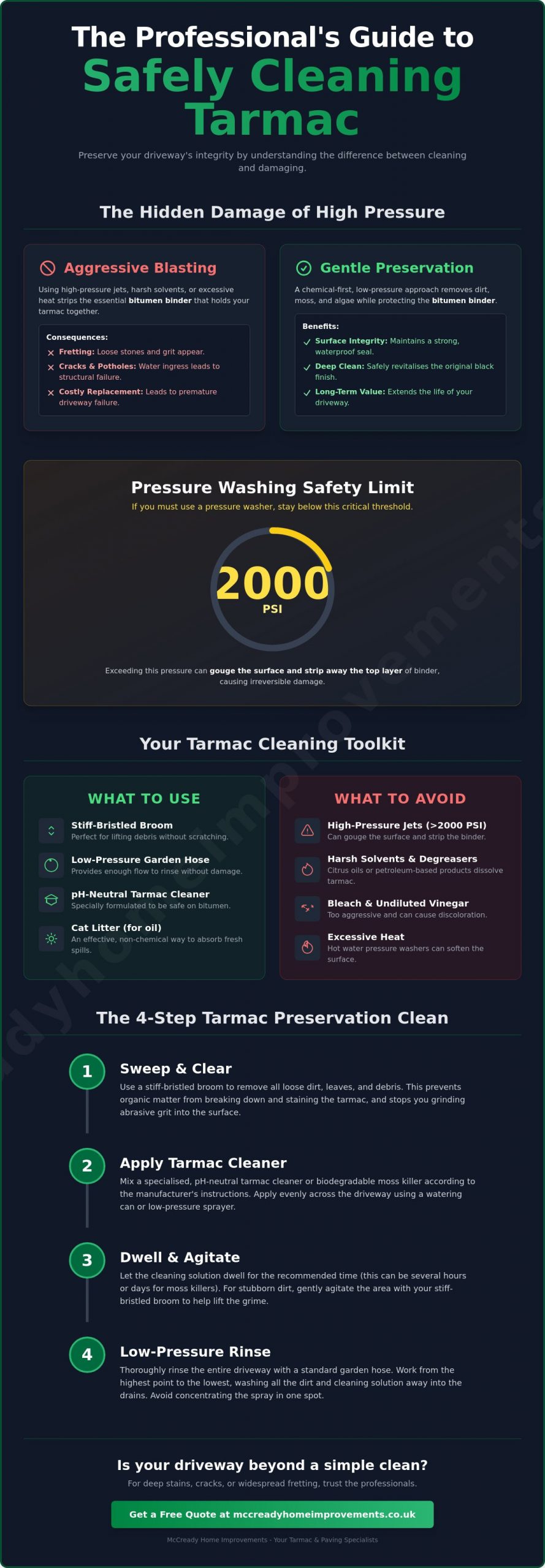
Step-by-Step: How to Clean a Tarmac Driveway Without Causing Damage
Cleaning your driveway isn’t just about a quick aesthetic fix. It’s a methodical process that protects your investment. Before you even think about getting the surface wet, you need a clear workspace. Remove any vehicles, potted plants, or stray debris. This structured approach follows the best practices for how to clean a tarmac driveway UK specialists use to guarantee a result that looks fresh and lasts for years. By taking it one step at a time, you ensure that you aren’t just shifting dirt, but actually preserving the bitumen structure underneath.
The Importance of the Dry Sweep
A thorough dry sweep is the most overlooked part of the maintenance cycle. Loose grit and small stones act like sandpaper when they’re pushed around by a wet brush or a stream of pressurized water. If you don’t remove this abrasive layer first, you’ll inadvertently scratch the surface. Pay special attention to the edges where dirt often accumulates. This is particularly common where the tarmac meets a tarmac driveway with border, providing a perfect breeding ground for moss and weeds. Use a stiff hand brush to get into those corners and clear away any organic matter that could trap moisture against the edges.
Once the surface is clear of loose grit, treat specific trouble spots. If you have stubborn moss patches or small oil drips, apply your targeted cleaners to these areas first. After pre-treating, apply your main cleaning solution across the whole driveway. Let it dwell for about 10 to 15 minutes. This gives the chemicals time to break down the grime. Don’t let it dry out completely. If the sun is out, you might need to mist the surface occasionally to keep the solution active. Next, use a medium-bristled brush to agitate the surface. You don’t need to scrub with heavy force. The cleaning agent has already done the hard work; you’re just helping it lift the dirt out of the textured surface.
Rinsing and Drying Protocols
The final rinse is critical for a professional finish. Use a low-pressure garden hose to wash the soapy residue away, working from the highest point of the driveway down to the drainage area. You must ensure no detergent is left in the pores of the tarmac. Dried soap can attract more dirt or make the surface surprisingly slippery when it next rains. We recommend avoiding this task on the hottest days of the year. In peak summer, UK tarmac can reach temperatures high enough to become slightly malleable. Cleaning it while it’s soft can lead to scuffing or “power steering” marks. Finally, as the water clears, watch for “puddling.” If water stands for more than a few minutes, it might indicate a drainage issue or a dip in the sub-base that needs professional attention to prevent future freeze-thaw damage.
Dealing with Tough Stains: Removing Moss, Oil, and Algae
General grime is relatively easy to manage, but specific stains require a more strategic approach to avoid permanent damage. When you’re tackling how to clean a tarmac driveway UK weather has impacted, you’ll likely face the big three: oil, moss, and algae. These aren’t just aesthetic issues. Because tarmac is a petroleum-based product, substances like motor oil act as a solvent, chemically dissolving the bitumen binder and leaving a “soft spot” that eventually turns into a pothole. Speed is your best ally here. Treating a spill the moment you spot it can save the structural integrity of your entire entrance.
For fresh oil leaks, the “cat litter” trick is a staple of professional maintenance. Spread a generous layer of absorbent clay-based cat litter over the spill and leave it for at least 24 hours. The clay pulls the liquid out of the porous surface before it can penetrate deep into the sub-base. Once the time is up, sweep the litter away and dispose of it safely. If you find yourself dealing with older, stubborn marks or cement splashes from a recent building project, you might need professional intervention. If the damage has already compromised the surface, it might be time to consider a high-quality Tarmacadam Driveways restoration or replacement to bring your property back to its best.
The Battle Against Moss and Green Algae
In the UK, particularly in the damp, shaded environments common across the Midlands, moss and algae thrive during the autumn and winter months. These organic growths trap moisture against the tarmac, which accelerates the freeze-thaw damage we discussed earlier. To treat these without scrubbing the surface away, use a dedicated, biodegradable moss killer. Apply the solution on a dry day and let it work into the roots. The moss will turn brown or black within a few days, at which point it can be gently brushed away with a stiff broom. Preventing this growth is often as simple as keeping the drive clear of wet leaves and ensuring your gutters aren’t overflowing onto the surface.
Removing Stubborn Oil and Grease
Older oil stains require specialised biological degreasers that “eat” the hydrocarbons without harming the bitumen. When applying these, always use a “blotting” motion with an old rag rather than aggressive scrubbing. Scrubbing often pushes the oil deeper into the texture of the tarmac, making it nearly impossible to remove. If the area feels soft or spongy underfoot after cleaning, the oil has already begun to break down the binder. At this stage, the stain has become a structural issue. While minor paint splashes can sometimes be carefully scraped away when the tarmac is cold and hard, structural soft spots usually require a professional patch or a full resurface to ensure the driveway remains safe and waterproof.
Beyond Cleaning: When to Consider Tarmac Restoration or Replacement
While mastering how to clean a tarmac driveway UK experts recommend is essential for maintenance, every surface eventually reaches its limit. There is a fine line between a driveway that is simply dirty and one that is structurally failing. If you notice your driveway has lost its deep black lustre and looks grey or “bony,” the bitumen binder has likely oxidised. At this stage, you might start to see “fretting.” This is when the small stones in the aggregate begin to break loose and collect in the gutters. Cleaning a fretting driveway with too much vigour can actually accelerate the damage by dislodging more stones and exposing the sub-base.
Distinguishing between a cosmetic stain and a structural crack is the key to choosing your next step. A surface stain from a leaf or a bird is easily scrubbed away. However, spider-web cracking or deep fissures indicate that the sub-base is shifting or the tarmac has become too brittle to flex. In these cases, no amount of detergent will fix the underlying problem. A professional seal coat can often save a driveway that is just starting to show its age, providing a fresh layer of bitumen to bind the aggregate and restore the waterproof barrier before the damage becomes terminal.
Signs Your Driveway is Beyond a Simple Clean
Keep a close eye out for significant potholing or cracks that are wider than a few millimetres. If you see these signs, cleaning might actually make the situation worse by allowing water to penetrate directly into the sub-base, leading to rapid deterioration during the next frost. For properties where tarmac maintenance feels like a constant battle, you might consider switching to more durable stone driveways. These provide a different aesthetic and can be more resilient in high-maintenance areas of your property, especially those heavily shaded by trees.
Professional Restoration vs. DIY
Many homeowners are tempted by DIY tarmac “paints” found in local hardware stores. These products often sit on top of the surface like a film and eventually peel away, leaving an unsightly mess that is difficult to fix. Professional-grade restorers are different; they are designed to soak into the tarmac and chemically re-bind the stones. At McCready Home Improvements, we take a thorough approach to restoring tired Hinckley and Nuneaton driveways. We handle everything from meticulous ground preparation to precise edge repairs, ensuring the final result looks like a brand-new installation rather than a temporary patch.
We take immense pride in treating every local property with the respect it deserves. Whether your driveway needs a professional refresh to regain its kerb appeal or you are looking for a completely new roof installation to protect your home, our team is here to help. Contact us today for a reliable assessment of your property’s needs and a realistic plan to restore its value and safety.
Protecting Your Investment for the Long Term
Maintaining your property’s kerb appeal doesn’t have to be a daunting task. By choosing the right tools and avoiding the common trap of high-pressure blasting, you can keep your surface looking pristine for years. We’ve explored the essential steps for how to clean a tarmac driveway UK homeowners can manage safely, from the importance of the dry sweep to the careful treatment of stubborn oil and moss. Remember that consistent, gentle care is always more effective than aggressive, one-off deep cleans that risk stripping your bitumen binder.
If you find that your driveway is showing signs of structural wear like deep cracks or fretting, it might be time for expert intervention. McCready Home Improvements is a family-run business with a reputation for meticulous craftsmanship across Hinckley, Nuneaton, and the Midlands. As specialists in high-quality tarmacadam and block paving solutions, we ensure every project is handled with the care of a personal residence. Get a Free Estimate for Tarmac Repair or Replacement to restore your home’s entrance today. Your driveway is the first thing guests see; let’s make sure it makes the right impression.
Frequently Asked Questions
Can I use a pressure washer on my tarmac driveway?
You can use a pressure washer provided you keep the setting below 2000 PSI (140 bar). Use a wide fan nozzle at a 45-degree angle rather than a narrow jet. This prevents the water from acting like a chisel and stripping the bitumen binder from the stone aggregate, which can lead to premature crumbling.
Will bleach damage a tarmac driveway?
Bleach is generally too aggressive for tarmac surfaces and often causes permanent discolouration or makes the binder brittle. It’s much safer to use specialised tarmac shampoos or simple pH-neutral soaps. These solutions lift dirt effectively without compromising the chemical bond that keeps your driveway waterproof and flexible.
How do I get rid of moss on tarmac without a jet wash?
Apply a professional-grade moss and algae remover concentrate and allow it to work over several days. Once the moss turns black and dies, simply sweep it away with a stiff-bristled broom. This chemical-first approach is the safest way for how to clean a tarmac driveway UK weather has impacted with dampness and shade.
What is the best time of year to clean my driveway in the UK?
Spring or early autumn offers the best conditions for driveway maintenance. Avoid the height of summer, as tarmac softens in high temperatures and can be easily scuffed by cleaning tools. Similarly, winter cleaning is difficult because freezing temperatures can trap moisture in the pores, leading to freeze-thaw cracks.
How do I remove old oil stains from tarmac?
Use a biological oil stain remover that contains enzymes specifically designed to break down hydrocarbons. Apply the cleaner and blot the area with a rag, repeating the process until the stain lifts. If the tarmac feels soft or has started to crumble, the oil has already caused structural damage that requires a professional repair.
Can I use washing up liquid to clean my driveway?
Washing up liquid is a safe and effective option for light surface cleaning and general maintenance. Because it’s generally pH-neutral, it won’t react with the bitumen binder like harsher household chemicals might. Mix it with warm water and use a soft brush to agitate the surface before rinsing thoroughly with a low-pressure hose.
How often should a tarmac driveway be cleaned?
We recommend a thorough clean at least once a year to prevent the buildup of organic matter and debris. For driveways that are north-facing or heavily shaded by trees, you might need to treat for moss and algae every 6 to 9 months. Regular monthly sweeping is the best way to extend the time between major cleans.
Is it worth sealing my tarmac driveway after cleaning it?
Sealing is highly beneficial for driveways that are more than two years old and starting to look grey or faded. A high-quality sealant replaces lost oils in the bitumen and provides a new waterproof barrier. It’s a cost-effective way to delay a full replacement and keep your surface looking polished and new.
