
What if the most affordable quote you receive today ends up being the most expensive mistake for your home’s kerb appeal? Choosing a new surface is a major project, and understanding the tarmac vs resin driveway cost involves much more than just the initial price per square metre. You want a finish that stands up to the UK climate without cracking or fading, yet the confusing terminology around bound and bonded systems often leaves homeowners feeling uncertain about where their money is actually going.
We believe you deserve total peace of mind and a result that lasts for decades. You’re likely looking for a balance between modern style and rugged durability, which is why this guide breaks down the real-world value differences between these two popular options. We’ll reveal why site preparation often accounts for 80% of your total investment and provide a clear comparison of longevity and maintenance. By the end, you’ll know exactly how to choose a high-quality solution and find a reliable local installer who treats your property with the meticulous care it deserves.
Key Takeaways
- Understand the real-world tarmac vs resin driveway cost by looking beyond the initial quote to factor in essential groundwork and long-term maintenance.
- Learn why tarmac remains the most durable and cost-effective choice for larger surface areas while providing a classic, reliable finish for your home.
- Discover the importance of SUDS compliance and how different surfacing materials impact your drainage and planning permission requirements.
- Compare the typical lifespans and weather resistance of both materials to determine which investment provides the best peace of mind for your property.
Tarmac vs Resin Driveway Cost in 2026: An Honest Comparison
Choosing between a classic tarmacadam finish and a modern resin bound surface is one of the most significant decisions you’ll make for your home’s exterior this year. Tarmac consists of a durable mix of crushed stone and bitumen, technically known as Asphalt concrete, which creates a flexible and incredibly resilient surface. Resin bound driveways take a different approach by mixing decorative aggregates with a clear polyurethane resin. This creates a smooth, permeable finish that has quickly become the aspirational choice for homeowners across the Midlands in 2026. While both options offer distinct aesthetic benefits, the tarmac vs resin driveway cost remains the primary factor for most project budgets.
There is a clear divide between budget-friendly surfacing and premium installations. A professional installation requires meticulous attention to the layers you can’t see. We often see “bargain” driveways fail within just three years because an installer cut corners on the sub-base or drainage. True value comes from a surface that remains level and crack-free for decades, not just a low initial quote. Investing in high-quality materials and skilled labour ensures your driveway withstands heavy vehicle use and the unpredictable UK weather without shifting or sinking.
Why Your Driveway Is an Investment, Not Just a Surface
In areas like Hinckley and Nuneaton, a well-executed driveway significantly boosts property value by creating an immediate sense of quality. It’s the first thing a potential buyer sees, and that psychological “first impression” can make or break a sale. Beyond aesthetics, modern surfacing must address environmental responsibilities. Sustainable Urban Drainage Systems (SUDS) compliance ensures your driveway allows water to permeate naturally into the ground, preventing local flooding and often removing the need for expensive additional drainage taxes or planning permission. This long-term saving is a vital part of the overall financial picture for any homeowner.
Quick Snapshot: Average Price Ranges per Square Metre
While every project is unique, looking at UK industry benchmarks helps set a realistic expectation for your project. These figures represent professional-grade installations rather than DIY or “cowboy” quotes:
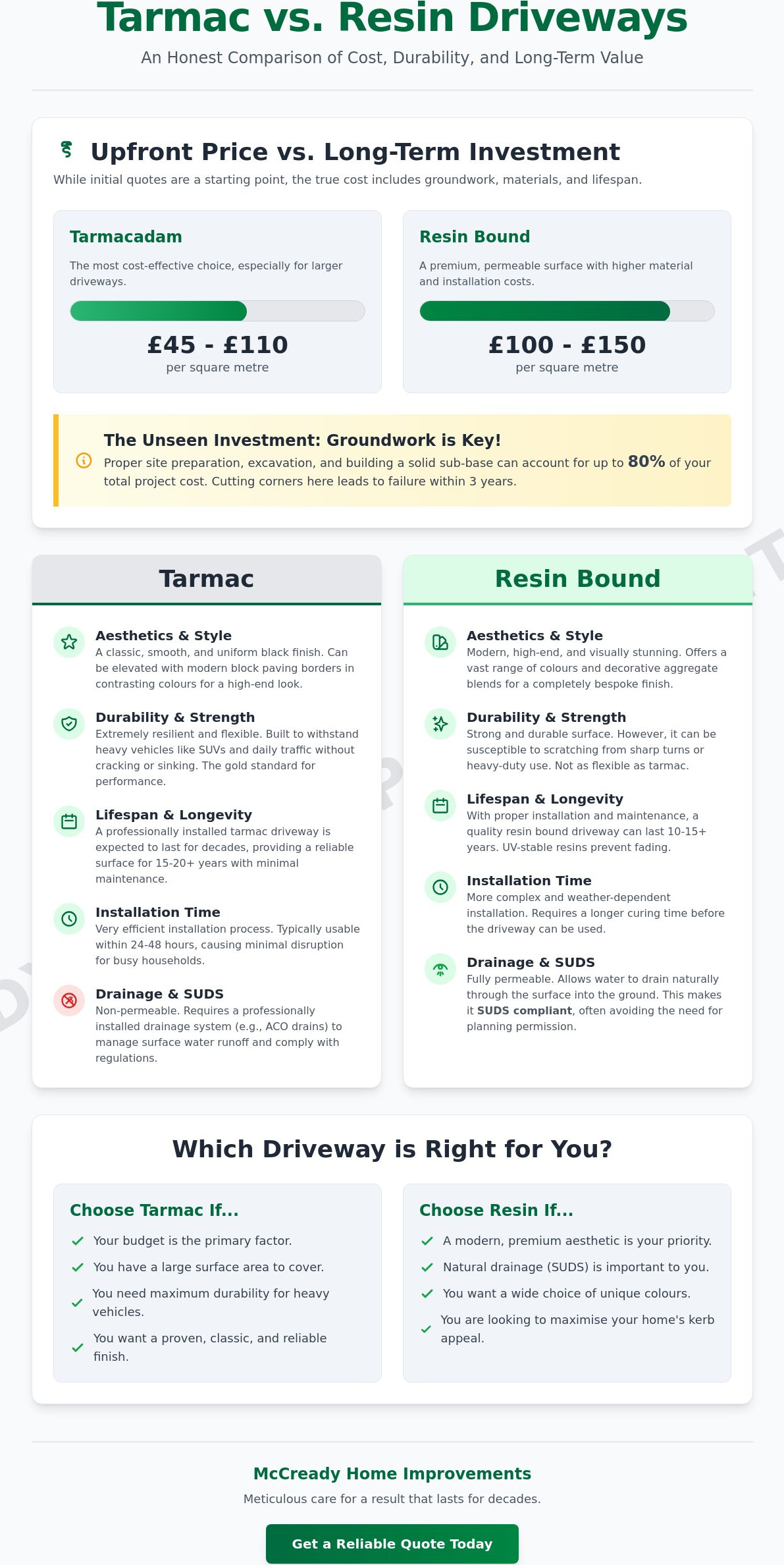
- Tarmacadam: General industry ranges typically fall between £45 and £110 per square metre.
- Resin Bound: Premium resin installations often range from £100 to £150 per square metre.
These figures vary wildly based on the current state of your existing ground. If your current drive requires significant excavation, waste removal, or a brand-new sub-base, the cost will naturally sit at the higher end of the scale. Conversely, an “overlay” on a perfectly sound existing surface can be a much more cost-effective way to achieve a fresh look.
Tarmac Driveways: The Durable, Cost-Effective Classic
Tarmacadam remains the gold standard for homeowners who need a reliable, high-performance surface without the premium price tag of resin. It’s particularly effective for larger surface areas where the tarmac vs resin driveway cost gap becomes most apparent. A professional installation is a multi-layered process. It starts with a solid sub-base, followed by a base course of larger stones for structural integrity, and finishes with a smooth wearing course. This layered approach ensures the driveway can handle heavy SUVs and daily traffic without failing or sinking over time.
For busy families in Leicestershire, tarmac is often the least disruptive choice. While some surfacing options require lengthy curing times or complex multi-stage applications, a tarmac drive is typically completed much faster. You can often return to using your driveway within 24 to 48 hours of completion. This efficiency doesn’t mean you have to sacrifice style. Modern tarmac isn’t limited to plain black bitumen. You can now choose red variations or elevate the aesthetic by installing a tarmac driveway with border using block paving. This creates a bespoke, high-end look that rivals more expensive materials while maintaining the rugged durability tarmac is known for.
Factors That Drive Tarmac Costs Up or Down
Excavation depth is the biggest variable in any surfacing project. If your existing ground is soft or poorly drained, we need to dig deeper to reach a solid foundation. This increases labour and waste disposal costs. Choosing a decorative border also impacts the initial investment, though it significantly boosts durability by protecting the edges of the tarmac from fraying. You should also consider the choice between standard bitumen and porous tarmac. While porous options cost slightly more, they allow for superior water management and can impact the overall tarmac vs resin driveway cost calculation by reducing the need for separate drainage channels.
The ‘Midlands Weather’ Factor: Tarmac Durability
Our local climate in the Midlands presents unique challenges for any driveway. The freeze-thaw cycles common in Leicestershire winters can wreak havoc on poorly laid surfaces. This is why a professional MOT Type 1 sub-base is non-negotiable. It provides the necessary stability to prevent the ground from shifting during temperature swings. Maintenance is straightforward and affordable compared to other surfaces. A simple sealcoat every few years keeps the surface looking fresh and prevents water ingress. If you’re looking for a reliable solution, our team can help you design a professional tarmacadam driveway that balances long-term value with a polished finish.
Resin Bound Driveways: The Premium, Permeable Alternative
Resin bound systems represent the pinnacle of modern driveway design, offering a sleek and seamless finish that tarmac simply cannot replicate. Leading specialists like Regal Group showcase the versatility of these materials in creating durable, high-end outdoor surfaces. When evaluating the tarmac vs resin driveway cost, it is vital to distinguish between resin “bound” and resin “bonded” surfaces. A bound system involves mixing the aggregate and resin together before laying, which creates a solid, permeable layer. In contrast, bonded systems scatter loose stone over a layer of resin. While bonded options are cheaper, they often lead to loose stones and a shorter lifespan; we exclusively focus on bound systems to ensure your investment stands the test of time.
One of the most significant advantages of resin is its compliance with Sustainable Urban Drainage Systems (SUDS). Because the surface is naturally porous, water drains directly through the driveway into the ground below. This usually removes the need for planning permission, saving you both time and administrative fees. To maintain this benefit, we use high-quality, UV-stable resins. While non-UV resins are available at a lower price point, they quickly turn a murky yellow when exposed to sunlight. Investing in UV-stable materials ensures your driveway retains its original colour and structural integrity for decades.
Why Resin Bound Costs More Than Tarmac
The premium nature of resin comes from both the materials and the meticulous labour required. We use only washed and dried aggregates to prevent moisture from reacting with the resin, which would otherwise cause the surface to cloud or peel. The installation is also labour-intensive. Every square metre is hand-trowelled by skilled professionals to ensure a perfectly level and smooth finish. Additionally, resin requires a rock-solid base. If your existing driveway is unsuitable, we must install a new concrete or tarmac foundation first, which is a key factor in the overall tarmac vs resin driveway cost.
Long-Term Savings: Maintenance and Permeability
While the upfront cost is higher, resin offers impressive long-term value. The technology we use for a resin bound patio translates perfectly to driveway longevity, providing a “puddle-free” surface even after heavy Leicestershire downpours. This superior drainage reduces the need for expensive soakaways or complex guttering systems. Resin is also naturally weed-resistant because seeds struggle to take root in the smooth, bound surface. This saves you hours of maintenance and the recurring cost of chemical weed killers, keeping your home’s entrance looking pristine with minimal effort.
Direct Comparison: Upfront Price vs. Long-Term Value
When you weigh up the tarmac vs resin driveway cost, it is tempting to focus solely on the initial quote. However, true value is measured over decades, not days. A high-quality tarmacadam surface typically offers a lifespan of 15 to 20 years. In contrast, a professionally installed resin bound system can last between 20 and 25 years. While resin requires a higher initial investment, its superior durability and lower maintenance requirements often close the price gap over time. Homeowners in the Midlands frequently find that resin adds a more significant premium to their property’s asking price, though a tarmac drive with a decorative block border remains a very strong second for return on investment.
The maintenance schedules for these two materials differ significantly over a 10-year period. For tarmac, you should plan for a professional sealcoat every three to five years to keep the bitumen flexible and prevent water ingress. Resin bound surfaces are much more “set and forget.” Aside from an annual jet wash to remove surface debris and maintain permeability, they require very little intervention. Because resin is weed-resistant and doesn’t suffer from the same oil-staining issues as bitumen, the “hidden” costs of cleaning products and repair kits are virtually non-existent.
The Resin Overlay: A Budget-Friendly Middle Ground
If your current driveway is structurally sound but looks tired, a resin overlay might be the perfect hybrid solution. This involves laying a new resin bound layer directly over your existing tarmac. This approach offers substantial savings because it bypasses the “full dig” phase, significantly reducing labour hours and waste disposal fees. To succeed, your existing tarmac must be free from major cracks, sinking, or “alligatoring.” If the base is shifting, any new layer on top will eventually mirror those faults. We always conduct a thorough site assessment to ensure an overlay is a viable long-term solution rather than a temporary fix.
Total Cost of Ownership (TCO) Case Study
Consider a standard 50m² driveway in Nuneaton. Over a 15-year period, the tarmac option involves a lower starting price but includes the cost of three sealcoating cycles and potential minor edge repairs. The resin bound option starts higher but incurs almost zero additional spend beyond basic cleaning. When you factor in the lack of weeding and the preserved curb appeal, the price difference becomes much smaller than it first appears. In terms of pure “pence-per-year” value, tarmac remains the most economical choice for those prioritizing low upfront spend, while resin wins for homeowners seeking the lowest possible lifetime effort.
If you are ready to see how these options fit your specific property, you can request a detailed driveway assessment from our local experts today.
Making the Choice: Which Driveway Is Right for You?
Deciding on the right surface depends on your specific priorities for your property. Tarmac is the logical choice if you have a sprawling driveway where managing the overall tarmac vs resin driveway cost is a priority. It delivers a clean, uniform appearance that suits traditional homes perfectly and provides a rugged surface for multiple vehicles. On the other hand, resin bound surfacing is ideal for smaller, high-impact areas where you want a bespoke, decorative finish. It remains the superior choice for homes with existing drainage issues or for those seeking a modern, “puddle-free” aesthetic that stands out in the neighbourhood.
You don’t always have to pick just one material. A significant trend in 2026 is the “mixed-material” approach. By combining block paved driveways with a central tarmac section, you achieve a premium, framed look at a much lower cost than a full resin installation. This hybrid method provides the structural strength of tarmacadam with the decorative appeal of block paving. It creates a custom entrance that enhances your home’s character while keeping your budget under control. We often recommend this for larger Leicestershire properties where a full resin drive might be cost-prohibitive.
Finding the right professional is just as important as the material itself. When reviewing quotes, watch for red flags like unusually low prices that suggest sub-par materials or a lack of proper groundwork. A reputable local Midlands contractor will always provide a detailed breakdown of the work. If a quote doesn’t mention the specific sub-base depth or the tarmac vs resin driveway cost variables we’ve discussed, it’s a sign that corners might be cut. Reliable installers value their reputation and will treat your property with the respect of a personal residence.
Key Questions to Ask Your Installer
Before signing any contract, ask your installer for specifics on their process. You want to know if they are using MOT Type 1 or Type 3 sub-base material. This choice determines the stability and permeability of the drive. For resin projects, confirm the aggregate-to-resin ratio and verify that the resin is UV-stable to prevent yellowing. Finally, ask if they provide a guarantee against “reflective cracking.” This occurs when the new surface mirrors faults in the base below, and a professional installer should have a plan to prevent it.
Next Steps for Your Hinckley or Nuneaton Home
A reliable project starts with an accurate site survey. Avoid “phone quotes” that don’t account for your specific soil type, levels, or drainage needs. We pride ourselves on balancing traditional craftsmanship with local value, ensuring every project is handled with meticulous care from design to completion. If you’re ready to transform your property, you can get a free, no-obligation driveway estimate from McCready and take the first step toward a beautiful, lasting investment.
Invest in a Driveway That Enhances Your Home for Decades
Your driveway is the gateway to your property and the first thing visitors see. Whether you opt for the rugged reliability of tarmacadam or the modern, permeable beauty of a resin bound surface, the success of your project rests on professional groundwork and high-quality materials. This comparison has highlighted how a solid sub-base prevents sinking and why choosing a surface that matches your specific drainage requirements provides long-term peace of mind. Both options offer significant value when installed with meticulous care and attention to detail.
Ultimately, the tarmac vs resin driveway cost is an investment in your home’s future value and kerb appeal. By weighing the upfront price against the total cost of ownership, you can select the solution that best fits your lifestyle. Our expert local team serves homeowners throughout Hinckley and Nuneaton, specializing in both systems to ensure a polished result every time. We offer free, no-obligation site surveys and transparent estimates to help you plan with total confidence.
Book Your Free Driveway Consultation with McCready Home Improvements today to discuss your vision with a trusted partner. We’re ready to help you transform your property with a surface that lasts.
Frequently Asked Questions
Is resin more expensive than tarmac in 2026?
Yes, resin bound systems generally require a higher initial investment than tarmacadam. This is primarily due to the cost of high-quality washed aggregates and the labour-intensive hand-trowelling process. While the tarmac vs resin driveway cost gap is wider upfront, resin often offsets this over time through lower maintenance requirements and superior drainage properties.
Can you lay resin bound gravel over an old tarmac driveway?
You can install a resin bound overlay on an existing tarmac surface provided the base is structurally sound and free from significant cracks. This hybrid approach is a popular way to achieve a premium look while saving on excavation and waste disposal fees. We always perform a site survey to ensure your current drive can support the new layer without risking future movement.
How much does a 50m2 resin driveway cost on average?
The total cost for a 50m2 area varies significantly based on the amount of groundwork required and your choice of aggregate. If you’re overlaying an existing sound base, the price will be considerably lower than a full excavation project. Factors such as the aggregate-to-resin ratio and the use of UV-stable materials also influence the final quote provided during your site survey.
Does a tarmac driveway need planning permission for drainage?
Planning permission isn’t usually required if you use porous tarmac or install a drainage system that directs water to a lawn or border. Standard non-porous tarmac may require permission if the area exceeds five square metres and doesn’t include a Sustainable Urban Drainage System (SUDS). We design every installation to be compliant with current regulations to save you time and administrative hassle.
Which driveway surface lasts longer in the UK weather?
Resin bound driveways typically have a slightly longer lifespan, often reaching 20 to 25 years when properly maintained. Tarmac is also incredibly durable, lasting 15 to 20 years, but it requires periodic sealcoating to prevent the bitumen from becoming brittle. Both materials are engineered to withstand the UK’s freeze-thaw cycles, provided they’re laid on a professional MOT Type 1 sub-base.
Is tarmac or resin better for a steeply sloped driveway?
Tarmac is often the preferred choice for very steep slopes because it provides excellent natural grip for tyres. While resin bound surfaces are smooth, we can add a crushed glass anti-slip coating during the installation to improve traction. The best choice depends on the specific gradient and your drainage needs, which we assess during our initial visit.
How do I maintain a resin driveway to keep it looking new?
Regular cleaning is the most effective way to maintain a resin driveway’s polished appearance. An annual jet wash with a domestic pressure washer will remove surface dirt and prevent moss or algae from blocking the permeable pores. Because the surface is bound, you won’t need to worry about loose stones or frequent weeding, making it one of the easiest surfaces to look after.
What are the hidden costs of a new driveway installation?
Unexpected costs often arise from necessary groundwork, such as repairing a failing sub-base or installing new soakaways. Other potential expenses include council permits for a dropped kerb or the removal of heavy waste material like old concrete. We provide transparent estimates that factor in the total tarmac vs resin driveway cost so you aren’t surprised by hidden fees halfway through the project.
