
What if you could achieve the rustic charm of loose gravel without spending every Sunday sweeping stray stones back onto your kitchen floor? For many homeowners across Hinckley and Nuneaton, the desire for a traditional aesthetic often clashes with the reality of messy maintenance. You likely want a finish that looks premium but stays exactly where it’s laid. It’s completely understandable to feel cautious about surface peeling or the technical differences between bonded and bound systems, especially when your hard-earned money is on the line.
A high-quality resin bonded patio offers a non-slip, durable alternative to traditional slabs, but only if the installation respects the integrity of the existing sub-base. In this 2026 comparison guide, you’ll discover how this specific technique stacks up against block paving and Indian stone. We’ll break down the 15-year performance expectations and help you decide if your current garden layout is ready for a professional transformation. We also address common worries about stone shedding, ensuring you understand why the right primer makes all the difference. By the end, you’ll have the clarity needed to partner with a local Midlands expert who prioritises craftsmanship over quick fixes.
Key Takeaways
- Understand why Hinckley and Nuneaton homeowners choose the traditional “heritage” aesthetic of a scatter system to complement their property’s character.
- Compare the unique texture and drainage needs of a resin bonded patio against bound alternatives to ensure you select the right surface for your garden.
- Learn how the high-friction, non-slip properties of bonded resin provide a safer solution for sloped paths and high-traffic outdoor spaces.
- Explore how professional base assessments can determine if your existing concrete or slabs can be transformed with a seamless, durable overlay.
- Gain insight into how local installation expertise and meticulous attention to detail protect your investment against UV discolouration and the British weather.
Understanding Resin Bonded Patios for Midlands Homes
Homeowners in Hinckley and Nuneaton often seek a balance between the classic charm of a gravel path and the durability of modern engineering. A resin bonded patio delivers this through a “scatter” system. We spread a specialized polyurethane resin over a solid base, such as existing concrete or tarmac, and then sprinkle natural aggregates over the top. This method creates a fixed layer of stone that looks identical to loose gravel but stays exactly where it’s placed. It’s a popular choice for local properties where a traditional heritage aesthetic is required to match the character of older Midlands architecture.
The primary technical distinction lies in permeability. While Understanding Resin-Bound Paving is helpful for those needing drainage through the surface, resin bonded systems are non-permeable. The resin forms a solid, water-tight seal over the substrate. This makes it an excellent choice for resurfacing existing areas without the need for a full excavation, provided the base is structurally sound and has adequate drainage falls already in place. It transforms tired, grey surfaces into vibrant, textured outdoor spaces with a seamless finish that doesn’t shift underfoot.
The “Scatter” Method Explained
The process begins with the resin acting as a high-strength adhesive. Once we apply the resin, we scatter the chosen aggregate across the wet surface until it’s completely saturated. This single-layer coverage creates a high-friction, non-slip surface that’s particularly effective for sloped areas or garden paths. You get the visual appeal of “loose” gravel without the constant maintenance of raking stones back into place or clearing them from your lawn. It’s a tidy, robust solution that handles foot traffic with ease.
Resin Bonded vs. Traditional Paving
Speed of installation is a major advantage for this system. When compared to the time-intensive process of laying block paved driveways or patios, resin bonded applications are significantly faster. Because it’s often used as an overlay, we can frequently complete the transformation in a fraction of the time required for a full dig-out and rebuild. This makes it a cost-effective alternative for homeowners looking for a high-end look on a sensible budget.
- Maintenance: Resin bonded surfaces require minimal weeding since seeds cannot easily take root in the solid resin base.
- Durability: The system is resistant to petrol and oil spills, making it as practical as it is attractive.
- Cleaning: A simple sweep and occasional light power wash keeps the surface looking fresh for years.
By choosing this method, you avoid the common issues of traditional paving like sinking blocks or mortar failure. It’s a straightforward, reliable way to upgrade your home’s exterior with a professional finish that stands up to the British weather.
Resin Bonded vs. Resin Bound: Which is Right for You?
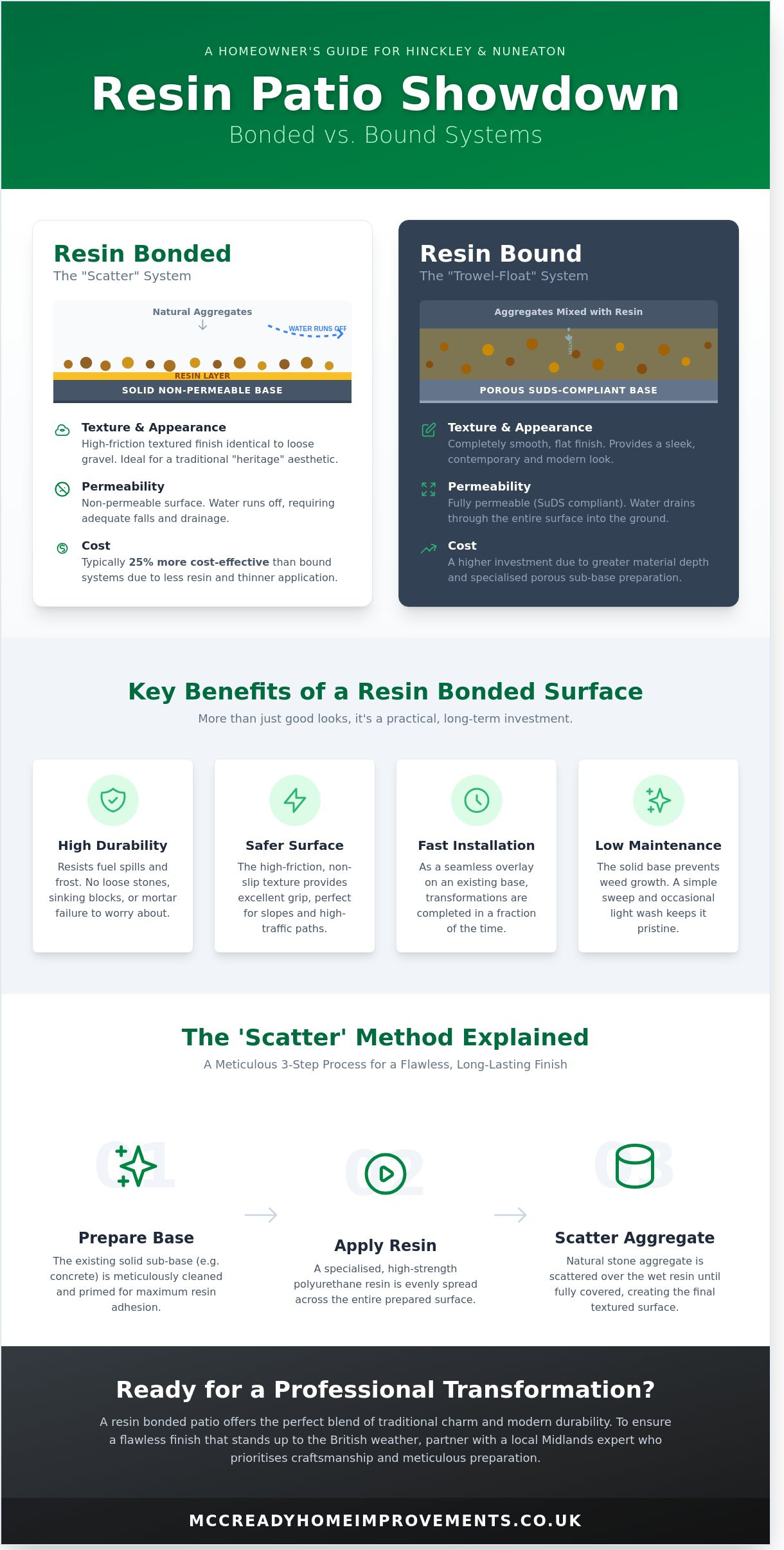
Choosing the right surface for your garden involves more than just picking a colour. While both systems use high quality resins and natural aggregates, they serve different purposes. A resin bonded patio is created by spreading resin over a prepared base and scattering loose stone over the top. This results in a high-friction, textured finish that looks exactly like traditional gravel but without the stones migrating into your lawn or house. In contrast, resin bound systems involve mixing the stone and resin together before laying, creating a smooth, flat surface.
For a deeper look at the installation process and benefits of these permeable systems, resources from ResinBound Dublin offer valuable comparisons for homeowners considering a premium upgrade.
Budget often dictates the starting point for many Hinckley homeowners. Resin bonded installations are typically 25% more cost-effective than bound systems. This price difference exists because bonded surfaces require less resin and a thinner application depth. For a large patio area, these savings allow you to allocate funds toward other landscaping features like bespoke walling or new turf. Despite the lower price point, the durability remains high. These surfaces handle the variable Midlands climate well, resisting the frost-thaw cycles that often crack traditional paving slabs.
- Resin Bonded: Non-porous, high-grip texture, traditional gravel appearance, lower cost.
- Resin Bound: Fully permeable, smooth finish, contemporary look, higher investment.
Permeability and SUDs Compliance
The biggest technical difference lies in how the surface handles rain. A resin bonded patio is non-porous. Water stays on the surface rather than soaking through the material. This makes drainage planning essential. In parts of Nuneaton where heavy clay soil is common, water management is our priority. We design every project with a precise 1:60 fall to ensure runoff flows directly into existing gully drains or soakaways. McCready Home Improvements manages this entire process, ensuring your new space meets local building regulations without the risk of standing water. If your garden is prone to heavy flooding, we might suggest a bound system, but for most standard garden layouts, a bonded finish with correct falls works perfectly.
Aesthetics and Colour Choices
The “scattered” nature of bonded resin provides a depth of colour that bound systems sometimes lack. The stones sit on the surface, catching the light and providing a rustic charm that complements Hinckley’s traditional red brickwork. For 2026, we see a shift toward earthy, grounded palettes. Silver Grey remains a top choice for modern renovations, providing a clean contrast to dark fencing. Brittany Bronze and Autumn Quartz are frequently requested for more traditional homes, as these blends mirror the natural tones found in local stone. Our team focuses on the finer details, ensuring the aggregate size and shade match your home’s existing character perfectly.
If you are weighing up the benefits of these different finishes for your outdoor space, our local experts can provide a site survey to help you decide which system best fits your property’s specific drainage needs and style.
The Benefits and Limitations of a Resin Bonded Surface
Choosing a resin bonded patio involves understanding the balance between its high-performance grip and its specific structural requirements. This system differs from resin bound surfacing because the aggregate is scattered over a resin layer, leaving the top texture of the stones exposed. This creates a finish that feels like solid stone underfoot but remains firmly anchored to the base. It’s a robust choice for Hinckley homeowners who want the look of loose gravel without the constant maintenance of raking stones back into place.
Safety and Slip Resistance
Safety is often the primary reason local homeowners choose this finish. The exposed aggregate provides a high-friction surface that achieves a Pendulum Test Value (PTV) often exceeding 65. This rating is classified as a low slip risk even in wet conditions. It makes the material the safest choice for sloped garden paths or areas where the elderly and young children walk frequently. While a standard tarmac driveway offers decent grip, the sharp texture of a resin bonded surface provides superior traction during heavy Leicestershire rain. It’s a reliable solution for “round-the-house” walkways that need to stay safe and accessible year-round.
Longevity in the UK Climate
The Midlands faces unpredictable weather, from sharp frosts in January to heatwaves in July. Resin bonded surfaces are incredibly durable, resisting damage from petrol, oil leaks, and the repetitive frost-thaw cycles that often crack traditional paving slabs. We use UV-stable resins to ensure south-facing gardens don’t suffer from the “yellowing” effect caused by constant sun exposure. Professional-grade polyurethane resin is essential for a 10-year+ lifespan. This high-quality material maintains its structural integrity and colour even under constant environmental stress and heavy foot traffic.
Technical Limitations and Installation Standards
Despite these strengths, a resin bonded patio has specific limitations that require a professional eye. It is not a porous system, so it requires a slight fall or dedicated drainage to allow water runoff. You can’t install this over a “loose” sub-base like sand, soil, or crushed stone. It requires a solid, monolithic base such as existing concrete or tarmac to bond correctly. If the base moves, the resin will crack.
One common concern is “stone shed,” where loose gravel detaches from the resin over time. This usually happens if the resin is spread too thinly or if the weather was too damp during the 2026 installation window. Professional installation prevents this by ensuring the correct resin-to-stone ratio and applying the materials only in optimal dry conditions. This meticulous approach ensures the stones remain locked in place for the long term, protecting your investment and your home’s kerb appeal.
Designing Your Perfect Patio in Hinckley & Nuneaton
Designing a resin bonded patio involves more than just picking a colour. We look at your garden as a complete system to ensure the finish lasts for decades. We start by checking if your existing concrete or paving slabs are structurally sound. If they’re stable and free from significant movement, we can often overlay them. This approach saves you the cost and mess of a full excavation, provided the base meets our strict stability criteria.
We always frame the resin with block paving or brickwork borders. These aren’t just for show. They provide a solid “retaining edge” that prevents the resin from fraying at the perimeter. Your patio should also work with your boundaries. We often coordinate our installations with new fencing and gates to ensure the heights and levels match perfectly across the entire plot.
Drainage is a non-negotiable part of our design process. While resin bonded surfaces are non-permeable, we ensure a minimum 1 in 80 fall to direct rainwater into existing gullies or soakaways. This prevents water from pooling against your house walls, which can lead to damp issues in older properties common in Hinckley.
Base Preparation for Midlands Soil
Nuneaton and Hinckley sit on heavy clay soil. This type of earth expands and contracts significantly based on seasonal moisture levels. A resin bonded patio requires a rigid, non-moving base to prevent the surface from cracking under these shifts. We clean every surface with industrial pressure washers and apply a high-strength primer to guarantee the chemical bond. If we find cracks in your existing concrete, we repair them with epoxy resin fillers before the main application. This stops any minor movement from reflecting through to your new surface.
Bespoke Design Touches
We use different aggregate sizes to create visual interest and define specific zones. A 1-3mm stone offers a smoother, tighter finish, while a 2-5mm size provides a more textured look. You might choose a 1-3mm “feature area” around a bistro set, surrounded by a larger 2-5mm aggregate for the main walkways. We plan the layout to follow the natural flow of your home. Most homeowners prefer a design that transitions seamlessly from the back door to the lawn, often using curved edges to soften the landscape and create a more organic feel.
Ready to transform your garden with a professional finish? Contact McCready Home Improvements for a site survey.
Professional Resin Installation by McCready Home Improvements
Choosing McCready Home Improvements means you’re partnering with a team that values precision. We don’t just lay surfaces; we build lasting outdoor features. Our commitment to detail ensures every resin bonded patio we install meets high standards of durability and aesthetic appeal. We treat your property with the same care we’d give our own homes. This means we maintain a tidy site and deliver a seamless finish that enhances your property value and curb appeal.
Local knowledge is vital for a successful installation in Hinckley and Nuneaton. We plan our projects around the specific microclimates of the East Midlands. This ensures the resin cures perfectly without interference from unpredictable weather patterns. Our team manages every stage of the journey. We handle everything from the initial groundworks and subbase preparation to the final site clear-up. We follow a strict professional process that minimises disruption to your daily life while ensuring the structural integrity of the surface. Our workflow includes:
- Free no-obligation estimates tailored to your specific project needs.
- Full compliance with the latest 2026 drainage regulations and SUDS requirements.
- A dedicated installation team that treats your home with absolute respect.
- A comprehensive final site clear-up that leaves your garden ready to use immediately.
Why Choose a Local Specialist?
The rise of “cowboy” installers in the home improvement sector remains a concern for homeowners. We’ve built our reputation on transparency and local accountability. We understand the specific drainage requirements and soil conditions common in Leicestershire and Warwickshire properties. Our team uses high-quality, locally sourced aggregates whenever possible. This ensures your new resin bonded patio complements the existing architecture and stonework of your neighbourhood. Local expertise allows us to navigate planning considerations efficiently, often saving homeowners weeks of potential delays compared to national contractors who don’t understand local council expectations.
Get Your Free Estimate Today
Transforming your garden starts with a straightforward conversation. When you contact McCready Home Improvements, we provide a bespoke consultation tailored to your specific goals. During our site visit in Hinckley or the surrounding areas, we assess your current subbase, measure the area accurately, and discuss various colour blends. We provide a clear, written estimate with no hidden costs. Our goal is to provide a professional finish that remains durable and beautiful for decades. Contact our team today to schedule your visit and take the first step toward a high-quality, low-maintenance outdoor space you can be proud of.
Transform Your Hinckley or Nuneaton Garden for 2026
Choosing a resin bonded patio gives your home a high-grip, durable finish that handles the Midlands weather with ease. This system provides the classic look of loose gravel without the mess, using premium polyurethane resins to lock every stone in place. Our team brings over 15 years of local experience to every project, ensuring your outdoor space benefits from expert craftsmanship and attention to detail. We focus on delivering a seamless transformation that balances aesthetic excellence with practical safety for your family. You’ll receive a surface designed for longevity, backed by a professional team that treats your home with total respect. It’s time to move from the planning stage to a finished result you can trust. We provide the technical expertise and the local touch needed to make your landscaping vision a reality this year.
Book your free resin bonded patio estimate in Hinckley or Nuneaton today
We’re ready to help you create a stunning, low-maintenance space that serves your home for years to come.
Frequently Asked Questions
Can a resin bonded patio be laid over old paving slabs?
You can lay a resin bonded patio over old paving slabs provided they are structurally sound and free from movement. Our team assesses the existing substrate to ensure a 100% stable foundation before application. If the slabs are loose or cracked, they must be removed or repaired first. This method saves on excavation costs and reduces project waste by roughly 40% compared to a full dig-out.
Is a resin bonded surface permeable to water?
A resin bonded patio is not permeable to water because the resin forms a solid, non-porous layer over the base. Unlike resin bound systems, which allow water to drain through, bonded surfaces act as a waterproof seal. You must ensure your patio has a 1 in 60 fall to direct surface water toward a drainage point. This prevents pooling and complies with UK SuDS regulations for non-permeable surfaces.
How long does a resin bonded patio take to install and dry?
Most installations take 1 to 2 days to complete depending on the weather conditions and the size of your garden. The surface is typically touch-dry within 4 to 6 hours in standard UK temperatures of 15°C. You can walk on the area after 24 hours, but we recommend waiting 48 hours before placing heavy garden furniture or large planters on the new finish.
Does a resin bonded patio require a lot of maintenance?
Maintenance for a resin bonded patio is minimal and generally involves a simple sweep and an occasional wash. You don’t need to worry about weeds growing through the surface as there are no gaps for seeds to take root. A quick jet wash once every 12 months removes organic growth like algae or moss. This keeps the aggregate looking vibrant and prevents the surface from becoming slippery during winter.
Will the stones on my resin bonded patio come loose over time?
You’ll notice a small amount of loose stone shedding during the first 4 weeks after installation. This is a normal part of the curing process where excess aggregate that didn’t adhere to the resin works its way loose. Once this initial period passes, the stones remain fixed firmly in place. High-quality resins used today are designed to withstand 10 years of typical foot traffic without significant stone loss.
Is resin bonded cheaper than block paving for a patio?
Resin bonded surfaces are often 20% to 30% cheaper than traditional block paving when we install them over an existing concrete or tarmac base. This price difference comes from the reduced labour and material costs associated with excavation and sub-base preparation. However, if a completely new base is required, the costs align more closely. We provide a detailed breakdown of these figures during our initial site visit.
Can I install a resin bonded patio myself using a kit?
We don’t recommend installing a resin bonded patio yourself because the resin sets rapidly and requires professional precision. Professional installers use specialist equipment to ensure an even spread and a seamless finish. A DIY mistake often leads to “shiners” or bald patches where the resin is visible. Fixing a failed DIY attempt can cost twice as much as a professional installation due to the removal fees involved.
How do I clean a resin bonded patio without damaging the surface?
Clean your patio using a stiff brush and warm soapy water to remove everyday dirt and debris. If you use a pressure washer, keep the nozzle at least 25cm away from the surface and use a fan spray pattern rather than a direct jet. Avoid using harsh chemicals or bleach, as these can degrade the resin bond over time. Regular cleaning every 6 months maintains the aesthetic appeal and safety of your outdoor space.
