
Imagine opening your back door after a rainy afternoon only to have your energetic dog race through the kitchen, leaving a trail of thick, brown paw prints across your freshly cleaned floors. It is a scene many homeowners know too well, alongside the constant battle against yellow urine patches and deep holes from persistent digging. You want a garden that looks pristine, but you also want your pet to have the freedom to play. This leads many to ask: is artificial grass good for dogs?
We understand that your garden is an investment in your home’s value and your family’s lifestyle. If you are one of the 70% of gardeners who also own pets, you need a solution that balances aesthetics with rugged durability. This guide will show you how to achieve a mud-free, evergreen space that stands up to heavy use. We will explain the importance of flow-through drainage systems, how to prevent ammonia odors using specialized infills like zeolite, and why professional installation is the secret to a long-lasting result. You will learn exactly how to create a safe, clean, and beautiful outdoor area that both you and your dog will love year-round.
Key Takeaways
- Learn why the answer to is artificial grass good for dogs is a definitive yes for owners seeking a mud-free, durable surface that survives even the most energetic pets.
- Understand the critical role of polyurethane backing and specialized infills in neutralizing ammonia and preventing unpleasant garden odors.
- Discover the structural requirements of a high-quality sub-base and why professional ground preparation is vital for a flat, mud-free result.
- Explore how to design a cohesive, low-maintenance garden by zoning your space to protect both your lawn and your flower beds.
- Identify the safety features of modern synthetic turf that provide a non-toxic and soft play area for your pets to enjoy throughout the year.
Is Artificial Grass Good for Dogs? The Short Answer
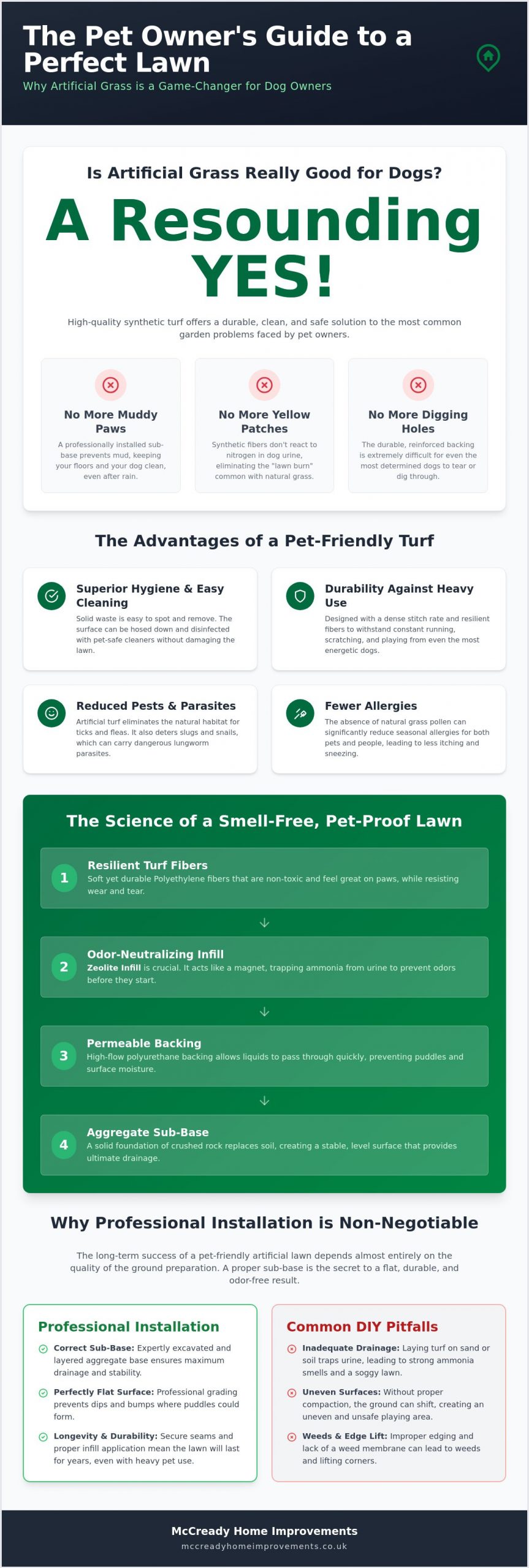
The short answer is a resounding yes. When homeowners ask is artificial grass good for dogs, they are usually looking for a way to reclaim their garden from mud, holes, and dead patches. High-quality synthetic turf provides a consistent, durable surface that withstands the high-impact “zoomies” that typically turn a natural lawn into a dustbowl. It’s a practical solution that balances a beautiful aesthetic with the rugged demands of pet ownership. Your garden remains green and usable, no matter how many times your dog circles the perimeter at full speed.
Success depends on the technical details. You can’t simply roll out any green carpet and expect it to work for a Labrador or a Spaniel. The result relies on selecting pet-specific materials and ensuring professional-grade drainage. Modern manufacturing has come a long way since the early days of plastic grass. Looking at the history and materials of artificial turf, it’s clear that today’s polyethylene and polypropylene fibers are engineered for safety and resilience. These materials don’t react to the nitrogen in dog urine, which means you can finally say goodbye to the “yellow patch” syndrome that plagues natural grass lawns.
The End of Muddy Paws in Hinckley
Local gardens in Hinckley often face a specific challenge: heavy clay soil. This type of earth stays wet and sticky for days after a light shower, turning your lawn into a quagmire. When we install artificial grass, we remove the top layer of soil and replace it with a structured aggregate sub-base. This creates a clean drainage layer that allows water and urine to pass through quickly instead of sitting on the surface.
The relief for homeowners is immediate. You no longer have to stand at the back door with a towel, wiping paws after every garden visit. Your kitchen floors stay clean, and your dog can enjoy the outdoors even in the middle of a British winter. It transforms the garden into a usable extension of your home rather than a high-maintenance chore that requires constant cleaning.
Durability Against Diggers and Scratchers
Natural grass is fragile. A determined dog can ruin a newly laid lawn in minutes. High-quality synthetic fibers are incredibly difficult for dogs to pull or tear because they are securely stitched into a reinforced backing. We use a sand infill to add weight and stability, which protects the turf backing from sharp claws and keeps the fibers standing upright during heavy use.
Pet-grade turf is specifically designed with a denser stitch rate and more resilient polymers than standard domestic grass to ensure it survives years of heavy scratching and digging attempts. This level of durability provides long-term peace of mind, knowing your garden will remain intact regardless of how much your dog loves to play.
Key Benefits of Pet-Friendly Artificial Turf
Beyond keeping your house clean, pet-friendly turf offers significant lifestyle improvements for both you and your pet. One of the most overlooked advantages is the drastic reduction in garden pests. Ticks and fleas thrive in the damp, shaded environment of long, natural grass blades. By switching to a synthetic surface, you remove the primary habitat for these parasites. Similarly, slugs and snails, which can carry the dangerous lungworm parasite, are far less attracted to synthetic fibers than they are to organic soil and decaying vegetation. It’s a proactive way to protect your dog’s health while maintaining a beautiful space.
The visual appeal is another major factor for homeowners. Even in high-traffic areas where a dog might constantly pace or play fetch, the grass remains lush and green. It doesn’t thin out or become a dustbowl in the summer. When considering is artificial grass good for dogs, the long-term health benefits and the reduction in maintenance time often prove to be the deciding factors. You get a garden that looks professionally landscaped every day of the year, regardless of the British weather or your dog’s activity levels.
Hygiene and Easy Waste Removal
Cleaning up after your dog is much simpler on a synthetic surface. The short, upright pile makes solid waste easy to spot and remove immediately. Unlike natural turf, which can be damaged by cleaning chemicals, you can use specialized pet-safe disinfectants to wash away any residue without worrying about killing the lawn. This keeps the garden smelling fresh and maintains a high level of hygiene for the whole family. For dogs that suffer from seasonal allergies, the absence of natural grass pollen can significantly reduce itching and sneezing during the spring and summer months.
Safety and Non-Toxic Materials
Safety is our priority when selecting materials for your home. Modern artificial grass is lead-free, hypoallergenic, and manufactured using non-toxic polymers that are safe for pets to roll on. In 2026, premium installations often feature “cool-to-the-touch” technology. These cooling fibers can reduce surface temperatures by 15 to 25 degrees compared to older synthetic materials, ensuring your dog’s paws stay comfortable even on sunny days. It’s about providing a space that is as safe as it is durable; for those interested in maintaining high safety standards in commercial environments, you can find out more about professional flooring installations.
A truly pet-safe garden requires more than just a durable lawn. We often find that integrating a new lawn with secure fencing and gates creates the ultimate safe haven for your pet. This comprehensive approach ensures they have a secure perimeter while enjoying their new play area. If you’re looking for a total garden transformation, our team provides expert artificial grass installation that focuses on the long-term well-being of your pets and the aesthetic of your property.
The Odour Factor: How Professional Installation Prevents Pet Smells
The most common question we hear from pet owners is whether their garden will eventually smell like a kennel. It is a valid concern. When people ask is artificial grass good for dogs, they are often worrying about the potential for trapped urine to create unpleasant odours during the summer months. The reality is that a lawn only smells if the installation method allows waste to pool and stagnate. Professional installation solves this by focusing on flow-through drainage rather than simple soak-away methods.
Effective odour control starts with the materials you can’t see. We use zeolitic infills, which are natural minerals that act as a molecular sieve. These minerals trap ammonia on a microscopic level and prevent it from turning into a gas. When it rains, the water flushes the ammonia through the system, resetting the infill for continued use. This proactive approach ensures your garden remains fresh even with multiple pets using the area daily. It is a total system designed to manage waste before it becomes a problem.
The Importance of a Fast-Drainage Sub-Base
In Hinckley and across the Midlands, our heavy clay soil creates a natural barrier for water. If you simply lay turf over clay, urine has nowhere to go. We replace the topsoil with a substantial layer of Type 1 MOT or crushed limestone to create a structural drainage void. For households with large or heavy dogs, we increase the depth of this aggregate to prevent shifting and ensure maximum capacity for drainage. While some installers use sharp sand, we prefer granite dust for pet installations. Sharp sand can retain moisture and harbour bacteria, whereas granite dust provides a stable, free-draining finish that keeps the surface dry and clean.
Latex vs. Polyurethane Backing
The backing of the grass itself is the final piece of the puzzle. Most standard domestic grasses use a latex backing. Latex is a natural, porous material that can absorb moisture over time. In a pet environment, this means the backing can hold onto urine, leading to persistent smells that are difficult to wash away. We recommend polyurethane (PU) backing for all our pet-friendly projects. Polyurethane backing does not absorb moisture, making it the hygienic choice for a long-lasting, odour-free garden. This technical difference is often what separates a successful installation from one that requires constant chemical cleaning to stay fresh.
Designing a Cohesive, Pet-Friendly Garden
Designing a garden that works for both you and your pet requires a holistic approach. It is not just about the lawn. It is about how that lawn interacts with your patio, flower beds, and borders. When asking is artificial grass good for dogs, many homeowners focus solely on the turf, but the surrounding design is just as important for a low-maintenance lifestyle. A well-planned garden uses different textures and levels to create a space that is both beautiful and functional. By integrating your lawn with hard landscaping, you eliminate the wear and tear that usually destroys a traditional garden.
Transitioning from your lawn to other areas should be seamless. For example, installing a resin bound patio provides a porous, slip-resistant surface that complements the drainage of your artificial lawn perfectly. This combination ensures your entire garden remains free of standing water even after heavy rainfall. Choosing the right pile height is another critical design choice. For most breeds, we recommend a pile height between 25mm and 35mm. This length is short enough to make waste removal simple but long enough to feel soft underfoot. It strikes the perfect balance between comfort and ease of cleaning.
Matching Turf with Patios and Borders
We aim for a flush transition between the grass and your paving. This prevents dogs from catching the edge of the turf and attempting to pull it up. Using timber sleepers or decorative brickwork creates clear boundaries that help zone the garden. These physical cues can even be used to train your dog to stay away from delicate flower beds. This attention to detail extends to the front of your property too. A tarmac driveway with border ensures your entrance stays as clean and mud-free as your backyard. If you are ready to transform your outdoor space into a pet-friendly haven, our experts at McCready Home Improvements are here to manage every stage of your project.
Maintenance Schedule for Dog Owners
While artificial turf is low-maintenance, it is not zero-maintenance. Following a simple routine protects your investment and keeps the garden fresh for everyone. We suggest the following schedule:
- Weekly: Rinse high-use areas with a garden hose to move urine through the drainage system and prevent crystal build-up.
- Monthly: Use a stiff brush to lift the pile in high-traffic areas where your dog frequently runs and remove any organic debris like leaves.
- Yearly: Schedule a professional deep clean to power-brush the fibres and top up the zeolitic infill to maintain optimum odour control.
Professional Installation vs. DIY: Why the Sub-Base Matters
Many homeowners consider a DIY approach to save on initial costs. However, the ultimate answer to is artificial grass good for dogs depends entirely on the foundation beneath the green surface. A beautiful lawn is only as effective as its sub-base. In the Midlands, our heavy soil requires a specific engineering approach that goes far beyond simply rolling out a carpet. Professional installation ensures that the ground is excavated to the correct depth and replaced with high-quality aggregates that won’t shift under the weight of a large dog.
The most common mistake in DIY projects is poor compaction. Without the use of professional-grade plate compactors, the ground will eventually settle unevenly. This creates “sinking” or dips where urine can pool and rainwater can stagnate. Our approach at McCready Home Improvements focuses on superior craftsmanship and meticulous ground preparation. We build a solid, porous foundation that remains perfectly level for years. This level of care doesn’t just provide a better environment for your pet; it adds tangible value to your property by creating a permanent, high-end garden feature that looks as good as it performs.
Why “Cheap” Turf Often Costs More Later
Opting for a budget installation often leads to hidden problems that appear within the first year. One major risk is weed growth. If the weed membrane isn’t high-grade or isn’t installed correctly between the sub-base and the turf, stubborn weeds can push through the drainage holes. This is not only unsightly but can also damage the backing of your grass. Edging is another area where DIY projects often fail. If the perimeter isn’t securely anchored into a concrete or timber frame, a curious dog will quickly find a loose corner and begin to pull up the grass. A professional installation provides the peace of mind that comes with a guarantee, ensuring your investment is protected against the destructive habits of even the most determined diggers.
Getting a No-Obligation Estimate in Hinckley
Every garden in Hinckley has its own unique challenges, from drainage issues to awkward shapes. We don’t believe in a one-size-fits-all solution. Our process begins with a detailed site visit where we assess your soil type, measure the area, and discuss the specific needs of your dog. We then provide a comprehensive plan that takes you from the initial excavation to the final, mud-free result. We take immense pride in treating every property with the respect of a personal residence, ensuring the final outcome is a polished and reliable space for your family. If you’re ready to say goodbye to muddy paws for good, contact our team today for a free landscaping quote and start your garden transformation.
Transform Your Outdoor Space for Good
Choosing the right surfacing is a significant decision for any pet owner. We have explored why the definitive answer to is artificial grass good for dogs depends on the quality of the installation and the materials selected. By prioritising a fast-draining sub-base and polyurethane-backed turf, you eliminate the common issues of lingering odours and uneven sinking. This creates a safe, evergreen environment where your dog can play freely without tracking mud across your clean kitchen floors.
As local Hinckley and Nuneaton experts, we take pride in delivering comprehensive landscaping and driveway solutions that stand the test of time. We understand the unique challenges of Midlands soil and how to overcome them with meticulous craftsmanship. Whether you need a simple lawn replacement or a total garden redesign, we treat every project with the care and attention it deserves. Our goal is to provide you with peace of mind and a garden you can enjoy year-round.
Ready to reclaim your outdoor space? Get a Free Estimate for Your Pet-Friendly Garden Transformation from McCready Home Improvements. We offer free no-obligation estimates to help you plan your project with confidence and clarity. Your perfectly green, pet-safe garden is within reach.
Frequently Asked Questions
Does artificial grass get too hot for dogs in the summer?
Synthetic turf can become warm in direct sunlight, but modern cooling-fiber technology helps manage surface temperatures effectively. Premium materials can be 15 to 25 degrees cooler than older styles of artificial grass. On exceptionally hot days, we recommend a quick rinse with a garden hose to cool the fibers instantly. It is always a good practice to check the temperature with the back of your hand before letting your pet out during a heatwave.
Will my dog try to eat or chew the artificial grass?
Most dogs show very little interest in chewing synthetic turf because it lacks the organic scent and taste of natural grass. The polyethylene fibers are non-toxic and durable, making them unappealing to most pets. If your dog is a persistent chewer of non-food items, providing plenty of toys and mental stimulation usually prevents any interest in the lawn. The fibers are securely stitched into the backing to resist pulling.
How do I clean dog urine and mess off the synthetic turf?
You should remove solid waste just as you would on a natural lawn and then rinse the area if needed. Urine drains away through the permeable backing and the aggregate sub-base we install beneath the surface. To keep everything fresh, rinse high-use areas weekly with a hose. For thorough hygiene, use a pet-safe enzymatic cleaner occasionally to ensure the answer to is artificial grass good for dogs remains a positive one for your household.
Can dogs dig through the grass or pull up the edges?
It is almost impossible for a dog to dig through the reinforced backing of a professional-grade artificial lawn. The durability of the material withstands persistent scratching and “zoomies” without tearing. We prevent dogs from pulling up the corners by securely anchoring the perimeter to a timber or concrete frame. This professional finishing ensures the lawn stays flat and intact regardless of how much your dog tries to find a loose edge.
Is artificial grass safe for puppies who are still being toilet trained?
Artificial turf is an excellent surface for toilet training puppies because it is consistent and easy to keep clean. Puppies find the soft texture inviting, which helps them establish a routine quickly. Because the surface is non-porous and easy to disinfect, you can maintain a much higher level of hygiene than is possible with a natural lawn. This reduces the risk of your puppy picking up bacteria or parasites during their vulnerable early months.
How long will an artificial lawn last with a large dog?
A professionally installed pet lawn typically lasts between 10 and 15 years even with the activity of large, heavy breeds. The lifespan depends on the quality of the sub-base and the density of the turf fibers. For breeds like Labradors or Retrievers, we recommend a shorter, denser pile that resists matting and stands up to heavy traffic. Regular brushing helps keep the fibers upright and extends the life of the installation.
Does artificial grass increase the risk of fleas or ticks?
Switching to synthetic turf actually significantly reduces the presence of fleas, ticks, and other parasites in your garden. These pests require the damp, organic environment provided by soil and long, natural grass blades to thrive. Because artificial grass is inorganic and drains quickly, it doesn’t provide a suitable habitat for these insects. It’s a proactive step toward a healthier, more comfortable outdoor environment for your pet.
Can I install artificial grass myself if I have dogs?
While a DIY installation is possible, it often lacks the specialized drainage and compaction required for pet owners. Pet-friendly systems need specific aggregate depths and professional-grade machinery to ensure urine doesn’t pool and cause odors. We understand the challenges of local Midlands clay soil and how to build a foundation that lasts. A professional install provides the stability and drainage necessary to ensure your garden remains a clean, mud-free space for years.
