
Imagine waking up after a heavy December storm in Nuneaton only to find a small, dark patch spreading across your bedroom ceiling. It’s a moment every homeowner dreads, often followed by a frantic search for a reliable roofer who isn’t already booked until spring. Protecting your home shouldn’t be a game of chance against the elements. By implementing proactive winter roof maintenance tips now, you can avoid the stress of expensive emergency call-out fees and the uncertainty of structural damage before the first frost hits the Midlands.
We understand that your property is your most valuable asset, and keeping it dry and warm is a top priority when the weather turns. This guide provides professional roofing strategies and local expert advice tailored for 2026, ensuring your home remains a sanctuary rather than a source of worry. You’ll learn how to identify early warning signs of wear, navigate the latest energy efficiency regulations, and optimize your insulation to keep heating bills under control. We’ll walk you through essential inspection points and the impact of the Building Safety Act to ensure your property stays protected, compliant, and leak-free all season long.
Key Takeaways
- Learn why shifting from reactive repairs to a proactive strategy is vital for surviving the high rainfall and “frost-thaw” cycles predicted for the 2026 UK winter.
- Discover essential winter roof maintenance tips such as clearing drainage channels and conducting ground-level visual checks for loose tiles to prevent internal leaks.
- Understand the hidden risks of moss growth and thermal bridging, which can trap moisture against your property and lead to persistent structural damp patches.
- Master safe post-storm inspection techniques using binoculars to spot debris or mortar fragments without the need for risky ladder work.
- Explore how tailored roofing solutions for Hinckley and Nuneaton homes ensure long-term property protection and improved energy efficiency.
Preparing Your Midlands Home for Winter: Why Roof Maintenance is Essential
Winter roof maintenance isn’t just about fixing leaks after they happen; it’s a proactive strategy to safeguard your home against structural damp and unnecessary heat loss. As we head into the 2026 winter season, homeowners in the Midlands face a double threat of high rainfall and volatile temperature swings. These conditions create a constant “stress test” for any property. Following essential winter roof maintenance tips now ensures that your roof remains a solid barrier rather than a liability when the first Atlantic storm hits Leicestershire.
Small defects that seem harmless during a dry July can rapidly escalate into midnight emergencies during a December gale. High wind loads put immense pressure on every component of your roofing system, from the ridge tiles to the guttering. A single cracked tile or a slightly loose fascia board can be ripped away, exposing the vulnerable timber structure beneath. This exposure often leads to rapid water ingress, which saturates insulation and compromises your home’s thermal efficiency, ultimately driving up your energy bills when you need them to stay low.
The “Frost-Thaw” Cycle Explained
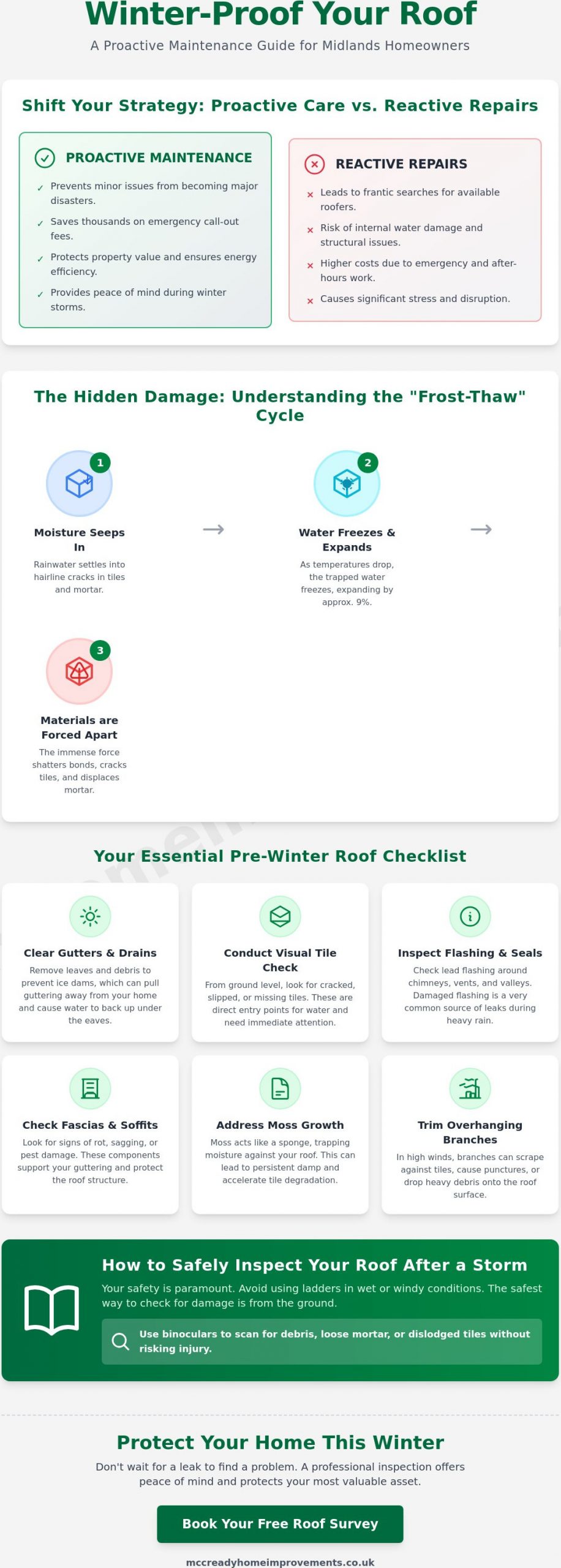
The frost-thaw cycle is the primary cause of winter tile displacement. When rain settles into hairline cracks in your tiles or mortar, it remains there until the temperature drops below freezing. As that water turns to ice, it expands by approximately 9% with incredible force, physically pushing materials apart and shattering the bond between the tile and the roof. This process is particularly damaging to the older ridge tiles and brickwork common in Nuneaton’s traditional housing stock. Understanding what causes ice dams and moisture traps is vital, as these issues often lead to internal damp patches that are difficult and expensive to resolve once the wet season is in full swing.
Protecting Your Home Investment in Hinckley & Nuneaton
In the Hinckley and Nuneaton property market, a well-documented maintenance history is a significant asset. Prospective buyers in 2026 are increasingly savvy about energy performance and structural integrity. A roof that has been professionally surveyed and maintained not only protects your family but also preserves your property value. Local context matters here; our region’s mix of Victorian terraces and modern developments requires a nuanced approach to care.
Choosing a local expert like McCready Home Improvements means you are partnering with a team that understands the specific architectural challenges of our region. While a professional inspection has a modest upfront cost, it is a wise investment compared to the thousands of pounds required for emergency repairs or full structural remediation after a major failure. We take pride in helping our neighbors secure their homes for the long term, treating every roof with the meticulous care it deserves. By addressing minor wear today, you ensure your property remains dry, efficient, and valuable throughout the harshest months of the year.
The Essential Pre-Winter Roofing Checklist for Homeowners
Performing a thorough inspection before the first snowfall is the most effective way to apply your winter roof maintenance tips. You should start by clearing all gutters, downspouts, and drainage channels. Debris like fallen leaves and moss can quickly form blockages that trap water. When this water freezes, it creates heavy ice dams that pull guttering away from your fascias. This University of Minnesota Extension guide highlights how preventing these blockages is critical for avoiding structural damage during the coldest months.
Beyond the drainage system, you must examine the roof’s perimeter and its penetrations. Check the lead flashing around chimneys and valleys for signs of lifting or cracking. These areas are notorious for leaks because they handle the highest volume of runoff. You should also examine your fascias and soffits for signs of rot or sagging. If these timber or uPVC components are compromised, they won’t support the weight of wet snow. Finally, trim back any overhanging tree branches. In a winter gale, these can act as battering rams against your tiles or drop heavy debris that punctures the roof surface.
Gutter Health and Its Impact on Your Driveway
The health of your roof is directly linked to the longevity of your landscaping. When gutters overflow, the concentrated fall of water can erode the jointing sand in block paved driveways. This constant dripping leads to sinking blocks and unsightly staining. Clear downspouts ensure that water is directed away from your foundations, preventing pooling that can cause damp issues in your sub-floor. At McCready Home Improvements, we view your property as a single ecosystem, ensuring your roofing drainage works in harmony with your driveway and garden walls.
Identifying Tile and Slate Issues Early
Spotting “slipped” tiles from the ground is a vital skill for any homeowner. Use binoculars to look for uneven rows or gaps where you can see the dark underfelt beneath. In Nuneaton and Hinckley, many older properties feature traditional Rosemary tiles or natural slate. These materials are durable, but the mortar on ridge tiles often degrades over time. If you see fragments of mortar in your gutters or on the floor, it’s a sign that your ridge tiles are becoming loose. Catching these minor surface wear issues early prevents the need for a full structural repair later. If you’re unsure about the condition of your roof, our team can provide a professional roof repair assessment to give you total peace of mind before the weather breaks.
Industry data from June 2026 indicates that the average cost for professional gutter and downpipe cleaning in the UK falls between £100 and £300. This is a small price to pay to avoid the structural damp issues that follow a blocked system. By following this checklist, you position yourself as a proactive homeowner, ready to face whatever the Leicestershire winter brings.
Addressing the UK Winter Threat: Damp, Moss, and Condensation
While many homeowners view moss as a minor cosmetic issue, it actually represents a significant structural threat during the colder months. Wet moss acts as a heavy, saturated sponge, holding moisture directly against your tiles for weeks on end. This constant contact prevents the roof from drying out, even during brief sunny spells. One of the most effective winter roof maintenance tips is to ensure your roof is clear of biological growth before the heavy rains begin. When moss stays damp, it encourages the deterioration of the tile surface and provides a perfect environment for rot to take hold in the underlying battens.
Internal damp issues aren’t always caused by a direct puncture in the roof. Thermal bridging occurs when heat escapes through a specific part of the roof structure, creating a cold spot on the interior ceiling. When warm air inside your home hits these cold spots, it condenses into water droplets, often mimicking the appearance of a slow leak. Distinguishing between a genuine leak and internal condensation is vital for applying the right fix. Proper roof ventilation plays a critical role here; it allows moist air to escape the loft space, preventing the timber rafters from becoming damp and eventually rotting.
The Problem with Heavy Moss Growth
In the peak of winter, the weight of saturated moss can add hundreds of kilograms of additional load to your roof structure. This extra weight puts unnecessary strain on the rafters and can cause older roofs to sag. Furthermore, because moss holds so much water, it exacerbates the frost-thaw cycle. When the temperature drops, the water trapped within the moss freezes, expanding and causing the tiles beneath to crack or delaminate. As of June 2026, professional roof cleaning for an average 3-bedroom house in the UK typically costs between £300 and £800. Investing in this service, often including a biocide treatment to prevent regrowth, is a proactive way to protect your tiles from premature failure.
Internal Warning Signs: Ceiling Stains and Damp
Your loft space is the best place to find early warning signs of trouble before they become expensive emergencies. On a bright afternoon, turn off the lights in your attic and look for “daylight” peeking through the tiles. Any visible light indicates a gap where water and wind can enter. You should also feel the insulation and timber rafters; if they feel damp or “spongy,” your roof’s integrity is likely compromised. A small, yellowish stain on a bedroom ceiling shouldn’t be ignored, as it usually points to a long-term slow leak that is already damaging your internal plasterwork. For a more detailed guide on diagnosing these issues, you can consult our checklist for roof repairs leicester to ensure your property remains dry and secure all winter.
How to Safely Inspect Your Roof After a Winter Storm
After a severe winter gale in Hinckley or Nuneaton, your first instinct might be to grab a ladder and climb up for a closer look. However, safety must always be your primary concern. Wait for the weather to clear completely and for the wind to drop before conducting any visual assessment. One of the most practical winter roof maintenance tips is to use a pair of high-quality binoculars to perform a ground-level inspection. This allows you to spot subtle shifts in your roofline without putting yourself at physical risk.
Start your inspection by walking around the entire perimeter of your property. Look for physical evidence of damage on the floor, such as fragments of mortar or broken pieces of tile. These are clear indicators that the storm has compromised your roof’s integrity. You should also check your guttering system from the ground; look for sections that appear to be sagging or pulling away from the house. Once you’ve finished outside, head into your attic with a torch to check for damp smells or new water stains on the rafters immediately after heavy rain. You must never attempt to walk on a wet or icy roof, as the risk of a fatal fall far outweighs any benefit of a closer look.
Post-Gale Checklist for Midlands Properties
High winds in the Midlands often create a suction effect on the “leeward” side of a building, which can lift tiles even if they aren’t directly facing the wind. Pay close attention to your chimney pots and cowls; these are often loosened by persistent gusts and can become dangerous projectiles if they fall. Another subtle sign of trouble is finding a large amount of mineral grit in your gutters. This grit is the protective surface of your tiles, and its presence in the drainage system suggests that your roof is reaching the end of its functional life and may require more than just simple winter roof maintenance tips to survive the next season.
When to Call a Professional vs. When to Wait
Knowing when to call for help can save you thousands in the long run. A genuine roofing emergency includes active internal leaks that are saturating your ceiling or visible structural sagging in the roofline. While “patching” a roof in the middle of January might stop a leak temporarily, it’s rarely a permanent solution. If your property has suffered significant storm damage, a professional report is often essential for your insurance claim. In 2026, many homeowners are opting for drone surveys, which typically cost around £200 and provide high-resolution evidence of damage without the need for scaffolding. If you’ve spotted any of these warning signs, we recommend booking a professional roofing survey to ensure your home remains secure and your insurance coverage stays valid.
Professional Roof Repairs in Leicestershire: The McCready Approach
McCready Home Improvements approaches every project with the meticulous care of a dedicated local partner. We recognize that Hinckley and Nuneaton properties range from heritage terraces to contemporary builds, each requiring a specific technical touch. While following basic winter roof maintenance tips helps you spot early trouble, professional intervention ensures those issues are resolved with high-level skill. We take pride in our reputation for craftsmanship, providing the peace of mind you need when the Midlands weather turns unpredictable.
Our expertise covers the full spectrum of roofing needs. We handle intricate repairs on traditional tiled roofs and specialize in new roof installations for homeowners looking for a total property upgrade. For flat roofing systems, we prioritize high-performance materials like EPDM. This synthetic rubber is specifically designed for the UK climate, offering exceptional resistance to UV radiation and the temperature fluctuations that often cause lesser materials to crack and leak.
Comprehensive Property Maintenance Solutions
Our team provides a total home solution that extends far beyond the roofline. We understand how your roofing drainage impacts your block paving or gravel driveway; we integrate these services to protect your entire property from water damage. Being a local team means we are familiar with the specific wind tunnels and rainfall patterns that affect Leicestershire neighborhoods. We offer free, no-obligation estimates for all residential projects. This ensures you have a clear understanding of the professional process and the expected results before any work begins on your home.
Securing Your Home for 2026 and Beyond
A professional repair is an investment in your home’s long-term future. DIY quick-fixes often fail at the height of a storm, leading to secondary damage that costs significantly more to rectify. As we move through 2026, the UK’s weather is becoming increasingly volatile, making structural reliability more important than ever. We focus on the longevity and polished nature of our results, treating your residence with the respect it deserves. Our work follows a logical, step-by-step manner that ensures every tile is secure and every seal is watertight. If you have concerns about your property’s readiness for the months ahead, contact McCready Home Improvements today for a comprehensive winter roof assessment.
Secure Your Home for the Season Ahead
Taking a proactive approach to your property’s health is the most effective way to avoid the stress of winter emergencies. By implementing these winter roof maintenance tips, you move from reactive repairs to a strategy of long-term protection. You now understand how to spot the early warning signs of the frost-thaw cycle and why managing drainage is essential for your home’s structural integrity. Protecting your roof isn’t just about stopping leaks; it’s about preserving your property’s value and ensuring your family stays warm and dry during the harshest months.
Our expert local team serving Hinckley and Nuneaton takes pride in delivering meticulous craftsmanship on every project. We are specialists in both traditional tiled roofs and modern flat roofing systems, providing a total property solution that ranges from your gutters down to your driveway. We treat every home with the respect it deserves, ensuring our results are both reliable and aesthetically polished. Book your free winter roof inspection with McCready Home Improvements today to secure your property for 2026. We look forward to partnering with you to keep your home safe and efficient all year round.
Frequently Asked Questions
How often should I have my roof inspected for winter maintenance?
You should aim to have your roof professionally inspected at least once a year, preferably during the autumn months before the severe weather arrives. This allows you to identify minor issues like loose tiles or degraded mortar before they turn into emergencies. Regular annual checks are the cornerstone of effective winter roof maintenance tips, ensuring that your property remains watertight and structurally sound throughout the coldest part of the year.
Is it safe to clear snow off my own roof in the UK?
It is generally not safe or necessary for homeowners to clear snow from their own roofs in the UK. Most residential structures are designed to handle the weight of typical British snowfall without issue. Attempting to climb onto a snowy or icy roof carries a high risk of slips and falls, which can be fatal. If you are concerned about the weight or an ice dam, it’s best to consult a professional rather than risking your safety.
How do I know if my gutters are failing or just full of leaves?
You can distinguish between a blockage and a structural failure by looking for specific signs of wear. If water is spilling over the front during rain, it’s likely just full of leaves or debris. However, if you see water marks on the brickwork behind the gutter or notice the plastic sagging away from the fascia boards, the system itself may be failing. Sagging often indicates that the brackets have snapped or the timber beneath has rotted.
What are the most common roof problems caused by UK winter weather?
The most frequent issues include tile displacement from high winds and the cracking of mortar due to the frost-thaw cycle. Heavy rainfall also tests the integrity of lead flashing around chimneys and valleys. These areas are prone to leaks if they haven’t been properly maintained. Additionally, persistent dampness can lead to moss growth, which holds moisture against the tiles and accelerates the degradation of the roof’s protective surface during the winter months.
Can I have a new roof installed during the winter months?
Yes, new roof installations can be carried out during the winter, provided the weather conditions are managed carefully by a professional team. While rain or high winds might cause slight delays, modern roofing techniques allow for sections to be stripped and recovered quickly. A professional contractor will monitor the forecast to ensure the internal structure remains protected throughout the process. Installing a roof in winter can often be a necessary step to prevent further damage to your home.
Why does my roof have damp patches in the loft even if it is not raining?
Damp patches that appear when it’s dry outside are usually the result of internal condensation rather than a leak. When warm, moist air from your living spaces rises into a cold loft, it settles on the underside of the roof felt or timbers. If your loft lacks adequate ventilation, this moisture can’t escape and eventually drips onto your insulation. Improving your roof’s airflow is a key part of long-term winter roof maintenance tips to prevent timber rot.
How much does a typical winter roof repair cost in Hinckley?
The cost of a roof repair depends entirely on the scope of the work and the materials required. Minor tasks like replacing a few slipped tiles or re-pointing a small section of ridge tiles are relatively affordable compared to structural remediation. We recommend obtaining a detailed, itemized quote to understand the specific requirements of your project. Investing in a professional repair now prevents the need for more expensive interventions once the weather worsens.
What is the best way to prevent ice dams on a UK roof?
Preventing ice dams requires a combination of effective loft insulation and clear drainage. You should ensure that your loft is well-insulated to prevent heat from escaping and melting the snow on your roof unevenly. Simultaneously, keep your gutters and downspouts clear of debris so that any melted snow can drain away freely. When water is trapped in gutters and freezes, it creates a dam that forces moisture back under your tiles and into your home.
