
How many times can you patch a leaking flat roof before you realize you’re just throwing good money after bad? It’s a common frustration for homeowners in Hinckley and Nuneaton who are tired of dealing with “ugly” felt roofs that seem to fail every few years. You want a solution that actually lasts, rather than a temporary fix that leaves you worrying every time the Midlands weather takes a turn for the worse.
We believe your home deserves better than a constant cycle of damp patches and expensive repairs. One of the primary benefits of EPDM roofing is its incredible “fit and forget” nature, offering a leak-free life for 30 years or more. In fact, high-quality EPDM membranes are now recognized for offering up to 50-year durability and unmatched resistance to the elements. This article will show you why rubber has become the gold standard for local flat roofs in 2026. We’ll break down the long-term cost savings, explain how it meets the latest energy efficiency standards, and show you how a professional installation can finally give you the neat, tidy finish your property deserves.
Key Takeaways
- Learn how EPDM handles the specific challenges of the Midlands climate, from freezing winters to intense summer UV radiation, without becoming brittle.
- Compare the flexibility of rubber membranes against rigid alternatives like GRP to find the best structural fit for your specific flat roof project.
- Discover the long-term environmental and financial benefits of EPDM roofing, including its 100% recyclability and role in improving home energy efficiency.
- Understand the critical importance of professional substrate preparation and precision corner detailing in achieving a neat, “fit and forget” finish.
What is EPDM Roofing and Why is it Trending in 2026?
For decades, flat roofs were synonymous with recurring leaks and messy, temporary maintenance. That has changed as homeowners across Hinckley and Nuneaton search for more reliable, long-term alternatives. EPDM rubber (Ethylene Propylene Diene Terpolymer) is a high-performance synthetic membrane that has successfully bridged the gap between heavy-duty industrial protection and residential aesthetics. While it was once reserved for large commercial warehouses, it is now the gold standard for home extensions, garages, and dormer windows.
In 2026, we’re seeing a massive shift away from traditional “torch-on” felt. Local residents are increasingly wary of the fire risks associated with hot-torch installations and the notoriously short lifespans of bitumen products. One of the major benefits of EPDM roofing is that it offers a modern, cold-applied solution. This removes the danger of open flames on your property while providing a finish that looks far more polished than old-fashioned felt. It just works. By choosing a material originally designed for the rigours of industrial environments, you are investing in a system that treats your garage or extension with the same level of respect as a major commercial facility.
This approach of applying industrial-grade quality to residential projects is a standard upheld by professional contractors like Rainier Roofing LLC, who specialise in high-performance roofing for both homes and businesses.
The Science of Synthetic Rubber Membranes
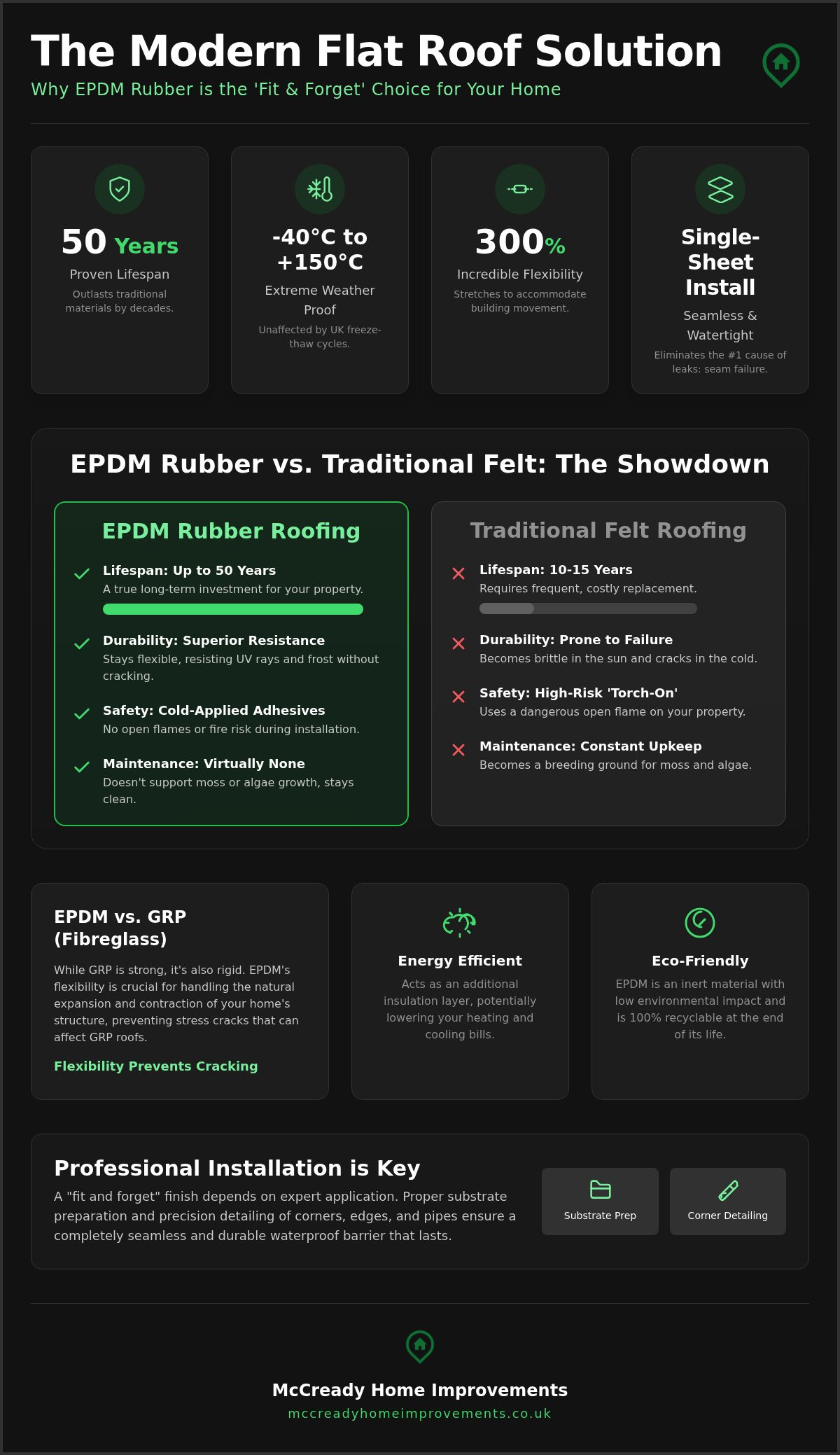
The secret to the longevity of this material lies in its molecular structure. It doesn’t just sit on your roof; it works with your home. The membrane remains incredibly flexible in extreme conditions, handling temperatures from as low as -40°C to as high as +150°C without cracking or degrading. Most residential projects in the Midlands can be covered with a single, seamless sheet of rubber. This eliminates the “seam failure” that causes so many headaches with older roofing styles. Additionally, the inclusion of carbon black in the manufacturing process provides superior UV resistance. This ensures the sun won’t turn your roof brittle over time, which is a common failing of traditional materials.
EPDM vs. Traditional Bitumen Felt
The difference between these two materials is stark, especially when you consider the UK’s unpredictable frost cycles. Traditional felt is rigid. When the temperature drops in Hinckley, felt often struggles to cope with the natural expansion and contraction of the building, leading to splits and damp patches. EPDM is different. It can stretch up to 300% to accommodate building movement.
- Lifespan: A standard felt roof might last 10 to 15 years, whereas EPDM is now recognized for its 50-year durability.
- Safety: We use cold-applied adhesives rather than dangerous hot-torch methods, ensuring a safer installation process for your family.
- Maintenance: One of the key benefits of EPDM roofing is the lack of ongoing costs. It doesn’t support moss or algae growth, keeping your roof looking neat and tidy for decades.
Choosing rubber isn’t just about stopping a leak today. It’s about making a smart, one-time investment that protects your property for the next 30 years or more.
Unbeatable Durability: How EPDM Survives the UK Climate
Homeowners in Hinckley and Nuneaton are well aware that the Midlands weather is rarely predictable. We often experience heavy frost in January followed by intense summer sun, sometimes in the same week. This constant shift creates a “freeze-thaw” cycle that is devastating for traditional materials. When water settles on a felt roof and freezes, it expands, widening tiny cracks until the roof eventually fails. One of the standout benefits of EPDM roofing is its ability to ignore these temperature swings. Because the rubber is naturally elastic, it stretches when things get cold and settles back when they warm up. It doesn’t crack under pressure.
The EPDM Roofing Association notes that this material is virtually immune to ozone and UV radiation. Unlike bitumen roofs that become brittle and “alligator” under the sun, rubber stays supple. This is vital for preventing the leaks that usually appear after a decade of exposure. You’ll also notice that your roof stays cleaner. Traditional felt often becomes a breeding ground for moss and algae, which hold moisture against the surface and accelerate decay. Rubber doesn’t provide the organic nutrients these organisms need to thrive. Your roof stays neat, tidy, and functional regardless of the season.
A 50-Year Lifespan for Peace of Mind
When we talk about durability, we aren’t just guessing. The first EPDM roofs installed in the 1960s are still waterproof today, proving the material’s incredible longevity. While the initial cost might be higher than a quick felt patch, the “cost-per-year” is significantly lower. It’s a true “fit and forget” solution. For busy homeowners, this means one less thing to worry about during a storm. If you are planning flat roofing systems for an extension, choosing rubber ensures you won’t be revisiting the project in ten years. It’s the logical final step if you’ve already invested in a new driveway or patio, completing your home’s exterior transformation with a material built to last.
Resistance to Punctures and Foot Traffic
A common myth is that rubber roofing is fragile. People imagine it’s easily popped like a balloon, but the reality is much tougher. Modern membranes, typically ranging from 1.2mm to 1.5mm in thickness, are designed to handle maintenance foot traffic. Whether you’re cleaning windows or clearing gutters, the material holds up. It also provides excellent impact resistance against hailstones and fallen debris. It’s a rugged, industrial-grade shield for your home that doesn’t sacrifice aesthetics. You get the peace of mind that comes with a heavy-duty material without the “industrial” look.
EPDM vs. GRP Fibreglass: Which is Better for Your Flat Roof?
While traditional felt is rapidly becoming a thing of the past, many homeowners are now choosing between two modern heavyweights: EPDM rubber and GRP (Glass Reinforced Plastic) fibreglass. GRP is a popular choice because it creates a hard, attractive, and seamless surface that is incredibly difficult to penetrate. It’s often the preferred material for balconies or areas that see heavy foot traffic. However, for the vast majority of residential flat roofs in Hinckley and Nuneaton, rubber is often the more practical and reliable long-term solution. The primary difference lies in how these materials react to the environment around them.
One of the most significant benefits of EPDM roofing is its inherent silence. Because GRP is a rigid plastic, it expands and contracts at a different rate than the wooden roof structure beneath it. On warm days or during sudden temperature drops, this can lead to audible “cracking” or “popping” sounds as the materials rub against each other. EPDM is a soft, pliable membrane that remains completely silent regardless of the weather. It doesn’t fight against your home; it moves with it. If you have a bedroom directly beneath your flat roof, this lack of noise is a massive advantage for your quality of sleep.
Flexibility vs. Rigidity
Structural movement is a reality for many older properties across the Midlands. As a house settles over the decades, a rigid roof like GRP can develop stress fractures or cracks. These tiny openings are all a leak needs to start causing damage to your ceilings. EPDM’s elastic nature allows it to stretch and bridge these movements without losing its waterproof integrity. While GRP relies on a series of joints and trims that can sometimes fail, a professional EPDM installation typically uses a single sheet. This removes the risk of seams pulling apart as the building naturally shifts.
Installation Speed and Reliability
The installation process for these two materials is also very different. GRP is notoriously finicky. It requires perfectly dry conditions and a specific temperature range to cure correctly. If a sudden Midlands rain shower hits during a GRP installation, the entire project can be compromised. EPDM is far more forgiving. We can install rubber membranes in a much broader range of temperatures and weather conditions. It’s a faster, cleaner, and less disruptive process for the homeowner. You won’t have to deal with the strong chemical odours associated with fibreglass resins, and the project is typically completed in a fraction of the time. Choosing expert flat roofing systems ensures you get a material that is installed correctly the first time, providing a reliable shield for your home without the drama of a complex curing process.
Eco-Friendliness and Energy Efficiency Benefits
Sustainability is a major priority for homeowners in 2026. One of the less discussed benefits of EPDM roofing is its surprisingly low environmental impact compared to traditional building materials. Unlike bitumen felt, which is a byproduct of oil refining and requires significant energy to manufacture, EPDM is a more sustainable synthetic. It’s also 100% recyclable at the end of its long life. Because the membrane can last up to 50 years, it stays on your property rather than ending up in a Midlands landfill every decade. It’s a responsible choice for any modern home improvement project that aims to reduce waste.
Reducing Your Home’s Carbon Footprint
The longevity of rubber membranes is a key factor in their green credentials. A roof that lasts half a century naturally requires fewer raw materials and less energy for transport and installation over the building’s lifespan. Additionally, the material is completely non-toxic. Rainwater runoff from EPDM doesn’t carry the petrochemical pollutants often found in bitumen or lead, making it safe for garden use. In fact, research from the Environmental Benefits of EPDM Roofing indicates that using this material as part of a rainwater harvesting system can reduce water bills by about 40%. It’s also the perfect base for a green or sedum roof, helping to support local biodiversity in Hinckley and Nuneaton while providing a beautiful, natural finish.
Thermal Performance and Insulation
Understanding the benefits of EPDM roofing also means looking at how it integrates with modern thermal standards. Installing a new flat roof is the best time to upgrade your home’s energy efficiency. Under the 2026 building regulations, flat roofs are now expected to achieve U-values as low as 0.15 W/m²K. We use this opportunity to install high-performance insulation boards beneath the rubber membrane. A dry roof is a warm roof. Because EPDM is entirely waterproof and seamless, it keeps your insulation dry and fully functional for decades. Data shows that black EPDM roofing can reduce energy costs by about 30% in colder climates by absorbing heat and minimizing heating usage. If you want to future-proof your property and lower your monthly outgoings, contact us for a free estimate on our flat roofing systems.
Professional EPDM Installation in Hinckley & Nuneaton
Even the highest quality material will fail if the installation is sloppy. While the single-sheet nature of rubber membranes is a major advantage, it requires professional precision to execute correctly. We often see amateur installations where the membrane has been laid over damp or uneven timber, which leads to bubbling and premature failure. Proper substrate preparation is the foundation of everything we do. We meticulously clean the area and replace any rotten deck boards before the adhesive is even touched. This level of care ensures the membrane bonds perfectly, creating a waterproof shield that lasts for decades.
One of the most technical benefits of EPDM roofing is the way it handles complex details. Corner detailing, pipe penetrations, and roof lanterns require expert handling to remain watertight. We use specialized pressure-sensitive tapes and formable flashings that mold to the shape of your roof. This creates a neat, tidy finish that a standard DIY kit simply cannot replicate. Our team takes immense pride in this level of craftsmanship, treating every property in Hinckley and Nuneaton with the same respect we would show our own homes.
The McCready Approach to Flat Roofing
Our process is designed to give you total peace of mind. It begins with a free, no-obligation estimate where we assess the structural integrity of your current roof. We don’t believe in quick wins or temporary patches. We provide a clear plan from the initial design to the final inspection. To achieve a truly polished result, we often recommend integrating your new roof with high-quality fascias, soffits, and guttering. This ensures that water is managed effectively and the entire roofline looks like a single, cohesive unit. It’s about providing a total solution that protects your home from the top down.
Enhancing Kerb Appeal and Property Value
Old-fashioned felt roofs with messy stone chippings are an eyesore. They look dated and often hide underlying issues. Modern EPDM has a sleek, dark grey aesthetic that instantly modernises a property. This visual upgrade is one of the primary benefits of EPDM roofing for homeowners looking to sell or simply improve their home’s exterior. A certified, professionally installed rubber roof is a significant selling point for future buyers, as it represents a maintenance-free investment for the next 30 to 50 years.
Many of our clients choose to revitalise their entire property exterior at once. We can coordinate your roofing project with the installation of new block paved driveways to create a stunning first impression. Combining these high-quality exterior services ensures your home stands out in the neighbourhood for all the right reasons. You get a leak-free home, improved energy efficiency, and a polished look that lasts a lifetime.
Secure Your Home’s Future with a Modern Flat Roof
Choosing a new roofing system is about more than just stopping a leak today. It’s an investment in your property’s longevity and energy efficiency. By moving away from traditional felt and embracing the benefits of EPDM roofing, you’re opting for a material that offers 50-year durability and a sleek, modern finish. Whether you’re protecting a garage or an extension, rubber provides the ultimate “fit and forget” solution for the Midlands climate. It moves with your home, handles the frost, and requires virtually no maintenance.
As a family-run local business serving Hinckley, Nuneaton, and the wider Midlands, we take immense pride in delivering complete home exterior solutions. Our expert installers are dedicated to superior craftsmanship, ensuring every project provides the peace of mind you expect. We don’t just install roofs; we partner with you to enhance your home’s total value. Ready to transform your property? Get Your Free, No-Obligation EPDM Roofing Quote today and make a smart choice that lasts a lifetime.
Frequently Asked Questions
How much does an EPDM roof cost compared to felt?
EPDM generally has a higher initial installation cost than traditional felt, but it offers a significantly lower lifetime cost. While a felt roof may require replacement or major repairs every 10 to 15 years, a rubber roof is designed to last for up to 50 years. This longevity makes it a far more economical choice over the long term. You’re paying for a superior material that eliminates the need for frequent, expensive patch repairs.
Can I walk on an EPDM rubber roof to clean windows?
You can certainly walk on an EPDM roof for occasional maintenance tasks like cleaning windows or clearing gutters. The membrane is designed to be tough and puncture-resistant for standard residential use. However, if your flat roof is intended to be used as a regular balcony or patio area with frequent foot traffic, we would recommend a thicker grade of rubber or a different system to protect the surface from long-term wear.
How long does it take to install a new EPDM roof on a garage?
A standard garage roof installation typically takes between one and two days to complete. Because EPDM is often applied as a single sheet and uses cold-applied adhesives, the process is much faster than traditional multi-layered felt systems. This reduced timeframe minimizes disruption to your daily routine while ensuring your property is made watertight as quickly as possible. Most domestic projects are finished in a single day.
Does an EPDM roof require much maintenance?
One of the key benefits of EPDM roofing is that it requires almost zero maintenance once installed. Unlike felt, it doesn’t support the growth of moss or algae, which often causes structural issues over time. We simply recommend a quick visual check once or twice a year to ensure your gutters are clear and no large debris has collected on the surface. It’s a true “fit and forget” solution.
Is EPDM roofing fire resistant for residential use?
EPDM roofing is highly fire-resistant and meets all current UK building regulations for residential applications. The membrane is manufactured with fire-retardant properties that prevent it from supporting a flame. When professionally installed with the correct underlying materials, it provides a safe and secure barrier for your home. This makes it a reliable choice for extensions, dormers, and attached garages in the Midlands.
Can EPDM be installed over my existing felt roof?
We strongly advise against installing EPDM over an existing felt roof. To ensure a long-lasting result, it’s essential to strip the old material and inspect the timber decking beneath. This allows us to identify and fix any hidden rot or structural issues before adhering the new membrane. Starting with a clean, dry substrate is the only way to guarantee the 50-year durability that rubber provides.
What happens if an EPDM roof gets a small puncture?
If your roof suffers a small puncture from falling debris or accidental damage, it can be repaired easily and permanently. You don’t need to replace the entire membrane. A professional can apply a specialized EPDM patch using a primer and adhesive that chemically bonds to the original sheet. This creates a seal that is just as strong and waterproof as the rest of the roof, saving you from a full replacement.
Why should I choose a local Hinckley roofer for EPDM installation?
Choosing a local Hinckley roofer ensures you’re working with a team that understands the specific building styles and weather challenges of the Midlands. We value our local reputation and aim to build long-term relationships with our neighbors. Being nearby also means we can provide a more responsive service and a personal touch that larger, national companies often lack. We treat every local property with the respect of our own home.
