
Imagine waking up to a fresh damp patch on your bedroom ceiling after a typical Hinckley downpour. It’s a frustrating sight that often points to a single, overlooked culprit: failing leadwork. You aren’t alone in worrying about the potential cost or whether a quick fix with flashing tape will actually solve the issue. Many homeowners feel a sense of dread when they spot water ingress, fearing that a small leak might lead to expensive structural decay.
This guide will show you how to approach lead flashing repair Hinckley with total confidence, ensuring your roof remains a watertight shield. We’ll help you identify the difference between minor wear and critical failure while explaining why industry standards like BS EN 12588 and the use of Code 4 lead are non-negotiable for a lasting result. You’ll learn how to follow the Lead Sheet Association’s best practices to determine if your home needs a targeted patch or a full specialist replacement. By the end, you’ll have the knowledge to protect your property and choose a local partner who treats your roof with the respect it deserves.
Key Takeaways
- Identify early warning signs of failing leadwork from the ground to prevent costly internal damp and structural decay.
- Discover how professional lead flashing repair Hinckley utilizes Code 4 lead and BS EN 12588 standards to ensure a lifetime of weather protection.
- Learn the technical differences between temporary flashing tapes and permanent lead solutions to make an informed investment in your home.
- Gain clarity on the precision bossing and cutting techniques required to create a watertight seal around complex chimney stacks and valleys.
- Understand why a “whole system” approach to roof maintenance provides the ultimate peace of mind for your property’s long-term health.
Understanding Lead Flashing & Its Role in Your Hinckley Home
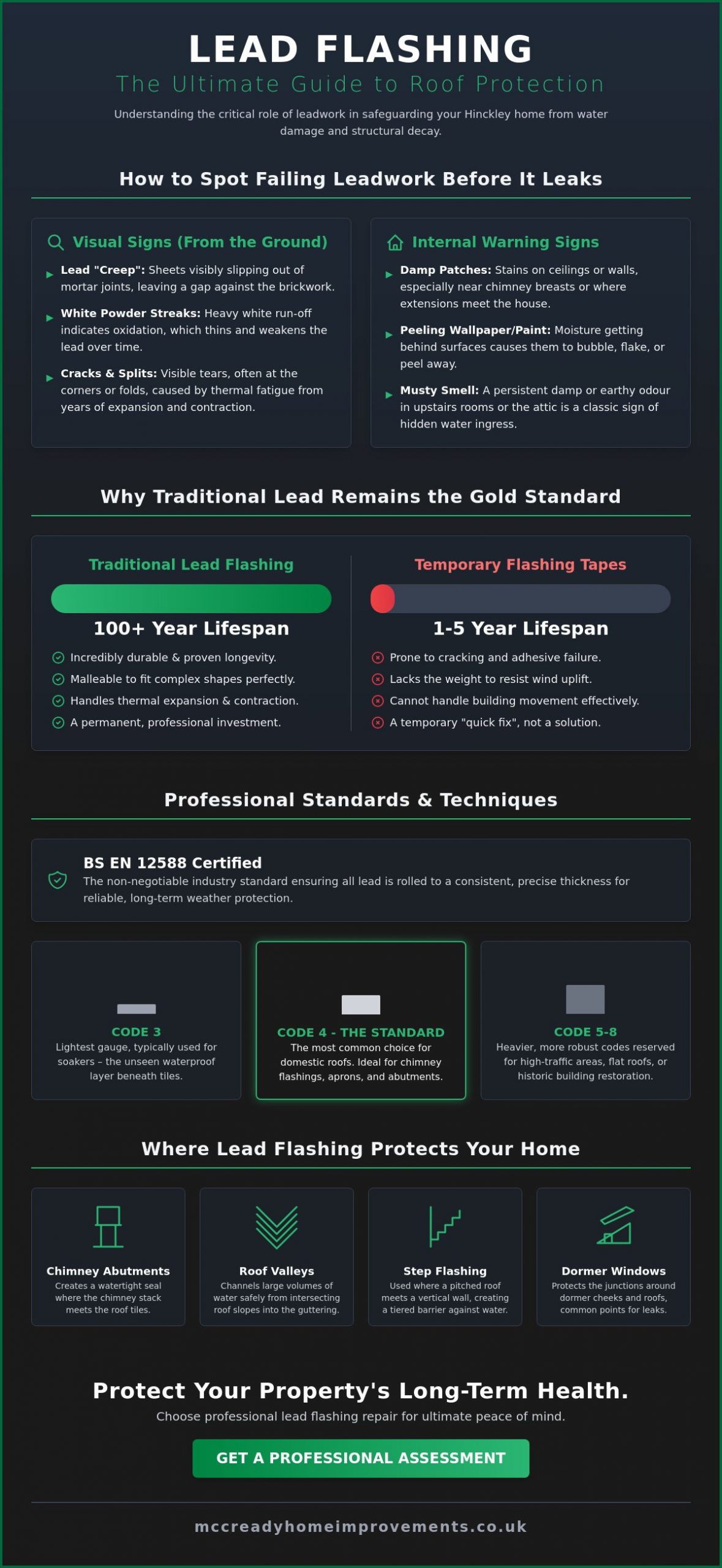
Lead flashing is the weather-proof bridge between your roof tiles and the brickwork of your home. It’s a critical component for Hinckley properties, especially those with traditional chimney stacks, valleys, or dormer windows. By Understanding Lead Flashing, you can see why it remains the first choice for protecting junctions where different building materials meet. It provides a flexible yet incredibly durable seal that handles heavy rainfall without cracking or shifting.
The Midlands climate presents a unique challenge for roofing materials. We experience significant temperature swings that cause building components to expand and contract throughout the year. Lead is uniquely suited for this because of its natural malleability. Unlike rigid alternatives, lead can handle these thermal cycles without losing its integrity. However, this constant movement eventually causes fatigue over decades. This is why a professional lead flashing repair Hinckley is eventually necessary to prevent water from creeping into your rafters and ceilings.
Not all lead is the same. Lead is categorized into “Codes” based on its thickness and weight per square metre. All lead used in quality roofing should meet the BS EN 12588 standard, ensuring it has been rolled to a consistent thickness. For most domestic projects, Code 4 is the industry standard for chimney flashings and abutments. Code 3 is often used for lighter work like soakers, while heavier codes like 7 or 8 are reserved for high-traffic areas or historic restoration. Choosing the right code ensures the lead is heavy enough to resist wind lift but flexible enough to be bossed into shape.
Where Lead Flashing is Found on Your Roof
Chimney abutments are the most frequent site for leaks. The lead here wraps around the base of the stack to keep water from running down the bricks into your attic. You’ll also find lead in roof valleys, which are the internal angles where two roof slopes meet. These valleys act as channels, safely directing water flow into your guttering systems. On many Hinckley extensions, step flashing is used where the new roof meets the existing house wall, creating a tiered, watertight barrier that moves with the building.
The Critical Importance of a Watertight Seal
A properly installed lead seal protects your roof timbers and rafters from moisture ingress. Once water bypasses the flashing, it quickly leads to rot and structural decay. Professional leadwork incorporates a “capillary break,” which is a strategic gap or fold that prevents water from being pulled upward between surfaces by surface tension. While modern plastic or bitumen tapes might seem like a quick fix, they lack the weight and longevity of traditional lead. Lead doesn’t just sit on the roof; it’s a precision-engineered shield that evolves with your home over its century-long lifespan.
How to Spot Failing Leadwork Before It Causes a Leak
Early detection is the best way to avoid expensive water damage. You don’t need to be a roofing expert to identify potential issues from the safety of the ground. Using a pair of binoculars, you can perform a quick visual sweep of your roofline and chimney stacks. Look specifically for any signs of “creep,” which occurs when lead sheets slowly slip out of their mortar joints due to gravity and thermal movement. If you notice a gap between the lead and the brickwork, your home is already vulnerable to the next Midlands downpour.
Another common indicator is the “white powder” effect. While lead naturally develops a protective grey patina, heavy white streaks or powdery deposits suggest lead carbonate run-off. This oxidation usually happens when lead hasn’t been properly treated with patination oil during installation. Over time, this chemical reaction thins the metal, eventually leading to pinholes and brittle sections that allow moisture to seep through. Spotting these streaks early often means you can schedule a lead flashing repair Hinckley before the damage requires a complete replacement.
Internal warning signs are often the first things homeowners notice. Check your attic or upstairs ceilings for damp patches, peeling wallpaper, or a persistent musty smell. These symptoms frequently appear near chimney breasts or where a lower roof meets a main house wall. If you catch these signs early, a targeted roof repair can often stop the rot before it compromises your structural timbers.
Common Failure Modes in Midlands Roofs
Thermal fatigue is a major factor in our local climate. The constant expansion and contraction caused by fluctuating temperatures lead to vertical cracks in the lead sheet. Once a crack forms, the seal is broken. Slipped flashing is another frequent issue, often caused by inadequate fixing or high wind loads during autumn storms. Mechanical damage can also occur if fallen branches strike the roof or if previous contractors used incorrect tools that thinned the metal at the folds.
When to Call a Professional Hinckley Roofer
It’s vital to distinguish between a simple mortar failure and a split lead sheet. While repointing a joint is a minor task, a split sheet requires the expertise found in Professional Lead Flashing Repair Techniques to ensure the new piece is correctly bossed and fixed. Avoid the temptation of “quick fixes” like bitumen tape or silicone sealants. These materials don’t bond well to lead and often fail within months, masking a larger problem. Safety must be your priority. Never climb onto a roof for an inspection yourself. Professional roofers have the correct equipment and training to assess the damage safely and provide a durable solution.
Professional Lead Flashing Repair Techniques & Standards
A successful lead flashing repair Hinckley begins with a meticulous removal phase. We don’t just rip out the old material. Our team carefully extracts the fatigued lead, ensuring that the surrounding roof tiles and brickwork remain undisturbed. Once the area is cleared and inspected, we move to precision cutting. Every piece of lead is measured and cut to allow for thermal expansion. This specific step prevents the buckling and cracking that often causes early failure in amateur installations.
Security is paramount during the installation process. We don’t rely on gravity to hold the flashing in place. Instead, we use traditional lead wedges or stainless steel clips to lock the sheet into the mortar joint. This prevents the “creep” that causes lead to slip over time. Finally, the joint is finished with a pointed seal. While traditional sand and cement mortar is common, we often recommend specialist lead-pointing sealants. These remain flexible throughout the year, moving with the lead rather than cracking under the pressure of Midlands temperature changes.
Our approach focuses on long-term results rather than quick patches. By adhering to the standards set by the Lead Sheet Association, we ensure every repair is structurally sound and aesthetically pleasing. This professional methodology protects your property from water ingress while maintaining the traditional character of your roofline. It’s a partnership between skilled craftsmanship and high-quality materials.
Bossing vs. Welding: Which Method is Best?
Bossing is the traditional art of hand-shaping lead using specialized tools to follow the unique contours of your roof. It’s perfect for most standard chimney abutments and corners. However, for complex shapes or deep valleys, we utilize lead welding, also known as lead burning. This creates a structural join that is just as strong as the metal sheet itself. We assess the unique geometry of your roof to choose the technique that guarantees a lifelong seal for your lead flashing repair Hinckley.
The Role of Patination Oil
Patination Oil is a critical but frequently skipped step in modern roofing. It’s an alkyd-resin based liquid applied to the surface of new lead immediately after installation. This oil prevents the initial formation of white lead carbonate, which can cause unsightly staining on your brickwork and tiles. By applying this protective layer, we ensure the lead develops its natural, durable grey patina evenly. This level of meticulous care ensures your home looks polished and stays protected for decades.
Why Traditional Lead Remains the Gold Standard for Hinckley Roofs
Lead has defended British homes for centuries. While modern engineering has introduced many synthetic alternatives, none have matched the raw durability of lead. A high-quality installation can easily last over 100 years. Compare this to synthetic flashing materials that often require replacement after just 15 years. For Hinckley homeowners, choosing lead is a decision that prioritizes the long-term health of the property over a temporary fix. It’s an investment that pays for itself by preventing the cycle of constant maintenance and repair.
Lead is also one of the most eco-friendly materials on your roof. It is almost 100% recyclable. This sustainability matters to the modern homeowner who wants to reduce their environmental footprint. Beyond the green credentials, the aesthetic impact is undeniable. Quality leadwork preserves the character of the period properties found throughout the Midlands. When the time comes to sell, a surveyor will immediately recognize the value of professionally installed lead. It signals that the property has been maintained to a high standard, which can positively influence valuations and buyer confidence.
Lead vs. Flashing Tape: A False Economy
Adhesive flashing tapes are a false economy. These products might look like a bargain, but they often fail within 2 to 3 years in the wet UK climate. They lack the weight and mechanical fixing of real lead. Because they rely on adhesives, they struggle with the thermal expansion cycles common in our region. As the building moves, the tape loses its grip. This creates a trap for moisture, leading to hidden rot in your roof timbers that you might not notice until the damage is severe. Repairing once with lead is always cheaper than patching repeatedly with tape.
Meeting UK Building Regulations
Compliance with UK Building Regulations is another reason to stick with tradition. All rolled lead sheet used for a lead flashing repair Hinckley must meet the BS EN 12588 standard. This ensures the material is of a consistent thickness and quality. Using certified materials and professional installers is often a requirement for home insurance compliance. If you are considering a larger project, you can see how this high-standard leadwork integrates with new roof installations to provide a total weather-guard solution.
If you want the peace of mind that comes with a permanent roof seal, our team is here to help. You can book a professional assessment for your property by visiting McCready Home Improvements today.
Expert Leadwork Services by McCready Home Improvements
McCready Home Improvements brings over 30 years of local experience to every project. We understand that your home is your most valuable asset. That’s why we approach every lead flashing repair Hinckley with a deep commitment to traditional craftsmanship. We don’t just patch up problems; we build lasting solutions that protect your property for the next century. Our team takes immense pride in serving Hinckley, Nuneaton, and the wider Midlands. We treat every roof with the same meticulous care we would give our own homes, ensuring every fold and fixing is perfect.
While we specialize in precision leadwork, we recognize that flashing issues are often part of a larger picture. We seamlessly integrate these specialist services into our broader roof repairs leicester to ensure your entire roofing system remains healthy. Whether it’s a minor chimney fix or a comprehensive overhaul of your valleys and dormers, we provide free, no-obligation estimates. This transparency allows you to make informed decisions about your property without any pressure or hidden costs. We believe in building long-term relationships with our clients based on trust and reliable results.
The McCready Process: From Quote to Completion
Every project begins with a thorough initial survey. We focus on identifying the root cause of your leak rather than just treating the visible symptoms. If your lead has failed due to poor original design or thermal fatigue, we’ll explain exactly why. Our quoting process is completely transparent. You’ll receive a clear breakdown of the work required with no unexpected “add-ons” mid-project. Once on-site, we maintain a clean and respectful working environment. We know that a construction project can be disruptive, so we work efficiently to restore your peace of mind as quickly as possible.
Start Your Roof Transformation Today
Early intervention is the key to protecting your bank balance and your home’s structural integrity. Addressing a minor lead flashing repair Hinckley now can save you thousands in future structural repairs. Damp timbers and ruined plasterwork are expensive to fix, but a timely leadwork update prevents those issues from ever starting. Our friendly local team is always available to provide expert advice on the best course of action for your specific roof type. We see ourselves as your proactive partners in property maintenance.
Book your free Hinckley leadwork survey today to secure your home against the elements and ensure your roof remains watertight for decades to come.
Secure Your Home With Durable Leadwork
Protecting your roof from the unpredictable Midlands weather requires more than a quick patch. It’s about choosing materials and techniques that stand the test of time. You’ve learned that while temporary tapes might seem convenient, they can’t compete with the century-long durability of traditional lead. Investing in a professional lead flashing repair Hinckley ensures your property remains structurally sound and aesthetically beautiful for decades to come.
Our family-run team brings expert local knowledge of the housing stock across Hinckley and Nuneaton. We are specialists in traditional lead bossing and welding, focusing on the meticulous craftsmanship that your home deserves. We treat every project with the respect of a personal residence, providing you with total peace of mind. Don’t wait for the next storm to test your roof’s integrity. Take action now to safeguard your investment with a partner you can trust.
Request Your Free Lead Flashing Repair Quote in Hinckley
Frequently Asked Questions
How much does it cost to repair lead flashing in Hinckley?
The cost of a repair depends on the specific scale of the damage, the height of your roof, and the current market price of lead. Every project is unique; a small chimney patch requires fewer materials and less time than a full valley replacement. It’s best to request a professional assessment to get an accurate quote based on your home’s specific housing stock and access requirements.
Can I repair split lead flashing with sealant?
Sealant is only a temporary fix and isn’t recommended for a permanent repair. Because lead expands and contracts significantly with the Midlands weather, rigid sealants quickly crack and pull away from the metal. A professional lead flashing repair Hinckley involves lead welding or replacing the damaged section with new Code 4 lead to ensure the seal remains watertight for decades.
How long should lead flashing last on a UK roof?
Lead is incredibly durable and typically lasts between 60 and 100 years when installed correctly. Its lifespan far exceeds that of synthetic alternatives, which often fail after just 15 or 20 years. To reach this century-long milestone, the lead must be the correct weight for its application and treated with patination oil to protect it from the elements.
What is the best lead code for chimney flashing?
Code 4 is the industry standard for most domestic chimney flashings and abutments in the UK. It’s thick enough to resist wind lift and handle thermal movement but remains malleable enough for precision bossing around corners. Using a code that’s too thin can lead to premature cracking, while lead that’s too heavy can be difficult to shape correctly around brickwork.
Why does my lead flashing have white marks on it?
White marks are usually lead carbonate, which forms when the metal reacts with moisture and carbon dioxide. This oxidation typically happens if the lead wasn’t treated with patination oil immediately after installation. These white streaks can eventually run down and stain your roof tiles or brickwork, signaling that the lead is beginning to degrade and may need professional attention.
Will my home insurance cover lead flashing repair?
Insurance coverage usually depends on the cause of the damage. Most policies cover repairs if the flashing was damaged by a sudden, one-off event like a storm or a fallen branch. However, insurers rarely pay out for issues caused by general wear and tear, age, or poor maintenance. It’s always wise to check your specific policy details before starting work.
Do you offer emergency lead flashing repairs in Nuneaton?
We provide comprehensive roof repairs across Hinckley, Nuneaton, and the wider Midlands region. If you’ve spotted an active leak during a storm, we understand the urgency of protecting your home from water damage. Our local team prioritizes these calls to ensure your property is made watertight as quickly as possible, preventing further decay to your ceilings and timbers.
Is lead flashing still the best option for modern houses?
Lead remains the gold standard for both traditional and modern homes because of its reliability and recyclability. While some modern builders use plastic or bitumen-based tapes to reduce initial costs, these materials lack the longevity of lead. Choosing a lead flashing repair Hinckley ensures your modern property benefits from a premium, time-tested material that won’t need replacing again in your lifetime.
